



.png)
.png)
.svg)

.png)
.png)


.png)


.png)


.svg)


.svg)

"Coaching works" – that's what HR managers often hear. But when management asks for concrete figures, things get complicated. How do you justify investments in leadership development when success cannot be reflected in Excel spreadsheets? Modern approaches combine structured frameworks with digital technology and provide HR professionals with the data they need to make informed decisions. Sharpist combines these elements in a platform that makes coaching success transparent from the first session to the proof of ROI.
Measuring B2B Coaching Success: Challenges In Digital Coaching
While many companies invest in leadership development, systematic performance measurement often fails due to fundamental problems: there is a lack of uniform standards, soft skills are difficult to quantify, and in decentralized organizations with hundreds of managers in different locations, evaluation quickly becomes confusing. Traditional satisfaction surveys are not enough.
The challenge is compounded by differing starting levels among participants and long development cycles. For example, sales staff require different development approaches than field sales representatives, customer-facing roles differ from internal functions, and each industry has its own specific requirements – from sales and marketing to strategic consulting. Is the goal to train salespeople in closing techniques or to develop partners in strategic leadership?
Some skills, such as time management, can be improved in a matter of weeks, while profound behavioral changes can take three years or more. HR professionals are faced with the question: How do we measure systematic, organization-wide leadership improvements rather than just individual successes? How do we distinguish between a placebo effect caused by likeable coaches and measurable skills development?

These questions are not just academic – they determine budget approvals and the quality of your personnel development. That's why it's important to address the challenges you expect to face when measuring the success of B2B coaching:
Key Learnings For Measurable Coaching Programs
How do HR teams systematically overcome these measurement challenges? The answer lies in a combination of proven evaluation frameworks, digital technology, and a holistic data strategy. Instead of relying on individual metrics, successful organizations develop an integrated approach that provides both quantitative and qualitative insights. The following three lessons show how you can move from reactive hope for success to proactive performance measurement – with concrete tools and strategies that have proven themselves in practice.
1. Structured Frameworks Create Comparability And Legitimacy
Successful coaching measurement begins with a standardized evaluation framework, such as the Phillips ROI model. This system tracks results on five levels, from participant satisfaction and behavioral changes to measurable business results and ROI calculations.
The key advantage: you obtain comparable data across different teams, locations, and time periods. Instead of isolated individual successes, HR professionals can demonstrate systematic improvements and establish benchmarks. Organizations that use structured frameworks report ROI values between 500–788% because they can link coaching investments to concrete business metrics.
2. Digital Platforms Automate Data Collection In Real Time
Manual data collection via spreadsheets and email surveys fails in large organizations due to scalability and consistency issues. Digital coaching platforms solve this problem through automated tracking at all levels of evaluation: session completion rates, micro task progress, goal tracking, and continuous feedback are recorded in real time.
Sharpist's L&D Dashboard shows HR teams at a glance, for example, which focus areas are most frequently selected in different cohorts – be it sales coaching for sales teams, leadership skills for trainers, or specific expertise for consulting roles. This is a direct indicator of organizational development needs. The result: instead of 10–20% activation rates with traditional e-learning offerings, companies with systematic tracking achieve engagement rates of over 90% because they can visualize progress and redistribute resources in a targeted manner.

3. Holistic Data Strategy Combines Quantitative And Qualitative Insights
The most effective coaching evaluations combine hard metrics with qualitative insights. While quantitative metrics such as 360-degree feedback improvements or goal achievement rates answer the "what" question, qualitative data such as coach logs or behavioral interviews provide the "why" and "how." This combination enables HR teams to not only document progress, but also understand the underlying mechanisms.
Applying The Phillips ROI Framework In Practice
The Phillips ROI Framework expands on the proven Kirkpatrick model with a crucial fifth level: the calculation of monetary return on investment. For HR decision-makers in large organizations, this is the second secret to success alongside the coach-client relationship: a systematic process that translates the impact of coaching into the language of management – figures, comparisons, and business cases.
The framework offers HR teams a structured approach to analyzing all dimensions of coaching. Instead of isolated individual assessments, a holistic understanding of the chain of effects emerges: from the initial reaction of the participants to the actual acquisition of skills to measurable behavioral changes in everyday work and their impact on business KPIs.
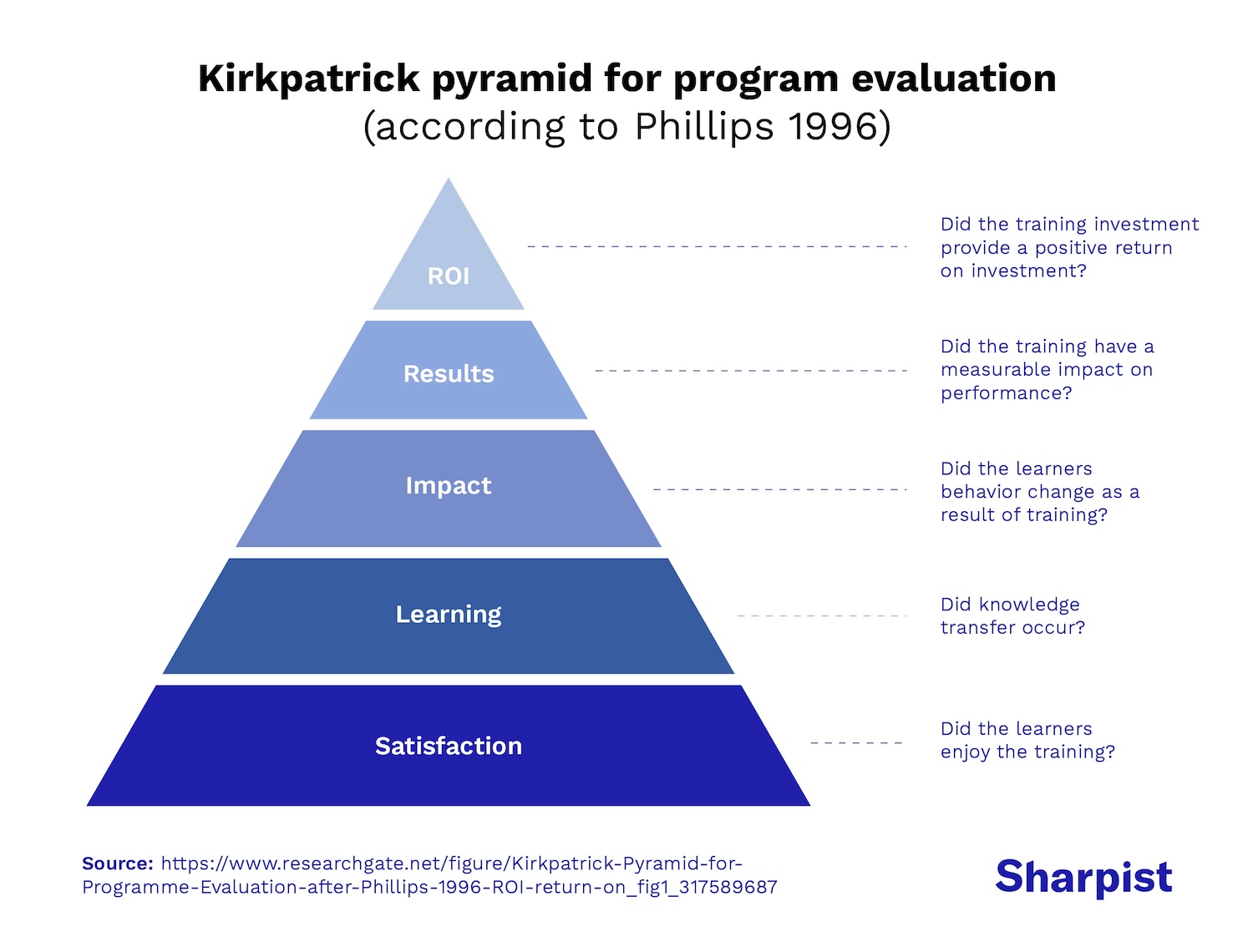
Understanding And Using The 5 Levels Of Evaluation
The Phillips model structures coaching evaluation into five consecutive levels, each of which captures different aspects of impact. While levels 1–4 are based on the classic Kirkpatrick approach, level 5 adds the crucial financial perspective. The following overview shows how HR professionals can collect specific data at each level and use it for their analysis:
The ROI calculation at Level 5 follows a clear formula that shows HR teams the monetary value of their coaching investment:
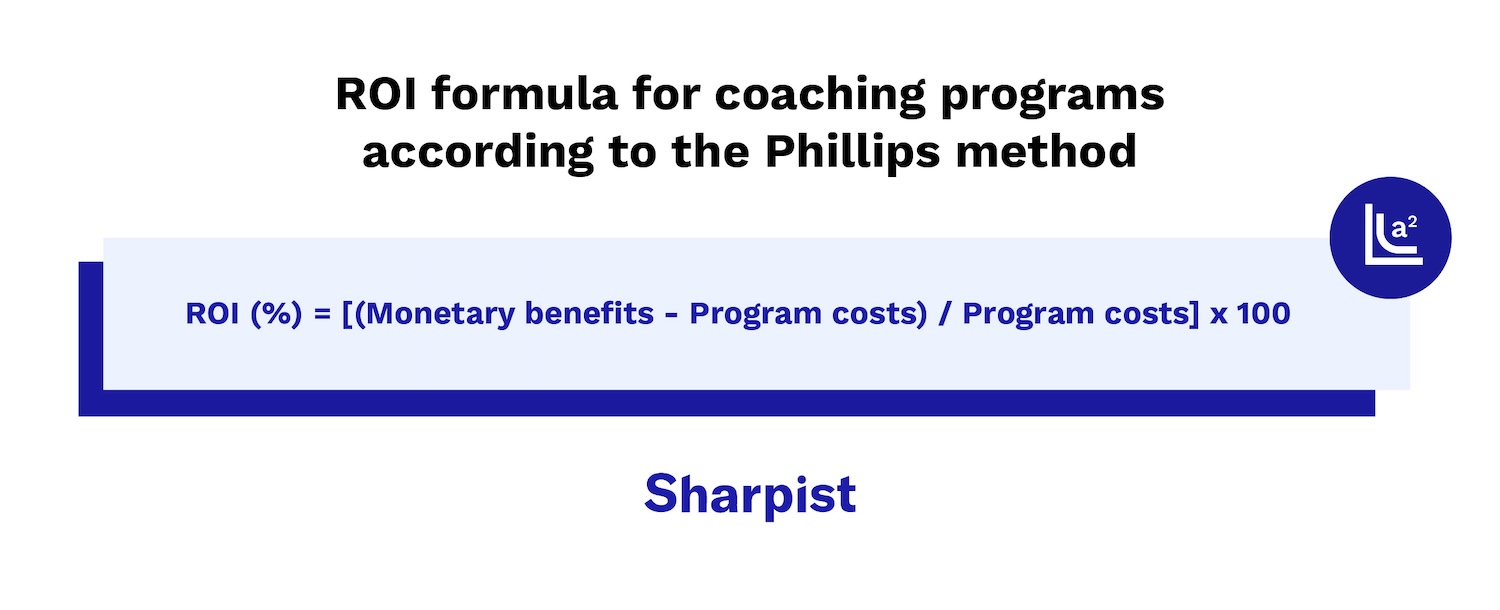
The crucial step lies in quantifying the monetary benefits based on the Level 4 results. For example, if coaching leads to reduced turnover costs, increased productivity, or faster project completion, these business results can be converted into monetary values and compared to the program costs. Sharpist enables HR teams to systematically collect data at all five levels using integrated tracking tools:
The platform automatically provides all the data needed to calculate ROI (Level 5): from program costs and usage rates to business impact metrics. HR professionals can systematically use this data to make coaching investments transparent and traceable, from the initial participant response to the measurable business case. This systematic expertise in measuring success makes coaching investments transparent and traceable—from the initial participant response to the measurable business case.
How Can The Impact Of Digital Coaching Be Measured?
From theory to practical implementation: The following four steps translate the Phillips Framework into concrete instructions for HR teams. Based on Ashridge research, which identified the coaching relationship as a key success factor, they show how digital coaching platforms combine these findings with systematic performance measurement. Each step addresses a specific challenge – from precise goal definition and the right choice of success criteria to intelligent data analysis. This action-oriented approach makes coaching impact not only measurable, but also controllable and optimizable.
1. Identify Clear Areas For Individual Improvement
How can HR teams develop constructive coaching programs that achieve measurable improvements in specific skills? The first step is to precisely define the focus areas before starting coaching. Blanket approaches based on the motto "We coach leadership" fail due to a lack of measurability, without specific indicators, you cannot expect valid results.
Defining focus areas requires validated diagnostic methods that meet the quality criteria of DIN 33430. Only if you objectively assess the initial situation using 360-degree feedback, behavioral interviews, or validated tests will you later be able to distinguish genuine improvements from placebo effects. For each focus area, you should set measurable goals according to the SMART criteria:
This structured approach creates the foundation for all further evaluation steps and enables you to systematically document coaching success.

2. Instead Of ROI, You Should Think About ROE
How do HR teams measure the value of coaching when soft skill development cannot simply be converted into euros? Return on Expectations (ROE) offers a more pragmatic approach than traditional ROI calculations. Instead of constructing complex monetization models, ROE ties in with company metrics that have already been measured. For example, if your company systematically tracks employee engagement, you can tailor coaching to known engagement drivers such as leadership quality, development opportunities, or feedback culture.
Success is then measured using your existing engagement surveys. This method aligns better with HR metrics such as retention rates, promotion rates, or internal satisfaction scores, and provides insights that are immediately understandable to stakeholders.
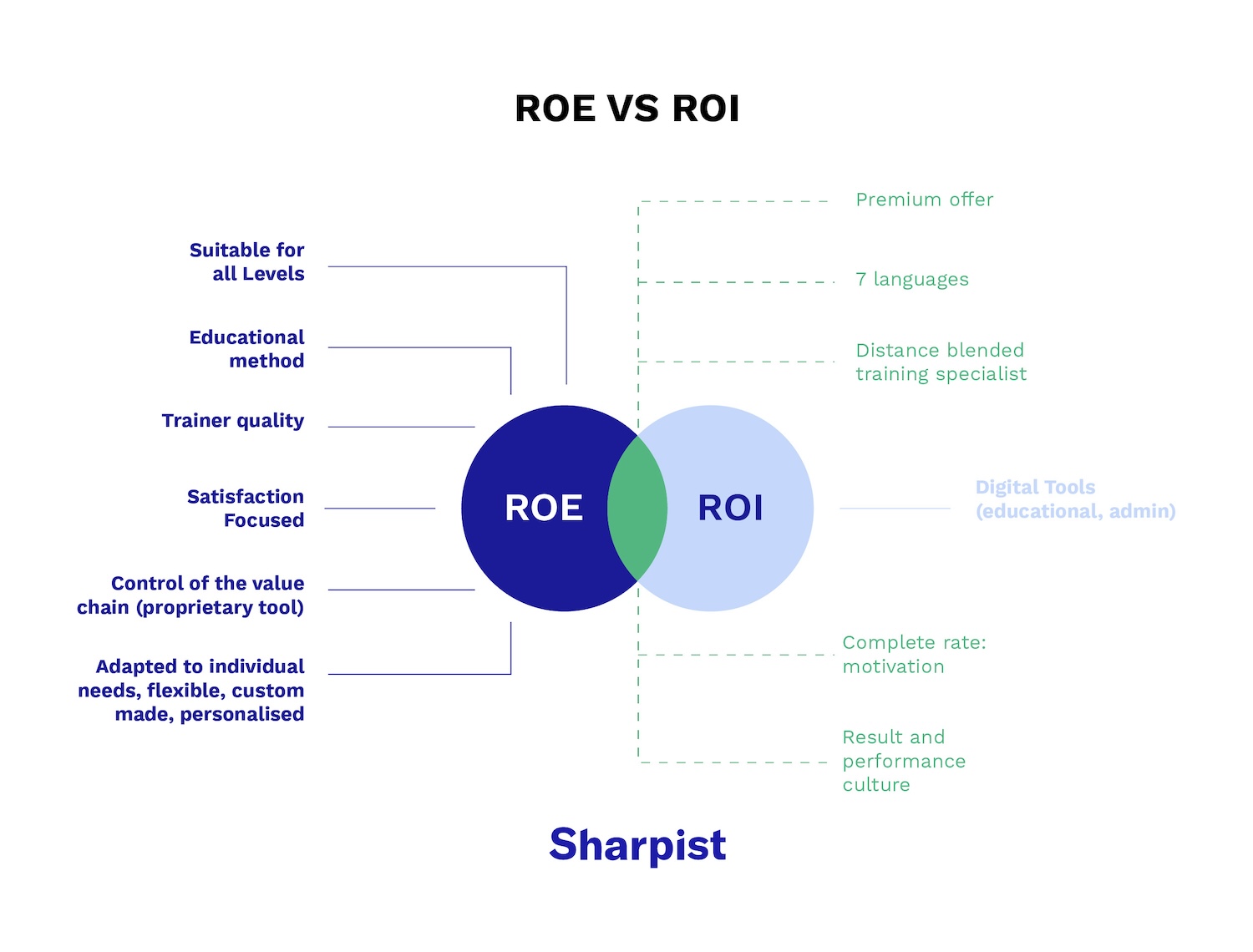
At Sharpist, we support companies by taking a more holistic approach to evaluating coaching. Recognizing that neither quantitative nor qualitative metrics alone are sufficient to measure company-wide progress, we prefer to look at return on expectations (or ROE). This ensures that our coaching goals are clearly defined, that the expectations of the coach and coachees are aligned, and that the most important organizational goals of coaching are achieved.
3. Determine What Help Is Needed And Where
Modern coaching platforms enable flexible grouping of participants by teams, locations, or functions through their cohort system. This structure provides HR professionals with valuable organizational insights: if 70% of managers in a particular division choose "conflict management" as a focus area, this signals systemic challenges in collaboration. Such insights go far beyond individual coaching successes – they show you where structural problems lie in your organization and where targeted interventions will have the greatest impact.
This analysis is particularly valuable when combined with benchmarking data and industry comparisons. Leading coaching platforms offer comparative analyses across various focus areas, enabling HR teams to contextualize their results within similar companies. Companies undergoing transformation processes, for example, use such insights to develop managers' change management skills in a targeted manner, focus area analyses clearly show where there is a need across the organization.
4. Balance Between Quantitative And Qualitative Data
Quantitative metrics answer the "what" – they show measurable progress through session completion rates, micro task progress, goal tracking data, or 360-degree feedback improvements. But these numbers alone do not explain the "why" and "how" of the change. This is where qualitative data comes into play: aha moments recorded by participants on the platform, detailed coach logs after each session, or structured behavioral interviews provide the contextual information that makes the numbers interpretable.
The integration of both data types enables the complete evaluation of coaching work. Sharpist automatically captures both perspectives: The L&D Dashboard aggregates quantitative metrics in real time, while coach logs and aha moment tracking document qualitative insights in a structured manner.
This holistic data strategy transforms coaching success from a subjective assessment into a comprehensible, reproducible result, the basis for continuous improvement of your leadership development and convincing business cases for management.
Implement Measurable B2B Leadership Coaching With Sharpist
How can HR teams systematically implement all the measurement approaches described above without multiplying the administrative workload? Sharpist was developed in response to precisely this challenge: a digital coaching platform that views performance measurement not as an afterthought, but as an integral part of the entire coaching process. Sharpist solves the key measurement challenges:
The result: instead of weeks of manual data collection, HR professionals gain end-to-end transparency on coaching impact: from initial participant response to measurable business case. Schedule a personal consultation to learn how Sharpist enables measurable leadership development in your organization.
FAQ
How Do You Measure The Effectiveness Of Coaching?
The effectiveness of coaching can be measured through a combination of structured frameworks, before-and-after comparisons, and continuous tracking. The Phillips 5-level model offers a systematic evaluation process ranging from participant satisfaction to ROI calculations. Validated diagnostic methods in accordance with DIN 33430, such as 360-degree feedback or behavioral interviews, record objective behavioral changes. Important: Pure satisfaction surveys are not enough – they are similar to customer surveys conducted when leaving a store. Digital platforms automate continuous tracking at all evaluation levels and deliver real-time results instead of manual data collection. These tools enable HR teams to systematically document the entire coaching process and demonstrate measurable improvements.
Which Key Performance Indicator Is Suitable For Measuring Coaching Success?
There is no single metric for coaching success: successful evaluation requires a set of KPIs aligned with the original goals. Key metrics include: Degree of goal achievement (measurable through SMART-defined goals)
Sharpists' 32 focus areas provide a proven framework for structured recording of these results. Selecting the right KPIs depends on whether you want to measure individual skill development, team performance, or organization-wide leadership improvements, a holistic approach combines multiple metrics to provide a complete picture.
When Is Coaching Successful?
Coaching is successful when SMART-defined goals are achieved AND sustainable behavioral changes remain measurable over 3–6 months. Success is reflected in both quantitative KPIs (e.g., improved 360-degree feedback scores, increased productivity) and qualitative indicators (enhanced self-reflection, positive feedback from supervisors). Crucially, the impact must be demonstrable at both the individual AND organizational level, individual successes without systematic improvements are not enough. For in-depth competency development, the 3-year rule applies: fundamental behavioral changes require longer development cycles. Successful programs combine short-term progress measurements with long-term impact evaluation and document both the achievement of goals and the underlying mechanisms of improvement.
How Much Does A Business Coach Cost Per Hour?
Business coaches typically charge €200–2,000 per hour, depending on their experience, certification (e.g., ICF, DBVC), and specialization. For scalable programs in large organizations, digital coaching offers a more cost-effective solution: instead of rigid hourly rates, flexible credit models such as those offered by Sharpist enable resources to be allocated according to demand. Unused sessions are not lost, but are transferred to more active users.
Does Coaching Success Measurement Work The Same Way In All Areas?
No, the measurement approaches must be adapted to the respective context for each training course. Sales coaching for salespeople focuses on different KPIs (closing rates, customer satisfaction) than leadership development for managers. Relevant success criteria also differ between industries: marketing teams measure differently than consulting partners or trainers. However, the Phillips Framework offers a common structure for all areas – from response to learning to ROI. It is important to define the focus areas and goals precisely: Is the aim to tap into new opportunities in customer acquisition or to deepen existing relationships? Digital platforms enable the parallel measurement of different target groups with appropriate metrics for each group through flexible cohort systems.
.avif)










.svg)


%20(1).avif)