



.png)
.png)
.svg)

.png)
.png)


.png)


.png)


.svg)


.svg)

Three executive teams, three reporting lines, one shared org chart. Who actually decides what once three leadership teams merge into one? After a post-merger integration, the new structure exists on paper, but the lines between the three original cultures have not yet blurred in daily practice. Sharpist supports leaders from all three organizations with hybrid 1:1 coaching, so that role clarity emerges faster than it would on its own.
The Topic in a Nutshell
Why a Post-Merger Integration Is Primarily a Leadership Crisis, Not Just a Culture Problem
After the legal and structural completion of a merger of three companies, a new org chart exists on paper. Spans of control grow, responsibilities shift between the three formerly separate entities, and leaders from all three organizations raise the same concern: who actually decides what now? This settling-in phase after a major change cannot be solved with yet another structural redesign. It requires support for role clarity, communication, and the new way of working together itself.
A reorganization involving just a single organization already places significant demands on leaders, as shown by the experience described in Leadership Development After Restructuring. In a post-merger integration with three original cultures, this situation intensifies further. Leaders must take on new roles and reconcile three different cultural logics at the same time, before operational collaboration can even begin. Anyone who underestimates this double uncertainty delays exactly the productivity a merger is meant to accelerate.
Three Cultures, One Organization: What Really Happens During a Post-Merger Culture Clash
In practice, culture clash rarely shows up as open conflict. More often, it appears as different decision-making speeds, communication styles, and priorities among the three original organizations. One team is used to deciding quickly and directly, another expects consensus across multiple levels, and a third operates with flat hierarchies and no formal approval processes. When all three patterns meet in the same meetings, friction builds long before anyone openly talks about culture. The merger of Daimler and Chrysler is a well-known example of how different leadership logics, in this case German engineering culture and American management, can structurally complicate collaboration.
With two merging companies, this alignment is already complex. With three organizations, the number of possible friction points multiplies, because every leadership team has to understand not just one, but two other cultural logics at the same time. Building intercultural leadership competence becomes a task in itself, and without targeted support, this translation work is left entirely to individual leaders, usually alongside ongoing day-to-day business.
Survivor Syndrome and Role Uncertainty: The Silent Risks of a Three-Way Merger
Employees who remain after a merger closely observe how colleagues from the other two companies are treated. This phenomenon, known as survivor syndrome, shows up as declining motivation and eroding loyalty, especially among the top performers a new organization relies on most. In a three-way merger, potentially three parallel survivor dynamics occur at the same time, instead of just one as in a classic restructuring.
This structurally slows down trust-building. Comparable studies on personnel changes show that newly formed teams can take anywhere from eight to more than 26 weeks to reach full productivity, depending on the role. Leaders structurally need the longest time to become fully effective again in new team constellations, and this exact timeframe extends further when three original cultures collide at once instead of one.
Culture Multipliers Instead of Rollout: What the Miro Approach Teaches About Three-Way Mergers
Instead of a company-wide program, Sharpist customer Miro chose a targeted approach during its own transformation. HR identified around 120 culture multipliers, new leaders, employees in particularly strained teams, and established opinion leaders, and approached each person individually and voluntarily. Sam Valentine, Head of Employee Experience at Miro, describes the mindset behind it: "We want to support you as a person, not as a resource."
This principle can be applied to a three-way merger. Multipliers can be identified from each of the three original cultures, rather than rolling out one standard program across all three organizations. At Miro, this approach led to 100% retention among coaching participants during the transformation, a 25% increase in employee confidence, and a satisfaction rating of 4.9 out of 5 stars for the coaching sessions.
How Sharpist Supports Leaders Through Three-Culture Integration
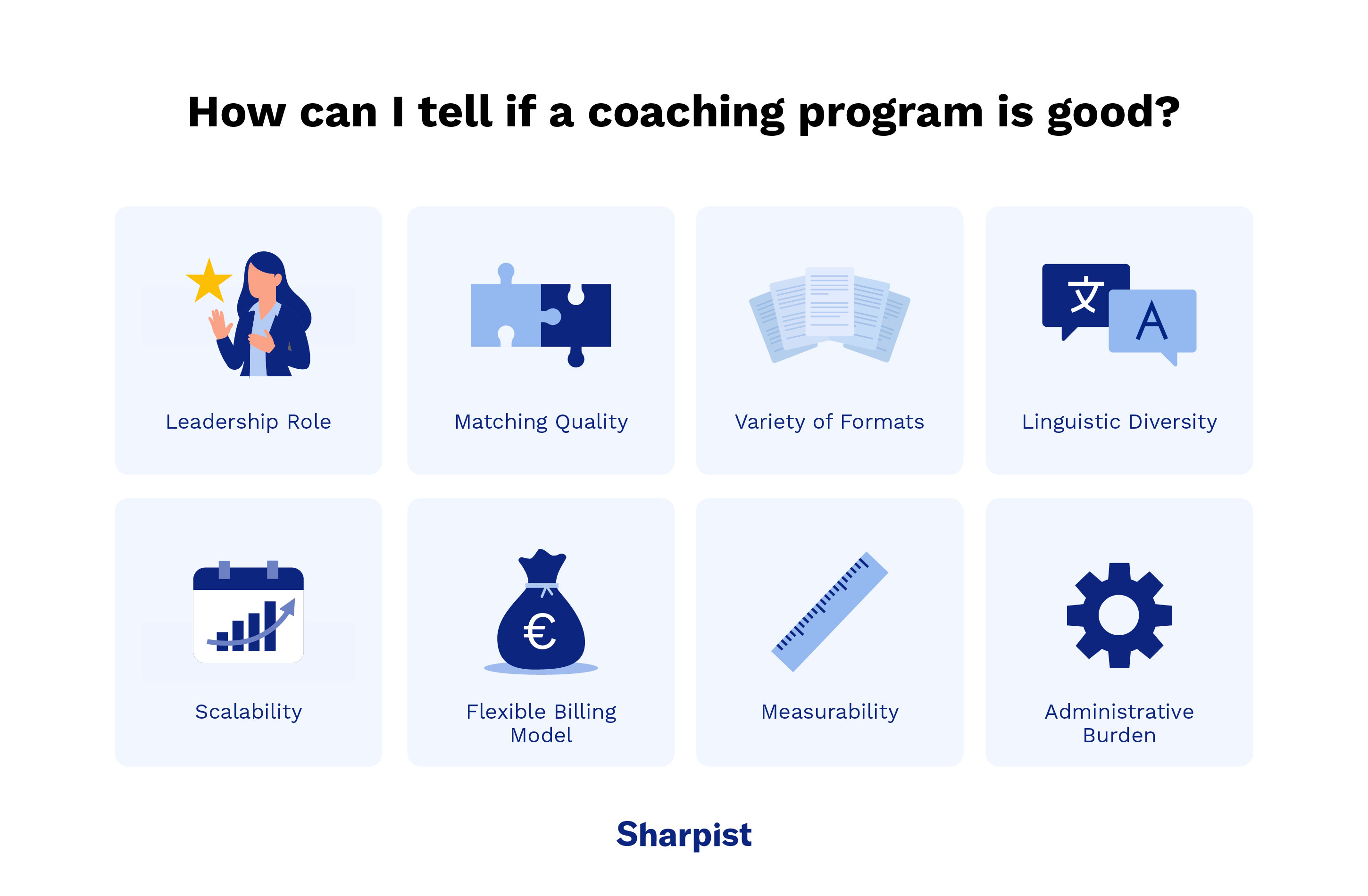
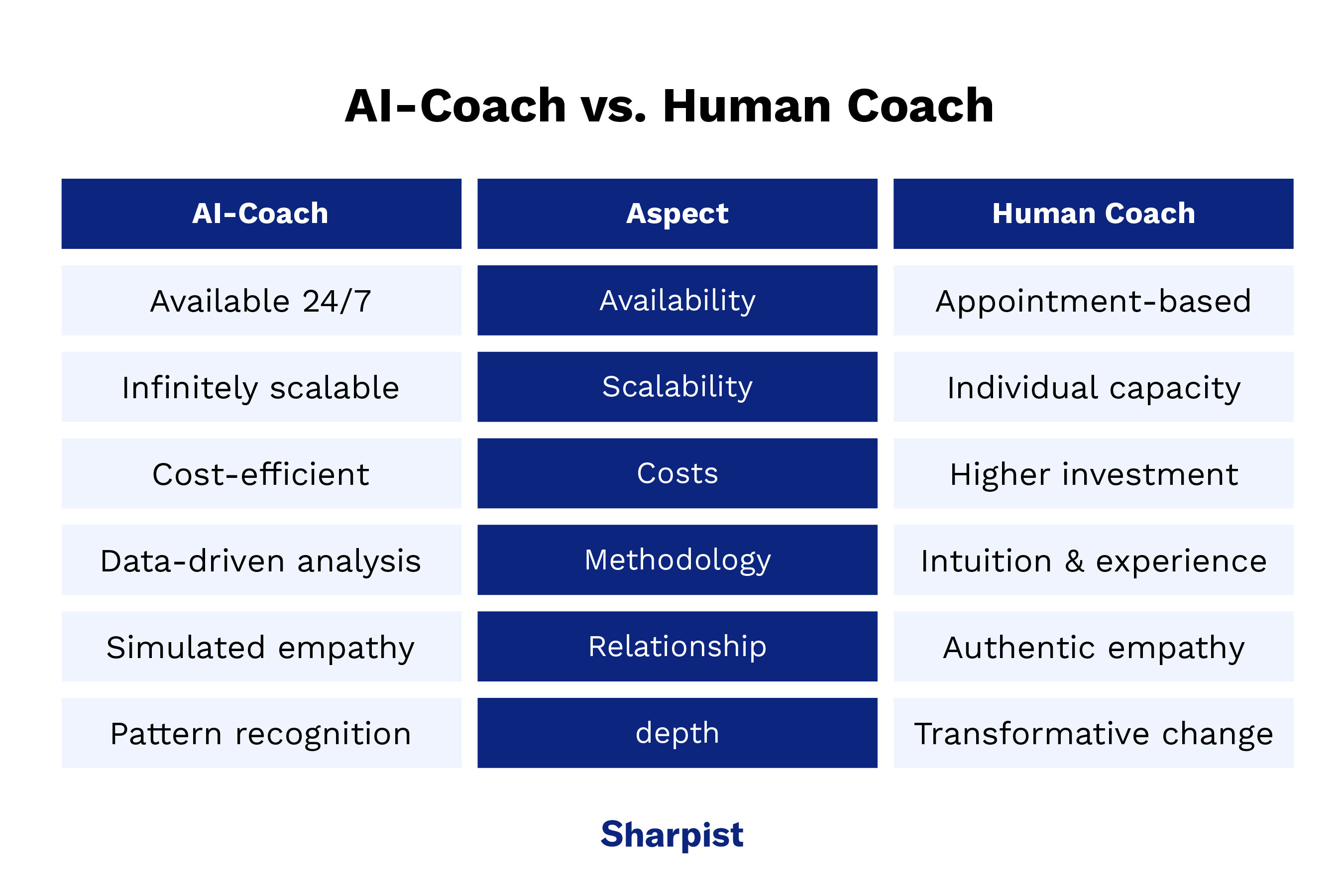
Sharpist supports leaders from all three organizations with hybrid coaching: a human coach works in depth on role clarity, trust-building, and the cultural differences between the three companies. The Sharpist AI coach is available between sessions at any time for quick reflection, which is especially helpful when leaders from the three organizations are spread across multiple time zones. Individually assigned micro tasks translate every insight into concrete leadership behavior in everyday work.
Because three merged companies rarely share the same linguistic background and site structure, scalability here is not a nice-to-have. Sharpist's network of 1,500+ ICF-certified coaches in 55+ languages ensures that leaders in each of the three companies receive the same coaching quality.
How Sharpist Turns Three Cultures Into a Resilient Leadership Culture
Post-merger integration succeeds when leaders from all three organizations receive individual, targeted support as they rebuild role clarity and trust. A new org chart alone does not create this clarity.
Anyone who actively supports post-merger integration with coaching today is also laying the foundation for building a unified leadership culture in the long term, instead of keeping three separate organizations under one roof.
FAQ
What Is Post-Merger Integration in Terms of Corporate Culture?
Post-merger integration refers to the organizational and cultural coming-together of companies after a merger, not just the legal and structural combination. In a three-way merger, three original leadership cultures meet at the same time, which makes this process more complex than a classic two-way merger. The new organizational structure is usually in place quickly, but the shared culture only emerges once leaders from all three companies receive targeted support.
Why Do Post-Merger Integrations Often Fail Because of Corporate Culture Rather Than Strategy?
Post-merger integrations often fail because different decision-making logics and a lack of role clarity disrupt daily collaboration long before any strategic mistakes become visible. Leaders take over new teams without knowing the informal networks and cultural logics of the other organizations. Without structured support, this translation work is left entirely to individual leaders, which costs trust and productivity, regardless of how well thought out the original merger strategy was.
How Long Does It Take for Three Merged Leadership Teams to Work Productively Together Again?
There is no blanket figure, because with three organizations involved, several settling-in processes run in parallel rather than one after another. What matters is not the calendar time itself, but whether role clarity and trust are built deliberately or left to develop on their own. Structured leadership development, such as through individual coaching, noticeably shortens this process compared to a purely organic coming-together.
What Role Does Coaching Play in Integrating Three Corporate Cultures, Compared to Classic Training?
Coaching supports leaders directly in their day-to-day work, while classic one-off training sessions usually lose their effect as soon as the seminar room is left behind. The key difference lies in continuity: a leader does not encounter the cultural differences between the three companies just once in a seminar, but every day in real situations, and this is exactly where ongoing coaching comes in, rather than delivering knowledge at a single point in time. This turns culture integration into an ongoing process rather than a one-time event.
How Can HR Leaders Measure the Success of Culture Integration After a Merger?
Success shows up in aggregated management metrics rather than individual feedback from coaching sessions: activation rates, the development of the leadership index, and participant retention across all three organizations. These metrics can be compared across organizations without disclosing individual coaching content. This turns leadership development into an early-warning system for the entire new organization.
.avif)






.svg)


%20(1).avif)