



.png)
.png)
.svg)

.png)
.png)


.png)


.png)


.svg)


.svg)

The new team structure is set on paper, but employees barely know each other, and old working agreements no longer apply. How do leaders bring a newly formed team back to real productivity quickly after a restructuring? Sharpist supports leadership development with individualized coaching, with results such as 100% participant retention at Sharpist client Miro during a transformation.
The Topic in a Nutshell
What a Productivity Slump After Restructuring Really Costs
A restructuring doesn't end with the new organizational chart. During the rebuilding phase that follows, productivity in affected units can drop by 20% to 30% because teams have to completely realign how they work together. Fewer than one in four reorganizations actually improve business performance in the end, and more than half cause productivity to decline during implementation.
These numbers rarely have much to do with the new structure itself. They stem from what that structure unintentionally destroys: coordination routines teams have built up over months. Restructuring disrupts established coordination routines and forces teams to rebuild working relationships and renegotiate informal work processes, a process that often takes months. This invisible social structure determines how quickly a newly assigned team delivers again.
The Moment Most Restructuring Guides Miss: Taking Over the Team
Most restructuring guides talk about communication, culture, and retention at the organizational level. What they rarely cover is the concrete moment when an individual leader has to take over a newly formed team without knowing the informal networks and individual strengths of the new team members.
Comparable dynamics in workforce changes show how long this path to full productivity can take: the average time to full productivity ranged from eight weeks for clerical roles to 20 weeks for professionals to more than 26 weeks for executives. These figures come from research on new hires and transfers, not restructuring teams specifically, but they show a comparable order of magnitude. Leaders take structurally the longest to become fully effective again in new team constellations.
The Survivor Syndrome: Why Trust Is the Real Bottleneck
Employees who make it through a restructuring watch very closely how their laid-off colleagues were treated. This phenomenon is known in organizational psychology as survivor syndrome, and it shows up as declining motivation, eroding loyalty, and, in the worst case, the loss of exactly the top performers an organization relies on most after a restructuring.
Sharpist client Miro faced exactly this problem after layoffs and chose a targeted approach instead of a blanket rollout: the company deliberately reached out to culture amplifiers and those most affected, and offered coaching as a personal benefit rather than a mandatory program. Sam Valentine, Head of Employee Experience at Miro, described the mindset behind it this way: "We care that we are wanting to help and support you with you as a person, not with you as a resource or an asset." That voluntary character was decisive in making coaching land as a trust signal rather than a control mechanism.
Why Classic Training Fails at Transfer, and What Leadership Really Decides
Most restructurings don't fail because of labor law. They fail because of weak leadership. The odds of a restructuring succeeding rise significantly when leaders show engagement, transparency, and clear goals, and involve employees actively and early in the process.
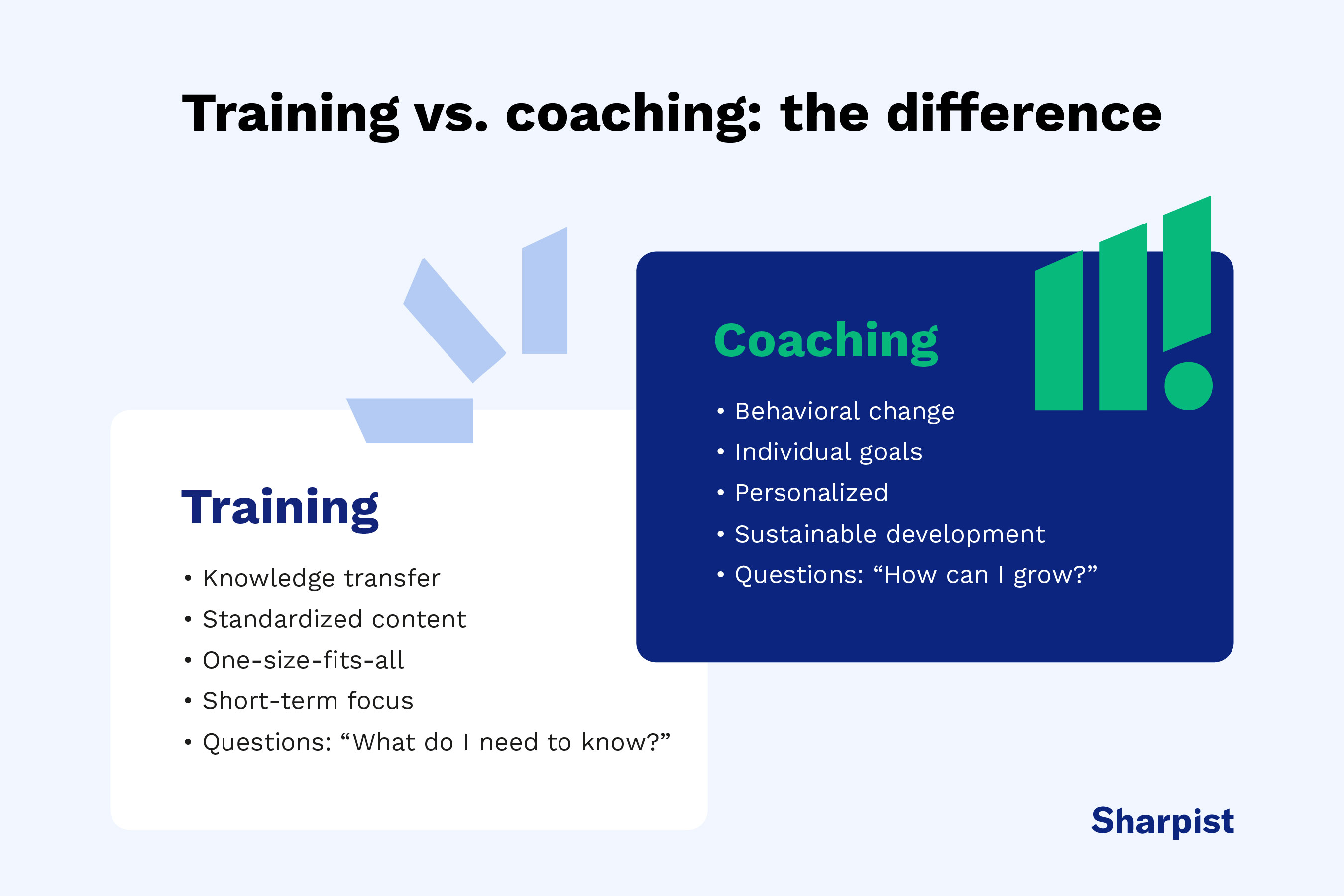
This gap explains why classic in-person training so often falls flat during this phase: knowledge from the seminar room fades away when no one helps translate it into daily work. HR teams also struggle to prove their own impact, because many performance systems are too rigid to adapt to the changed situation after a restructuring. Without continuous support, leadership development after a restructuring stays theory instead of practice.
How Sharpist Makes Leaders Effective Faster in Newly Formed Teams
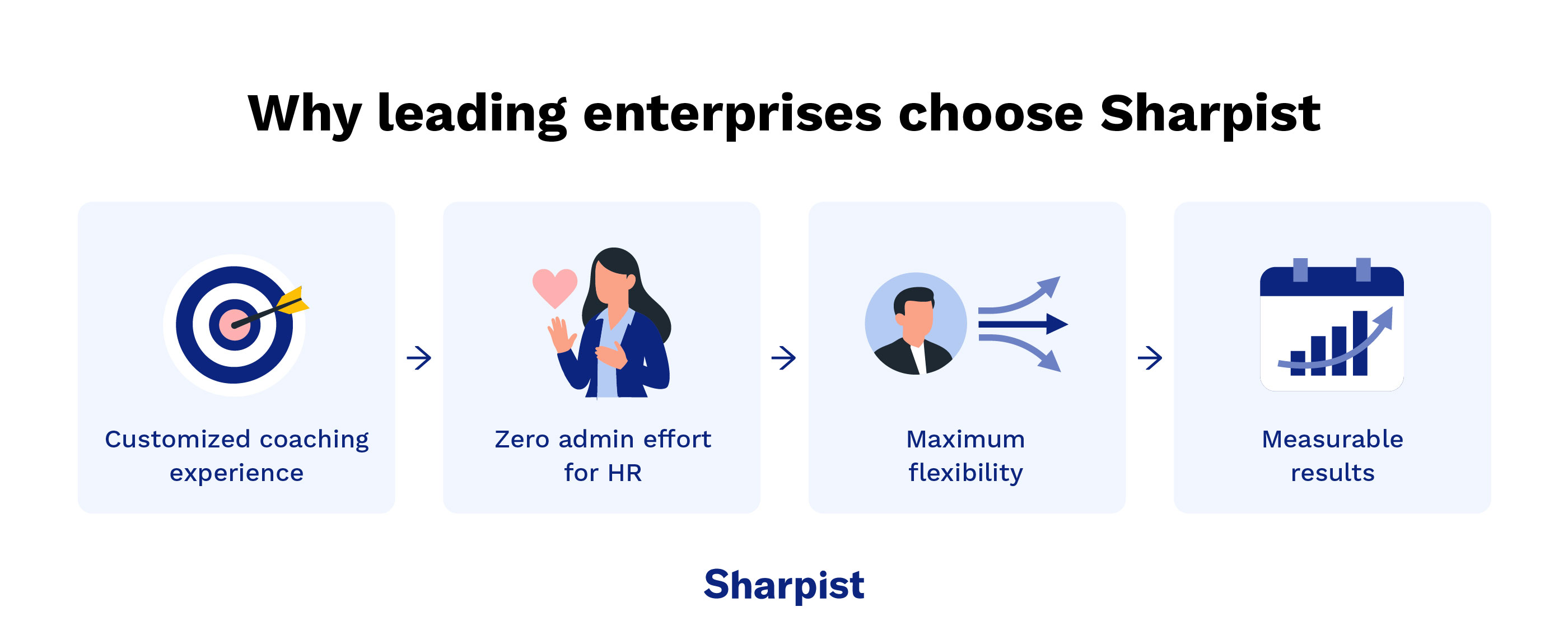
Sharpist supports leaders through exactly this transition period with a hybrid coaching approach: a human coach works in depth on rebuilding trust, role clarity, and team dynamics, the Sharpist AI Coach is available for quick reflection between sessions at any time, and individually assigned micro tasks translate every insight into concrete leadership behavior in daily work.
The effect becomes clear in Miro's example: during its own transformation, the company achieved 100% retention of coaching participants, a 25% increase in employee confidence, and a satisfaction score of 4.9 out of 5 stars with the coaching sessions. Sharpist clients achieve activation rates of 80% to 90% with this hybrid approach, compared with 10% to 20% for classic e-learning programs.
What This Means for HR
For HR leaders, there's an added benefit: the Sharpist L&D dashboard makes not only individual progress visible, but also organizational patterns such as a lack of role clarity, without exposing confidential coaching content. That turns leadership development into an early-warning system for the whole organization.
Why a New Team Structure Alone Isn't Enough, and How Sharpist Still Makes Leaders Effective Fast
A new org chart doesn't create productivity on its own. Only once leaders get targeted support to rebuild trust and lead their new team does the restructuring actually become a fresh start.
Investing in leadership development after a restructuring now doesn't just shorten the time to full productivity, it also protects the top performers who are most at risk during the transition.
FAQ
How long does it take for a newly formed team to become productive again after a restructuring?
Comparable research on workforce changes shows that reaching full productivity can take anywhere from eight weeks for clerical roles to more than 26 weeks for executives. Restructuring teams don't follow an identical dynamic, but the order of magnitude is comparable. Structured leadership development, such as individualized coaching, shortens this time because trust and role clarity are built deliberately rather than left to chance.
What is survivor syndrome, and how does it affect leaders after a workforce reduction?
Survivor syndrome describes how employees who make it through a restructuring closely observe how laid-off colleagues were treated. For leaders, that means they take over a team whose trust in the organization is already shaken before the actual collaboration even begins. Declining motivation and eroding loyalty follow when this effect is underestimated.
How can HR leaders measure the success of coaching programs after a restructuring?
An L&D dashboard with aggregated usage and progress data shows how coaching programs are working without exposing individual coaching content. Sharpist clients use this data to make progress visible at the team level and to spot organizational patterns, such as a lack of role clarity, early, rather than reacting only once problems have already surfaced.
What role does psychological safety play in rebuilding teams after a workforce reduction?
Psychological safety determines whether employees communicate openly with their leader after a workforce reduction or withdraw instead. Coaching offered voluntarily rather than mandated acts as a trust signal here, as shown by the example of Sharpist client Miro during its own transformation.
Why does classic in-person training often fail in the post-restructuring phase?
Classic training delivers knowledge in isolated moments, but without continuous support it fades away in daily work before it turns into real leadership behavior. This gap between seminar content and practical transfer explains why many restructurings fail because of weak leadership rather than legal hurdles, and why continuous coaching is more effective here than one-off training days.
.avif)







.svg)


%20(1).avif)