



.png)
.png)
.svg)

.png)
.png)


.png)


.png)


.svg)


.svg)

The world of work is becoming more diverse: generations work hand in hand, teams are internationally staffed, and the workforce is more varied than ever. But how does this diversity create real added value? This is precisely where diversity management comes in. Coaching from Sharpist proves to be a practical instrument for sustainably implementing inclusion – from the shop floor to the boardroom.
The Topic in a Nutshell
What Is Diversity Management?
Diversity management refers to the strategic approach of consciously promoting personnel diversity within a company and utilizing it as a resource for business success. It's not just about avoiding discrimination but actively generating value creation through the diversity of employees. The Charter of Diversity defines seven central diversity dimensions:
Diversity management in the corporate context means more than the mandatory (m/f/d) in job postings. It encompasses the conscious design of processes, structures, and work environments so that all members of the organization can develop their potential. While pure anti-discrimination prevents disadvantage, diversity management aims at the active utilization of diversity – through recognition and appreciation of each person's uniqueness.

Why Is Diversity Management Important for Companies?
Demographic change is intensifying the skilled labor shortage, globalized markets require intercultural competence, and the working world is becoming increasingly diverse. Diversity management has evolved from a marginal topic to a business-critical success factor. Companies that strategically utilize diversity gain measurable competitive advantages – in today's business world, lip service no longer counts, but concrete results through lived diversity do.

From Theory to Practice: How Does Good Diversity Management Work?
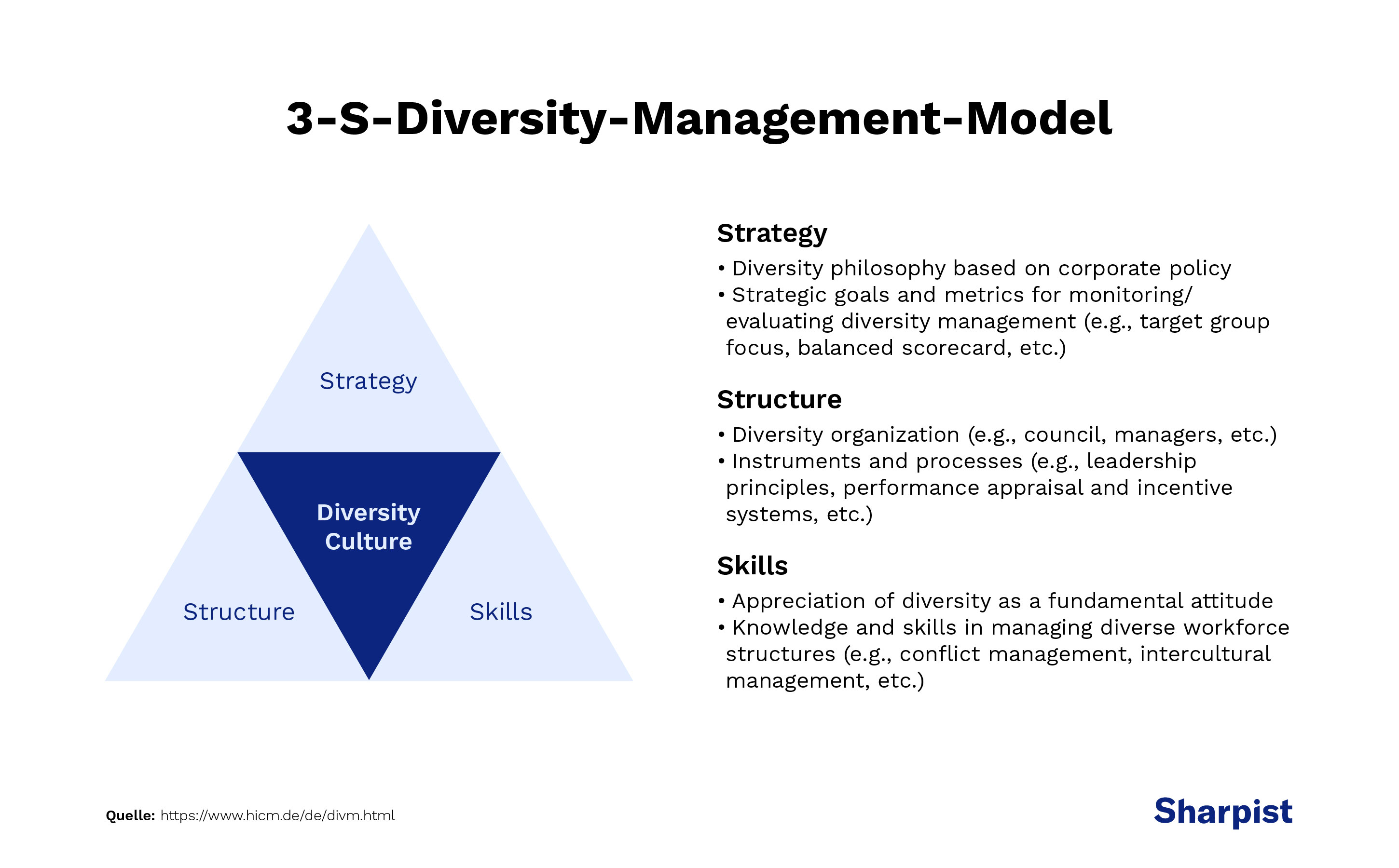
How does diversity management work in reality? Successful diversity strategies follow a structured, multi-stage approach. Various diversity management approaches combine strategic planning with operational implementation – the systematic procedure is crucial, making diversity measurable and sustainably anchoring it in the organization.
Coaching plays a central role in all these steps. It transforms diversity strategies from declarations of intent into measurable behavioral changes.
Concrete Diversity Management Measures for Companies
Successful diversity management requires a systematic approach across various fields of action. Diversity management measures can be divided into four central areas that must interlock:
Effective diversity strategies combine all four areas – isolated individual measures fizzle out ineffectively. Only when companies implement diversity measures holistically does diversity create real added value instead of symbolic gestures.
1. Design Inclusive Recruiting Processes
Diversity management in companies begins with talent acquisition. Anonymized application procedures hide discrimination-relevant characteristics such as name, age, or origin in pre-selection and demonstrably increase opportunities for underrepresented groups. Gender-neutral job postings without superlatives reach broader talent pools. Diversely staffed selection committees with standardized interview guidelines reduce bias effects in hiring decisions.
Active sourcing in underrepresented groups opens up new talent sources, cooperations with diverse networks expand reach. Crucial is the critical review of requirement profiles: Which qualifications are truly necessary, which unconsciously exclude certain applicant groups? Coaching supports recruiters in recognizing their biases and making fair selection decisions – through continuous reflection instead of one-time training.

2. Awareness and Training for Employees
Awareness training creates consciousness for unconscious biases and sensitizes to various diversity dimensions. One-time workshops raise awareness but rarely create sustainable behavioral change. The challenge lies in transferring from the seminar room to everyday work, where biases and old patterns break through again in critical situations.
3. Flexible Work Models and Barrier-Free Structures
Flexible working time models, remote work, and part-time options even in leadership positions enable working parents to balance family and career. Job-sharing models create access for people who cannot take on full-time positions. Barrier-free office design with height-adjustable desks, ramps, and elevators as well as technical aids such as screen readers or noise-canceling headphones make workplaces usable for people with disabilities. Prayer rooms respect religious needs, culturally sensitive cafeteria food considers different worldviews, flexible vacation policies enable consideration of religious holidays of different faiths.
These structures create genuine inclusion for various groups – from older employees with health limitations to employees with migration backgrounds who want to live cultural particularities.
4. Promote Diversity in Leadership Positions
Leaders crucially shape corporate culture, serve as role models, and make strategic decisions that influence the entire company. Diversity at the leadership level is therefore particularly effective. Promoting diversity in leadership signals to all employees: here everyone has the same advancement opportunities, regardless of gender, origin, or other diversity dimensions.
Concrete measures include mentoring programs for underrepresented groups, sponsorship by established leaders, transparent promotion criteria, and targeted leadership development. Here coaching proves to be a key instrument: Sharpist helps develop the competence to successfully lead diverse teams.
Challenges in Implementing Diversity Management
Despite all measurable advantages, diversity initiatives often encounter resistance in practice because implementation is complex. Three central challenges impede realization: unconscious biases shape decisions without leaders noticing. Resistance in the team arises from fears of change and lack of acceptance. Structural barriers in processes and culture hinder genuine inclusion.
1. Unconscious Bias and Bias in the Workplace
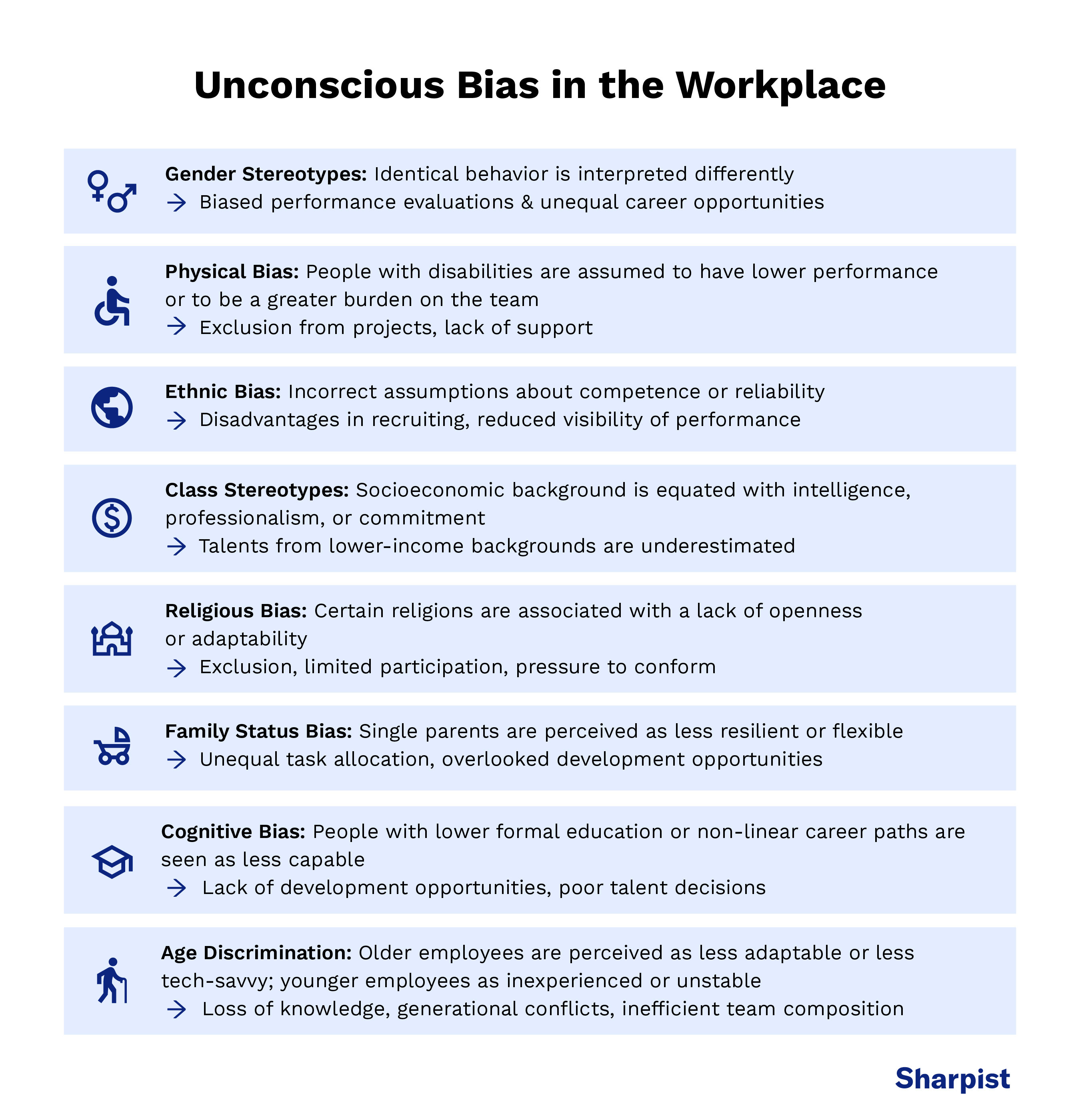
Unconscious bias refers to unconscious prejudices that influence decisions without us noticing. These automatic thought patterns arise from societal conditioning and operate even in people who consciously advocate for diversity. Coaching proves to be an effective instrument against bias in companies and leads to sustainable behavioral change instead of just superficial awareness.
2. Resistance in the Team and Lack of Acceptance
Diversity initiatives often encounter resistance in the workforce. Fears of change arise because people naturally like to surround themselves with similarity – diversity requires effort and leaving familiar thought patterns. Lack of understanding for the business case leads to diversity being perceived as an imposed obligation rather than an opportunity.
This lack of acceptance in the team undermines even well-intentioned diversity strategies and prevents diversity from developing its full potential. Change management coaching helps constructively overcome resistance and create acceptance for diversity initiatives.
3. Structural and Cultural Barriers
Entrenched structures hinder diversity management even with the best intentions. Opaque promotion processes unconsciously favor certain groups, lack of role models in leadership positions signals limited advancement opportunities for underrepresented employees. Inflexible work models factually exclude parents or people with disabilities, lack of accessibility prevents genuine participation.
Coaching as the Key to Successful Diversity Management
One-time workshops may raise awareness, but sustainable behavioral change only emerges through continuous support and reflection. Diversity competence doesn't develop in a two-day seminar but through repeated practice, constructive feedback, and the willingness to question one's own thought patterns. Leaders need support precisely when critical situations arise – not weeks later in a planned training.
Workshops convey knowledge about diversity, coaching develops the ability to apply this knowledge in difficult moments – when unconscious biases break through in hiring interviews, when conflicts escalate in diverse teams, or when leaders must make inclusive decisions under pressure. Without this continuous translation of theory into practice, even the best diversity strategies remain mere declarations of intent because people automatically fall back on old, practiced behavioral patterns in stressful situations.

Conclusion: Diversity Management as a Success Factor – Sustainably Implement With Coaching From Sharpist
Diversity management is not a trend but a business-critical success factor for companies. Organizations that strategically promote diversity are demonstrably more innovative, productive, and competitive. Coaching proves to be the key to sustainable implementation of diversity management. This is precisely where Sharpist comes in:
Transform your diversity strategy into measurable success. Schedule a personal consultation now and learn how Sharpist sustainably strengthens your diversity management.
FAQ
What Is Meant by Diversity Management?
Diversity management refers to the strategic approach of consciously promoting personnel diversity in companies and using it as a resource. It encompasses seven core dimensions: age, gender, ethnic origin, disability, sexual orientation, religion, and social background. Unlike pure anti-discrimination, which prevents disadvantage, diversity management aims at active value creation through diversity. Through targeted measures in recruiting, leadership, and work design, an inclusive work environment emerges that uses employees' diversity as a competitive advantage.
Why Is Diversity Management Important?
Diversity management is important because it enables measurable business success. Companies with lived diversity also attract talent more easily and retain employees more strongly. In times of skilled labor shortage and globalized markets, diversity evolves from nice-to-have to business-critical success factor.
How Does Diversity Management Work?
Diversity management works through a structured five-step process: First, analysis of the status quo and existing imbalances. Second, definition of measurable goals and KPIs for diversity. Third, derivation of concrete measures from inclusive recruiting to flexible work models. Fourth, clear assignment of responsibilities to leaders and HR. Fifth, continuous monitoring of progress. Coaching plays a central role – it enables leaders to sustainably implement through continuous support.
What Challenges Exist in Implementing Diversity Management?
Three main challenges arise when implementing diversity management: First, unconscious biases that influence decisions without leaders noticing. Second, resistance in the team due to fears of quota thinking or lack of understanding for the business case. Third, structural barriers such as opaque promotion processes or inflexible work models. Coaching specifically addresses these challenges – through continuous reflection, development of change competencies, and practical support in critical situations in everyday work.
What Does a Diversity Manager Do?
A diversity manager develops and coordinates the diversity strategy in the company. Tasks include analyzing workforce structure, defining measurable diversity goals, planning and coordinating concrete measures, and organizing training and awareness campaigns. The diversity manager conducts continuous monitoring, creates reports for management, and serves as a central contact person for all diversity questions. In many companies, this role works closely with HR, leaders, and external consultants to sustainably anchor inclusion.
.avif)







.svg)


%20(1).avif)