


.png)
.png)
.svg)

.png)
.png)


.png)


.png)


.svg)


.svg)

Digitalization has permanently changed the world of work. Remote work is an integral part of modern working models. But physical distance changes the requirements for leadership: remote leadership requires new skills – from digital empathy to virtual team culture. For HR teams, this means systematically and measurably preparing managers. Digital coaching platforms such as Sharpist support this with 1:1 coaching and over 2,000 micro tasks that specifically build remote leadership skills and enable improvements of up to +18%.
The Topic in a Nutshell
What is Remote Leadership?
Remote leadership refers to the systematic management of teams across geographical distances. In contrast to traditional on-site management, the management, communication, and development of employees primarily takes place via digital tools and virtual channels. While classic leadership is based on direct contact, spontaneous conversations, and physical presence, remote leadership requires structured processes, conscious communication strategies, and new skills on the part of managers – regardless of whether employees work from home, at different locations, or in a hybrid model.
In practice, remote leadership takes various forms, each of which presents specific challenges:
For HR teams, this means that remote leadership is not a temporary adjustment, but a strategic leadership skill that must be developed systematically. Sharpists' coaching platform supports organizations in building these skills in a scalable way – with customized development paths for managers in 32 focus areas.
Challenge for Remote Leadership
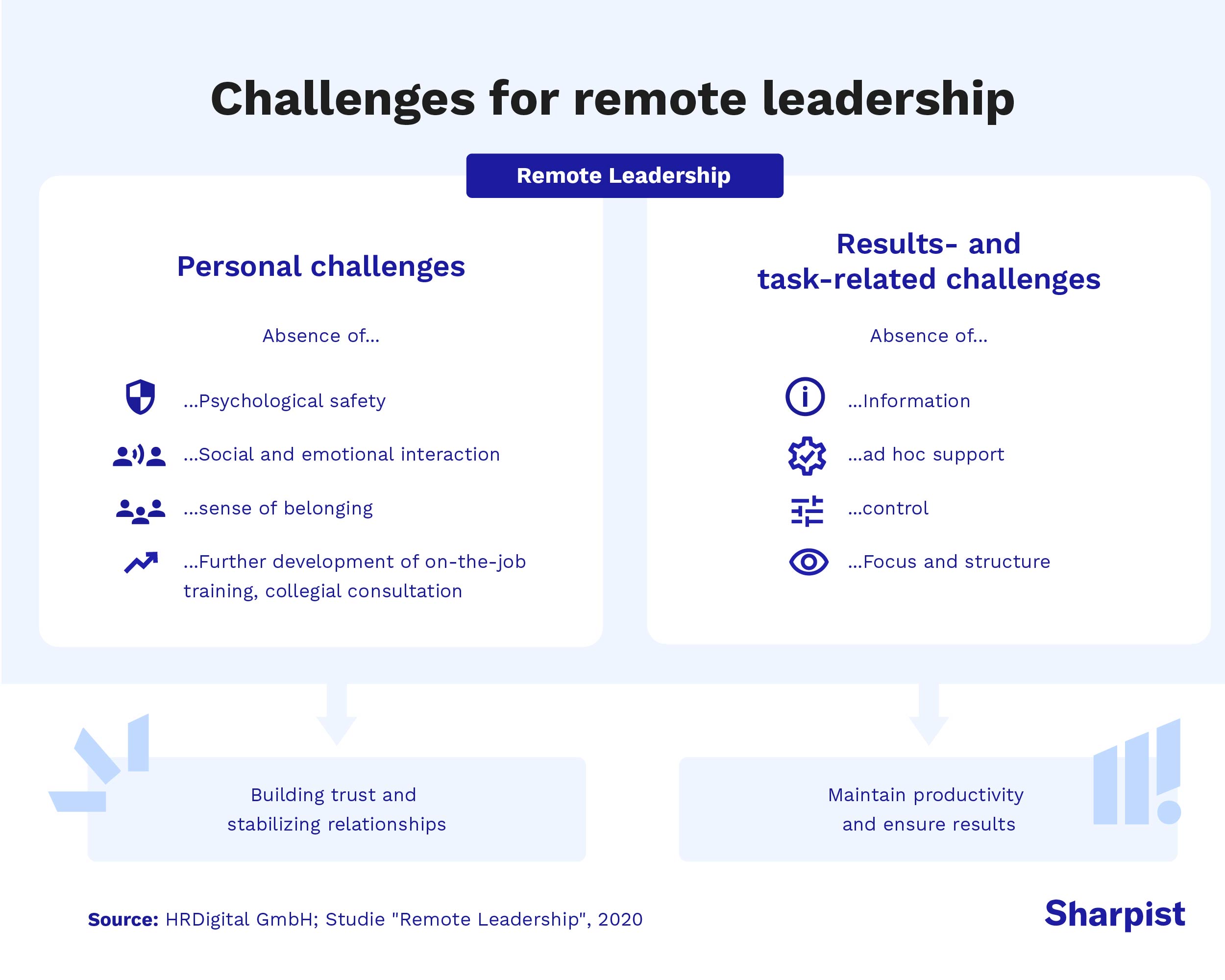
The coronavirus crisis has brought remote leadership into focus as an urgent necessity – but the challenges go far beyond a temporary adjustment. For HR professionals and managers, physical distance means a fundamental change in the reality of leadership:
The transition to remote models affects everyone involved – from individual team members to organizational leadership – and requires systematic rethinking. The effects are evident at all levels of the organization, from individual employee motivation to strategic corporate culture.
The situation becomes particularly critical when managers suddenly have to lead remotely without adequate preparation. A lack of structures, unclear communication channels, and a lack of trust can significantly impair team performance. At the same time, remote leadership also offers strategic opportunities: Companies that establish systematic leadership structures benefit from greater flexibility, a better work-life balance for their employees, and access to talent regardless of location.
Establishing Structural Foundations
Before remote managers can utilize their personal skills, the organizational framework must be in place. Three areas form the foundation of successful remote work:
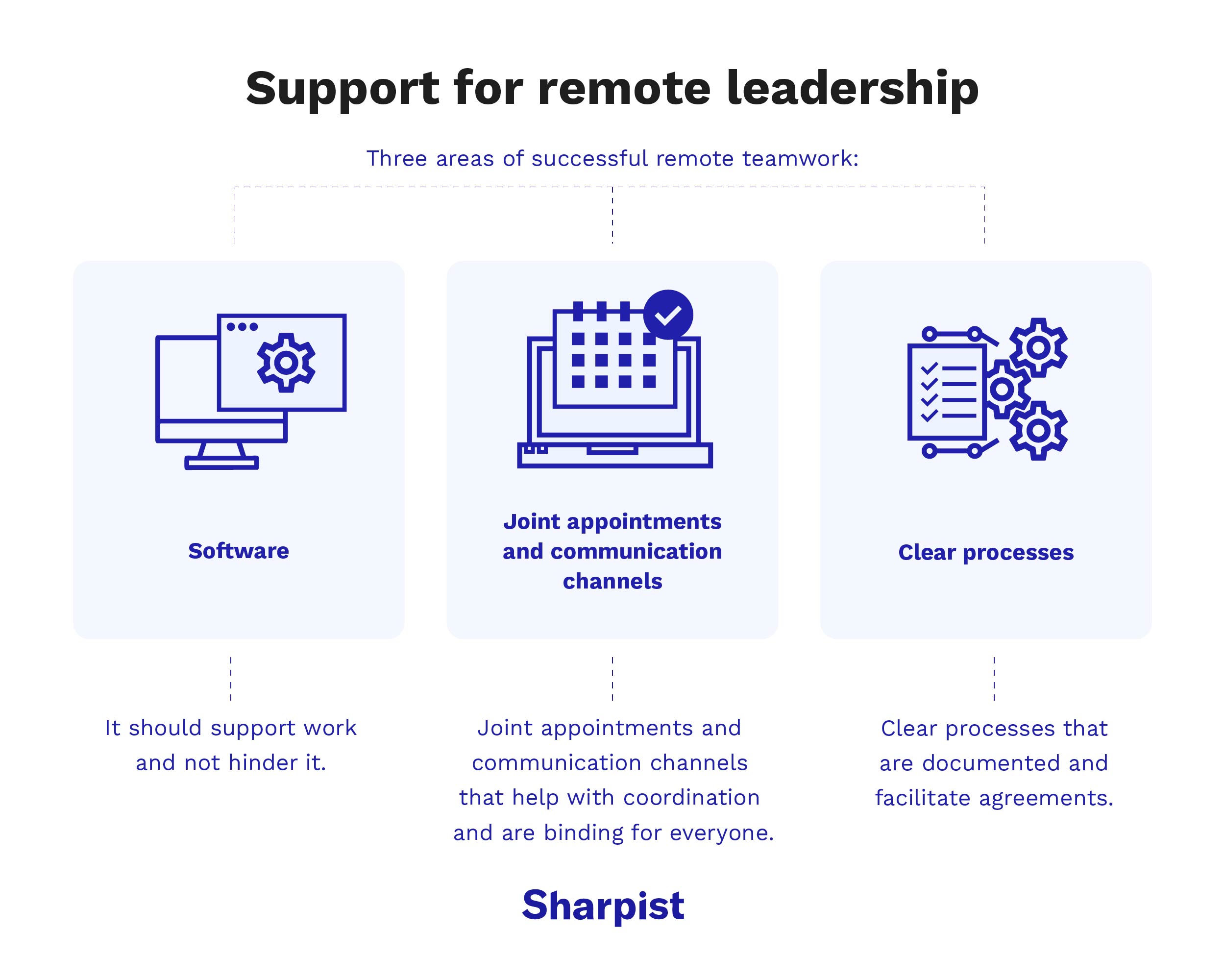
These structural prerequisites lay the foundation – but successful remote leadership also requires specific personal skills on the part of managers. The systematic development of remote leadership skills is not an option, but a strategic necessity. Sharpist supports HR teams in preparing managers specifically for these challenges with flexible coaching programs that deliver measurable results and are scalable across the organization.
7 Qualities for Successful Remote Leadership
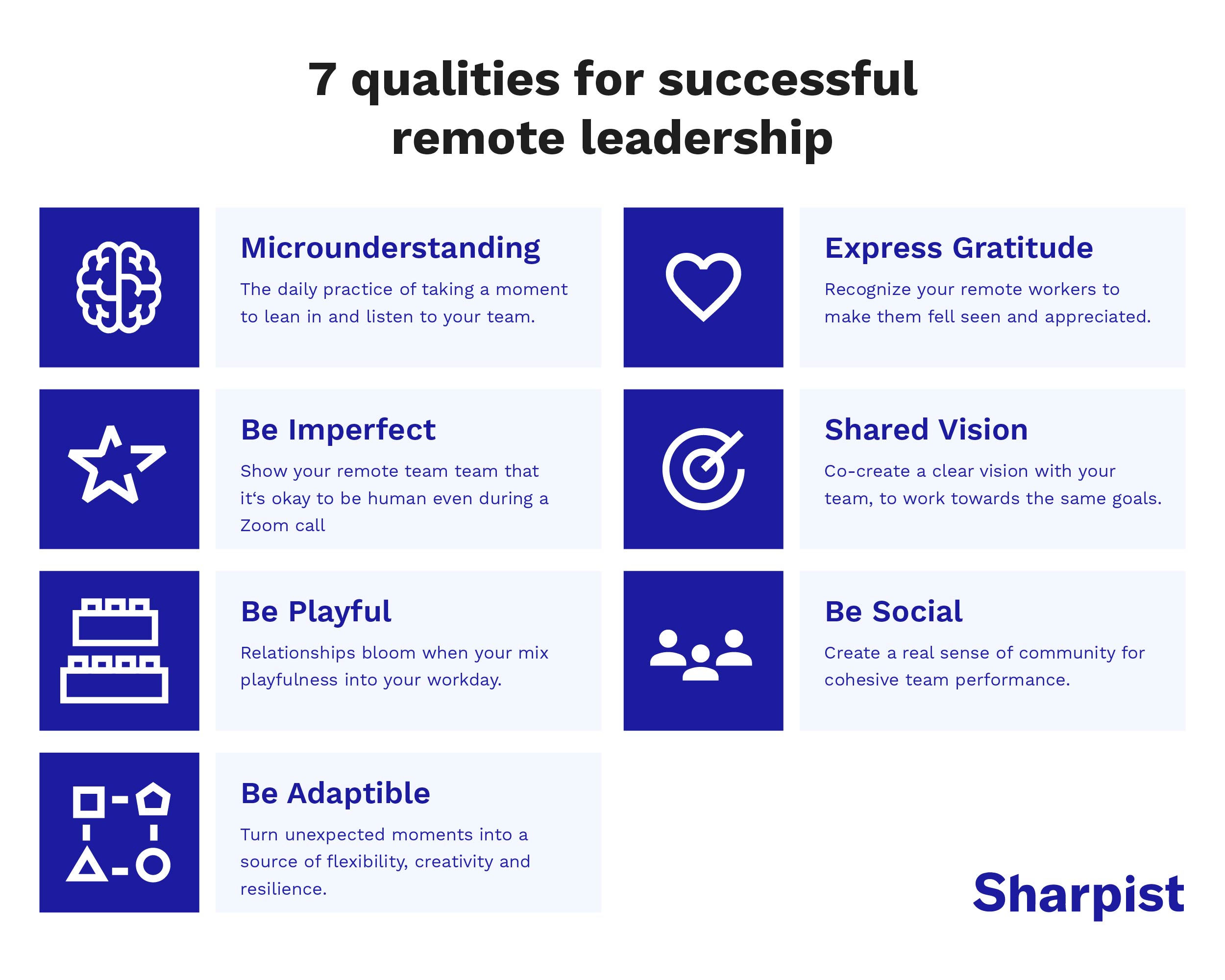
Successful remote leadership is based on an expanded set of skills that goes beyond traditional leadership qualities. For HR teams, this means that the systematic development of these skills is crucial to preparing managers for the demands of distributed teams. These seven core competencies form the foundation for effective remote leadership and can be established organization-wide through targeted coaching approaches.
Micro-understanding
Remote leaders must be able to pick up on subtle signals in virtual communication that would be obvious in face-to-face situations. Digital body language is evident in response times to messages, word choice in chats, or camera use in video calls. If a team member suddenly responds more briefly or turns on their camera less often, this may indicate overload or distancing.
Managers with a keen understanding of micro-level issues recognize such changes early on and address them proactively – before problems become entrenched. For organization-wide implementation, this means that HR teams should train managers to pay attention to these subtle indicators and establish regular check-ins that create space for honest exchange.

Allow imperfection
A constructive error culture is particularly important in remote teams, as misunderstandings and technical glitches are par for the course. Managers who allow imperfection create psychological safety – the foundation for innovation and engagement. When a leader openly admits that they too are struggling with the new software or forgot an appointment, it signals to the team that mistakes are human and learning opportunities.
This attitude reduces the pressure to appear perfect and promotes open communication about challenges. Organizations benefit from this trait through greater risk tolerance and faster problem-solving. Coaching programs can help managers develop this attitude authentically and embed it in their teams.
Be Playful
Virtual collaboration can quickly become monotonous – playful elements lighten up digital communication and strengthen team cohesion. Remote leaders who take a playful approach integrate creative formats into their everyday management activities: virtual coffee breaks with quizzes, team challenges, or casual check-ins with unusual questions.
For example, a team could start every Monday with a "two truths, one lie" round, in which employees introduce themselves personally. Moments like these create emotional connections and reduce distance. For organization-wide implementation, HR teams should provide managers with concrete ideas and formats – from digital team-building events to playful elements in regular meetings that sustainably invigorate team culture.

Expressing gratitude
Recognition and appreciation quickly lose visibility at a distance – that's why remote leaders need to consciously express gratitude. A spontaneous "thank you" when passing by someone's desk is no longer possible, so a structured feedback culture is needed: public praise in team meetings, personal messages after successful projects, or regular recognition rituals.
Studies show that employees who feel valued are significantly more committed and productive. Managers should be specific: instead of saying "Good work," it's better to say "Your analysis helped us make the right decision." For organizations, this means that a systematic feedback culture in which gratitude is firmly anchored measurably increases motivation and satisfaction. Digital coaching platforms support managers in continuously developing this skill.
Shared Vision
Distributed teams need a clear, shared vision for guidance – especially when there is a lack of informal communication about company goals. Remote leaders must transparently communicate meaning and goals and regularly link them to daily work. This means not only presenting quarterly goals, but also explaining why these goals are important and how each team member contributes to them.
An example: Instead of "We need to increase sales by 15%," it is better to say "With 15% more sales, we can invest in new tools that will make your work easier." This goal orientation creates connection and motivation even across distances. For organization-wide implementation, HR teams should train managers to translate company goals into tangible team visions and to communicate these continuously – in meetings, chats, and personal conversations.
Be Sociable
Building genuine relationships in virtual environments requires conscious effort – social remote leaders create spaces for informal communication. This means scheduling time for personal conversations that have nothing to do with work. Virtual coffee breaks, team lunches via video, or dedicated chat channels for private matters promote networking. For example, a leader could start each one-on-one meeting with five minutes of personal conversation – about hobbies, family, or current experiences.
These social moments are not a waste of time, but rather an investment in trust and team spirit. Organizations with strong social bonds between managers and employees have lower turnover and higher engagement. HR teams should encourage managers to actively shape these informal formats and establish them as an integral part of their leadership work.

Be Adaptable
Remote leadership requires a high degree of flexibility in working hours, tools, and processes – rigid structures do not work in distributed teams. Adaptable managers accept different work rhythms, experiment with new digital tools, and adapt processes as needed. If a team member is only available in the mornings due to childcare commitments, a flexible leader finds solutions instead of problems. This adaptability is also evident in change management: remote environments are constantly changing – new tools, changing team compositions, shifting priorities.
Managers who see these changes as an opportunity and actively support their team through transformations create stability in uncertain times. For organizations, this means promoting adaptability as a core competency, which makes teams more resilient and innovative. How you can support your team during transformation processes is demonstrated in the practical implementation of this flexibility.
Master Remote Leadership with Sharpist
The challenges of remote leadership require systematic, scalable approaches to leadership development. Individual workshops or sporadic training sessions are not enough to prepare managers for the demands of distributed teams in the long term. HR teams need solutions that deliver measurable results, respond flexibly to different needs, and can be implemented across the organization – this is exactly where Sharpist comes in.
Sharpist supports organizations in developing remote leadership skills in a structured and sustainable manner. The platform combines various elements into a holistic development approach:
The results speak for themselves: 99 % satisfaction with coaching sessions, 97 % successful coach matchings on the first attempt, and measurable improvements in leadership skills. Sharpist not only makes remote leadership possible, but also measurably successful – scalable for your entire organization.
FAQ
What does Remote Leadership mean?
Remote leadership refers to managing employees without regular physical contact. In contrast to on-site leadership, communication primarily takes place via digital tools such as video conferencing, chats, or project management platforms. Remote leadership requires structured processes, clear communication channels, and a high degree of trust between managers and teams. Physical distance fundamentally changes leadership dynamics – spontaneous conversations are no longer possible, nonverbal cues are limited, and team culture must be consciously shaped.
How do You Manage a Team Remotely?
Successful remote team management is based on three pillars: structured communication through regular check-ins and clear availability rules, systematic trust instead of control through transparent goals and responsibilities, and conscious relationship building through virtual team events and informal exchange opportunities. Digital tools such as video conferencing software, project management platforms, and messengers support collaboration. It is crucial that managers proactively approach team members, establish a culture of feedback, and create psychological safety – even across distances.
What is Virtual Leadership?
Virtual leadership is a management style based entirely on digital tools and platforms. It describes the ability to lead teams effectively when physical presence is not possible – regardless of whether employees are working from home, at different locations, or across different time zones. Virtual leadership encompasses both the technical competence in using digital communication tools and the social competence to promote trust, motivation, and team cohesion virtually. It is the digital evolution of classic leadership approaches for the modern working world.
How Can You be a Successful Leader in a Remote Environment?
Success in remote environments requires specific skills: empathy for virtual communication, trust in the team's self-organization, adaptability in processes and tools, and the ability to communicate clear goals and vision. Systematic training is crucial – digital coaching platforms such as Sharpist support managers in developing these skills in a targeted manner. With 1:1 coaching, over 2,000 micro tasks, and 32 focus areas, remote leaders continuously develop their skills.
.avif)







.svg)


%20(1).avif)