



.png)
.png)
.svg)

.png)
.png)


.png)


.png)


.svg)


.svg)

Micromanagement is not a character flaw – it is a learned behavior. Most leaders know it is harmful, and yet they do it anyway. Because knowledge alone does not change behavior. What works is continuous coaching, as Sharpist clients like Miro and PALFINGER demonstrate.
The Topic in a Nutshell
When Control Becomes a Habit: How Micromanagement Develops and Reinforces Itself
Micromanagement rarely arises from a conscious decision. The most common triggers are structural in nature:
The problem is the dynamic that emerges from this. Employees who are constantly monitored stop making their own decisions. They wait for approvals, develop less initiative – and the leader sees a team that is waiting on them. And exerts even more control. The vicious cycle closes.
During transformation phases, this mechanism accelerates. Roland Lechner, VP Human Resources EMEA at PALFINGER, describes the core problem: leaders under pressure seek exchange, but instead of reflection, they end up taking on their interlocutors' problems on top of their own. What is missing is a protected space for honest engagement with one's own leadership behavior.
What Micromanagement Really Costs Your Organization – Beyond Motivation
Micromanagement is not a soft topic. It is a measurable business risk, on three levels simultaneously:
Every resignation attributable to a controlling leadership environment comes with costs that can amount to many times the monthly salary of the person concerned. Organizations that want to scale cannot afford leaders who are stuck in day-to-day operations.
The Transfer Gap: Why Leadership Training Cannot Cure Micromanagement
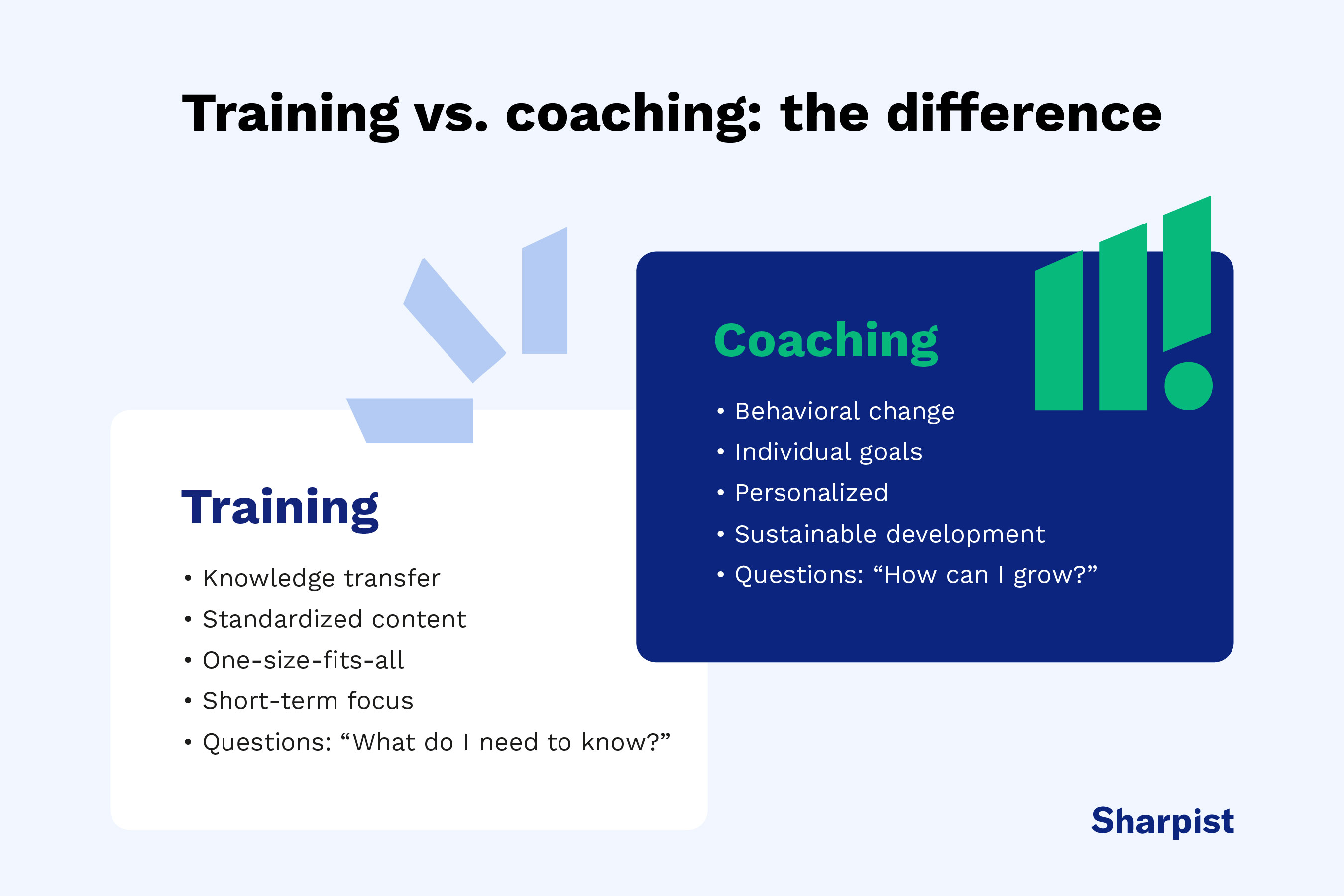
Once the problem has been identified, the obvious solution is often reached for: a leadership training. A workshop on delegation. A seminar on trust-based leadership. The knowledge conveyed there is often sound and valid. The problem lies not in the content – it lies in the transfer.
The Transfer Gap describes a well-known phenomenon from learning research: insights gained in a protected training environment rarely survive the demands of everyday life. The leader returns. The first pressure hits. And within days or weeks, the old behavioral patterns are active again – not because the leader didn't want to change, but because behavioral change without continuous support in a real-world context simply does not work.
This very mechanism is addressed in the Sharpist webinar "How HR Plays a Strategic Role in Times of Instability": leaders don't need more knowledge inputs – they need a structured space for reflection that is close to their leadership reality and works continuously. The structural difference between training and coaching is not the depth of input, but the duration and contextual proximity of the support.
How Coaching Structurally Reduces Micromanagement: Three Mechanisms That Work
Coaching does not work through insight alone. It works because it activates three specific mechanisms that training structurally cannot deliver:
100% Retention Despite Transformation: What Miro Teaches Us About the End of Micromanagement
Miro, the collaborative workspace tool with over 1,700 employees, faced – following a wave of layoffs and strategic restructuring – exactly the scenario that encourages micromanagement: loss of trust, uncertainty, and a growing need for control at the leadership level.
The People team opted for a targeted approach: rather than a blanket leadership training, Miro identified so-called "culture amplifiers" – employees with a high degree of influence on company culture – and offered them coaching as a personal benefit. Explicitly not as a corrective measure, but on a voluntary basis.
The results, documented in the Miro Case Study:
What Miro demonstrates: coaching during high-pressure phases interrupts the vicious cycle of insecurity, control, and loss of trust at a structural level – and this is transferable to any organization in which leaders are operating under pressure.
Systematically Reducing Micromanagement with Sharpist – and Leading with Measurable Impact
Sharpist operationalizes exactly the three mechanisms that structurally reduce micromanagement: 1:1 coaching with precisely matched coaches, AI-supported moments of reflection between sessions, and concrete micro tasks that integrate behavioral change into everyday leadership practice.
The process follows a clear logic:
Three mistakes HR teams frequently make when introducing coaching:
97% of Sharpist clients would recommend the platform. Companies such as LVMH, IKEA, and Miro have demonstrably changed leadership behavior with Sharpist – with measurable results that are specifically attributable to the Sharpist approach.
Micromanagement is not a leadership problem that resolves itself – but it is one that can be resolved with the right system. Discover how Sharpist supports leaders in DACH organizations in reducing micromanagement and what measurable results are achieved.
Get in touch now with no obligation – and find out how Sharpist structurally reduces micromanagement in your organization.
FAQ
What Is Micromanagement and How Do I Recognize It?
Micromanagement describes a leadership style in which managers control every step of their employees' work instead of delegating tasks and responsibility. Typical signs: decisions are systematically blocked or withheld, employees must check in for every minor matter, leaders correct work results even when they meet the objective, and the team develops little initiative because it has learned to wait for approvals.
Why Don't Leaders Simply Stop Micromanaging?
Because knowledge alone does not change behavior. Almost all leaders who micromanage know that it is harmful. The problem is the Transfer Gap: insights from training are immediately overwritten by ingrained behavioral patterns under everyday pressure. Behavioral change requires continuous reflection in a real leadership context – and that is precisely what coaching delivers.
What Are the Consequences of Micromanagement for the Organization?
The consequences affect multiple levels simultaneously: employees lose accountability and motivation, which increases turnover rates. Leaders are chronically overloaded because they work operationally rather than strategically. And the organization loses scalability because decisions are concentrated at a single point that cannot scale.
How Long Does It Take to Reduce Micromanagement Through Coaching?
Initial behavioral changes are often measurable within just a few weeks of coaching – particularly in willingness to delegate and in the team's psychological safety. Sustainable change that remains stable even under pressure typically requires 3 to 6 months of continuous support.
Can Coaching Be Effective for Leaders at All Levels?
Yes – provided the matching is right. Sharpist works with leaders from team lead level through to C-level. A generic coach pool that treats all levels the same produces significantly weaker results than targeted contextual matching.
What Distinguishes Digital Coaching from Traditional Leadership Training?
Three key differences: firstly, individuality – coaching addresses the specific leadership behavior of a single person. Secondly, everyday integration – coaching works continuously within a real leadership context. Thirdly, measurability – coaching outcomes can be demonstrated with concrete KPIs. These three differences explain why coaching closes the Transfer Gap that training leaves open.
.avif)


.png)




.svg)


%20(1).avif)