



.png)
.png)
.svg)

.png)
.png)


.png)


.png)


.svg)


.svg)

Monday morning: a key leader resigns and there's no successor in sight. Those who only act once roles are vacant pay twice – in cost and in trust. How the shift from reactive to strategic HR work succeeds and what measurable impact it has is shown by companies already using Sharpist for scalable, data-driven coaching programs.
The Topic in a Nutshell
When HR Only Puts Out Fires: The Hidden Costs of Reactive Mode
The cycle is familiar: an important position opens up, recruiting starts under pressure, a new employee is hired and onboarded, and it takes months before productivity returns to its previous level. Then the cycle starts again.
What's often underestimated: visible recruiting costs are only part of the equation. Knowledge transfer breaks down, teams lose stability, and leadership continuity suffers. HR teams that operate permanently in reaction mode simply have no capacity for what strategic HR work is really about: identifying potential early, building leadership pipelines, and actively shaping culture.
So why does HR remain reactive anyway? Operational overload, short-term budget battles, and a lack of data to justify a proactive case all mean the next fire always feels more urgent than prevention.
Proactive Talent Development: What It Actually Means
Proactive talent development is not an HR buzzword. It describes a concrete organizational decision: to invest in the continuous build-up of skills, leadership pipelines, and resilience before an acute need arises. Three elements make the difference in practice:
What this looks like in practice is shown by PALFINGER: through the targeted use of Sharpist coaching programs for leaders in a shopfloor context, absenteeism dropped by 20%. Not an abstract effect, but a directly measurable business impact.
Talent Retention in a Crisis: What Miro Proved With 100% Retention
The toughest test of proactive HR work isn't everyday operations – it's transformation. When companies restructure, lay off staff, and realign strategically, it becomes clear whether development investments were sustainable.
Miro, the collaborative workspace platform with around 1,700 employees, faced exactly this situation. The People team decided against a generic coaching rollout and instead opted for a targeted program with Sharpist: aimed at culture carriers and particularly affected employees, positioned as a personal benefit – not as an obligation and not as a reaction to underperformance.
The results after four months and 207 coaching hours: 100% retention of coaching participants, a 25% increase in employee confidence, and a satisfaction rating of 4.9 out of 5 stars for the sessions. What Miro did is no isolated case. It's a model.
The Numbers HR Decision-Makers Show Their CFO
The most common objection to coaching investments is lack of measurability. Sharpist customers counter this objection with concrete numbers.
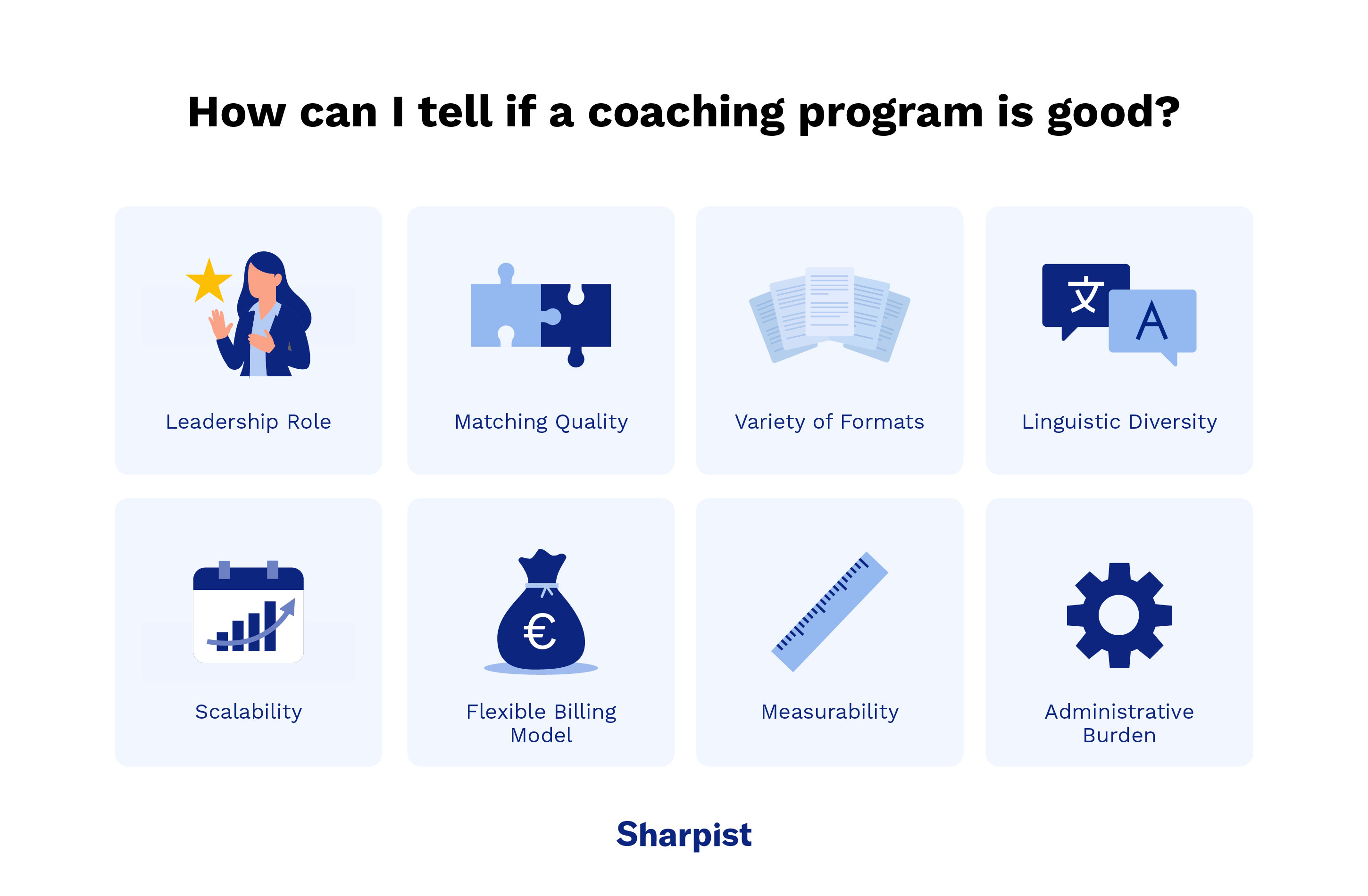
These results don't happen by chance. They're the result of programs with clear goal definition, individual coach matching via the Sharpist coach network of 1,500+ certified coaches in 55+ languages, and ongoing success measurement via the L&D dashboard. Susanne Mayer of PALFINGER emphasizes that measurability is not just a nice-to-have for HR – it's the foundation for legitimacy and budget justification within the company.
Three Strategies for Making the Shift to Strategic HR
The shift from reactive to strategic HR work isn't a question of motivation – it's a question of the right decision points. Anyone who wants to embed proactive talent development as a lasting organizational principle needs three levers.
How Sharpist Turns HR Into a Strategic Business Driver
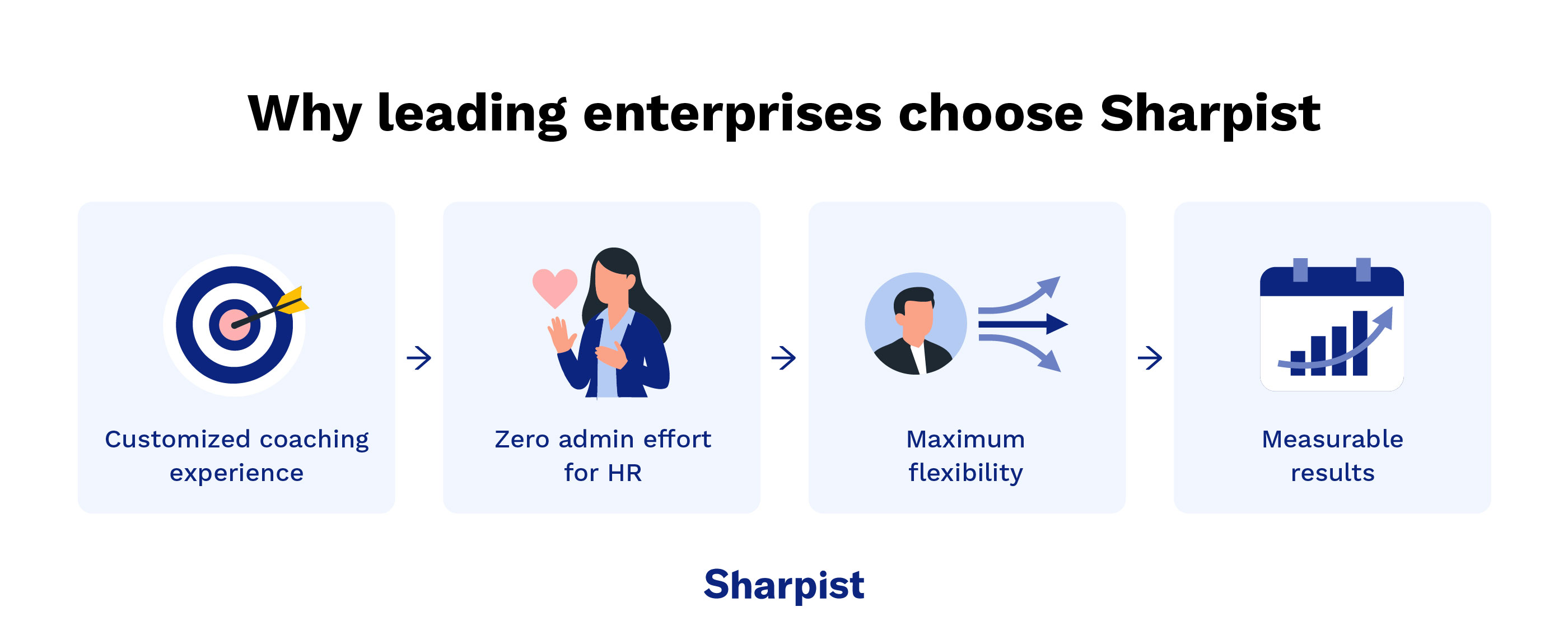
Strategic HR doesn't mean letting go of operational tasks. It means combining both: day-to-day work and the long-term build-up of leadership capacity, retention resilience, and measurable talent ROI. Sharpist is the platform that makes this shift structurally possible.
Find out how Sharpist can turn your HR department into a strategic business driver too. Schedule a demo now.
FAQ
What's the difference between reactive and proactive talent development?
Reactive HR acts once a problem is already visible – vacant positions, declining performance, high turnover. Proactive talent development invests continuously in skills, leadership pipelines, and resilience before the need becomes urgent. The difference isn't in intent, but in the timing of the intervention.
How can HR measure the ROI of coaching programs?
Measurable KPIs for coaching programs include retention rates, changes in leadership index, absenteeism rates, and activation rates. Sharpist customers such as LVMH (+18% leadership competencies) and IKEA Switzerland (+8–10% leadership index) use the Sharpist L&D dashboard for real-time tracking and industry comparisons.
How can talent retention succeed during a corporate transformation?
Talent retention during times of crisis succeeds when development measures are targeted at the specific employees affected and are perceived as a genuine benefit, not a control mechanism. With this approach and Sharpist coaching, Miro achieved 100% retention of program participants during a deep transformation.
What makes HR a strategic business partner?
HR becomes a strategic business partner when decisions are based on data, leadership pipelines are built proactively, and the case for talent investments can be made convincingly to leadership. This requires programs with measurable impact and an infrastructure for continuous tracking.
How do coaching programs scale in large organizations?
Scalable coaching programs rely on individual matching, flexible resource models, and central governance. Sharpist enables rollouts across multiple locations and languages, with a coach network of 1,500+ certified coaches in 55+ languages and a credit system that doesn't expire but can be reallocated.
.avif)







.svg)


%20(1).avif)