



.png)
.png)
.svg)

.png)
.png)


.png)


.png)


.svg)


.svg)

A promotion to leadership fulfills a dream for many – yet within just a few weeks, the feeling of being overwhelmed often sets in. Why does so much talented sales talent fail after a promotion – and how can this critical role transition be successfully navigated? The answer lies in professional support. This is exactly where Sharpist comes in: with certified business coaches and personalized learning journeys, Sharpist guides new sales leaders in finding their own leadership style and driving their team to lasting success.
The Topic in a Nutshell
What Really Changes When You Transition From Sales Professional to Leader
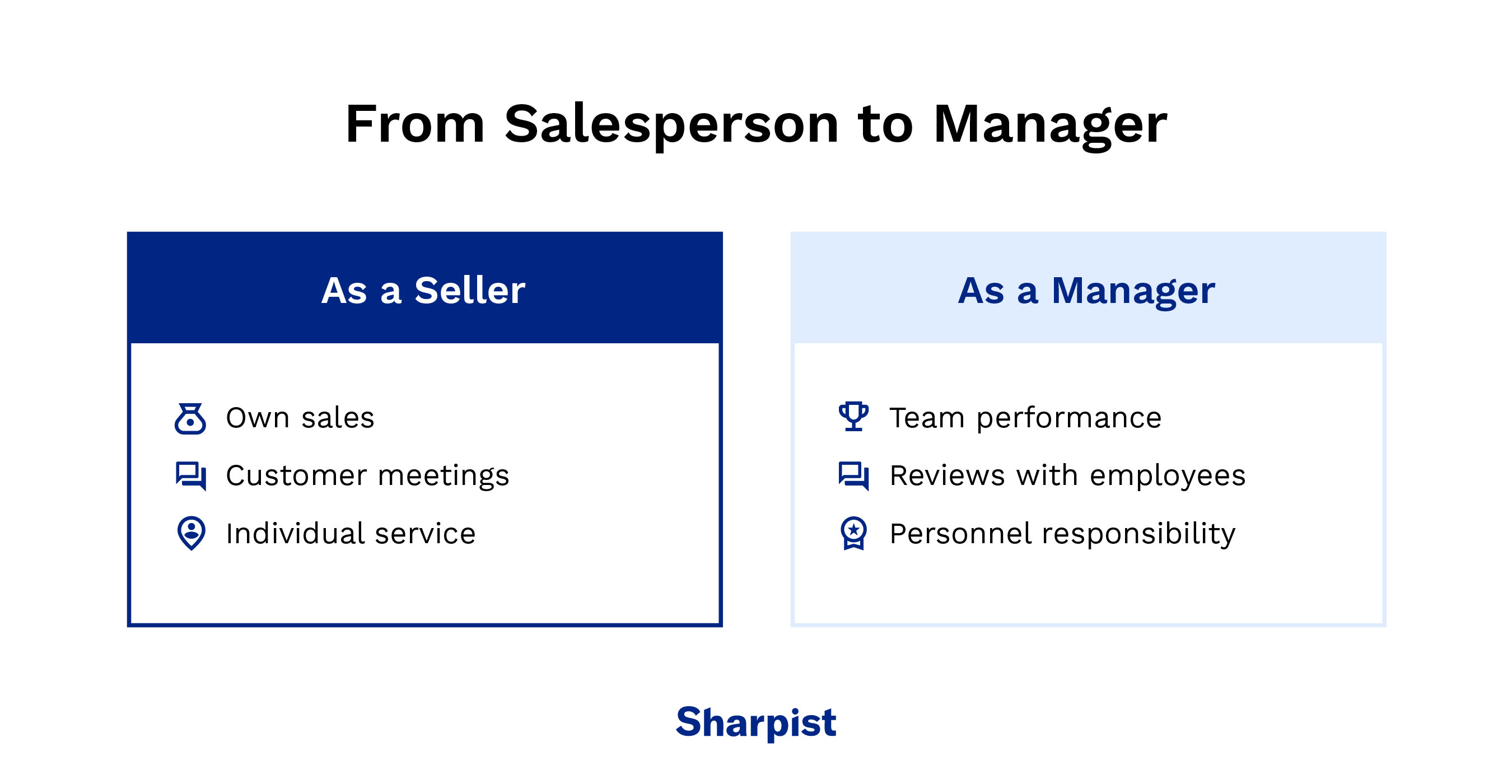
The transition from sales professional to leader marks one of the most significant turning points in a sales career. What initially feels like nothing more than a new job title is, in reality, a complete realignment of your work, your professional identity, and your definition of success. The following changes are fundamental and must be consciously embraced for the role transition to succeed.
From Individual Performance to Team Responsibility
In sales, success is unambiguously measurable: by your own closed deals, your individual quota, and your personal revenue. As a sales leader, this perspective shifts radically. Success is now measured by team results, no longer by individual performance. The central question is no longer "How can I sell better?" but rather "How does my sales team need to operate in order to succeed?"
The leader becomes a multiplier: a great salesperson influences one quota, a great sales leader influences ten or more. This shift in perspective must be consciously embraced – without it, the new leader remains stuck in an individual contributor mindset.
This is precisely where professional coaching from Sharpist comes in: it helps new sales leaders make this mental shift in a structured way and redefine their own role. With Sharpist's certified business coaches, this process happens faster and with greater lasting impact.
Leadership Style Instead of Sales Style
The required competencies change fundamentally. As a sales professional, deep product knowledge and the ability to close deals were paramount. As a sales leader, however, the focus shifts to guiding employees toward success. Authoritative leadership models no longer work – what's needed is a collaborative, situational leadership style with coaching elements. Key leadership competencies that now matter:
People Responsibility as a New Reality
The new position brings with it a range of administrative and strategic responsibilities that many new leaders underestimate: conducting performance reviews, setting goals, managing conflicts, recruiting, and carrying out performance evaluations. Many new leaders would prefer to delegate these tasks and continue focusing on what they do best: selling. But that is precisely the wrong path.
People responsibility is not a burdensome obligation – it is the core of the job. On top of that, rather than managing only your own pipeline, you now need to ensure pipeline discipline across multiple team members. This requires systematic sales processes and clear behavioral standards for the entire sales team. These responsibilities demand time and attention that is no longer available for personal selling activities. Those who fail to accept this will struggle in a leadership role.
Managing Former Teammates – the Underestimated Challenge
One of the most complex challenges is the social dynamic: yesterday a peer, today a leader with authority. Some former teammates react with envy, others withdraw or test boundaries. The new leader must learn to set professional boundaries without coming across as cold or arrogant. The tension between closeness and distance is delicate: too much closeness undermines authority, while too much distance feels off-putting.
Authenticity and clear communication norms are essential here. Team norms and values developed together with the sales team can strengthen cohesion and ease this transition period. This balance must be found individually – and professional support through coaching is the key to success here. Sharpist's certified business coaches help new leaders find exactly this balance: between closeness and distance, between authority and trust.
Typical Pitfalls on the Path to Becoming a Sales Leader
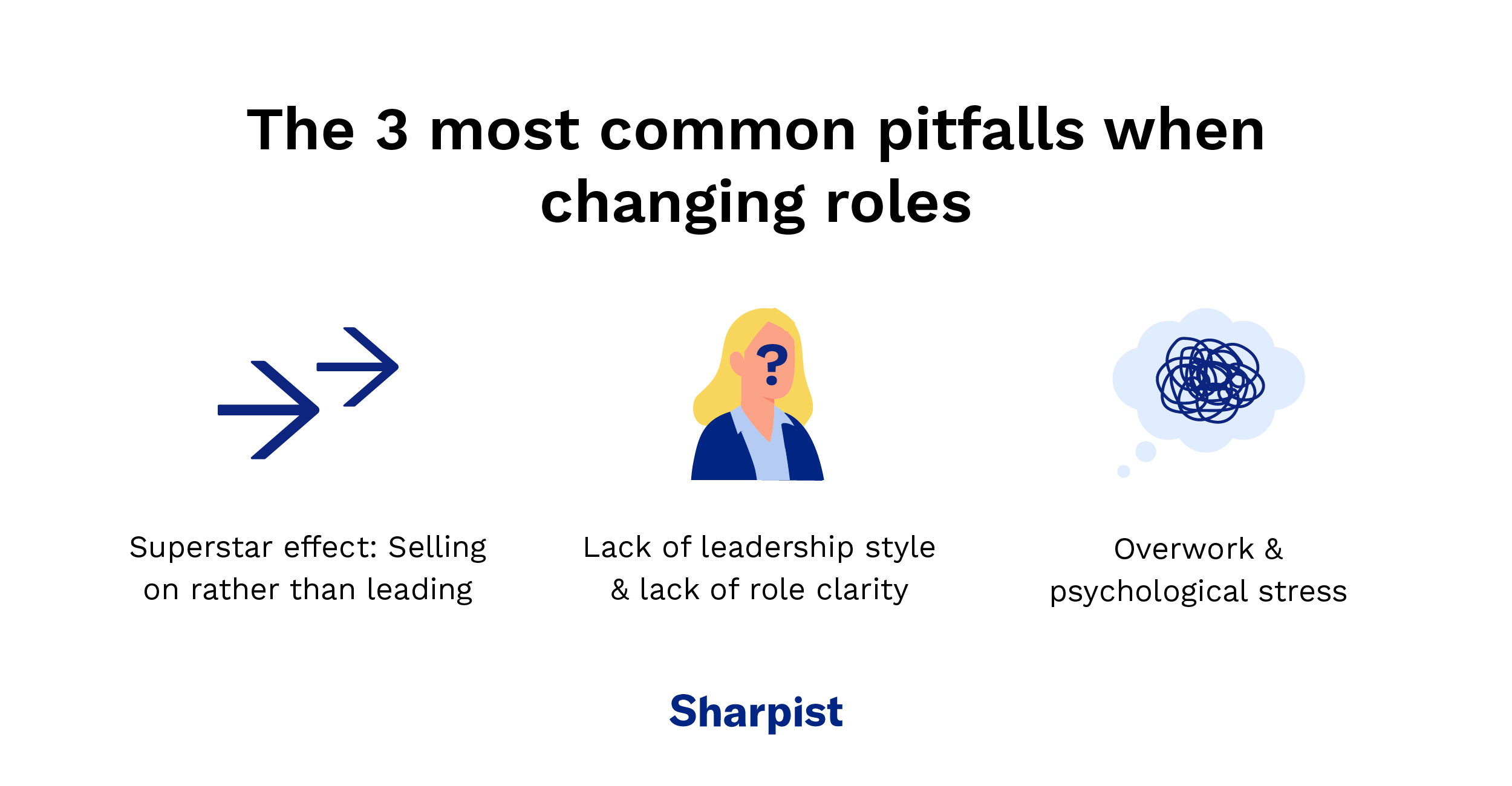
The road to becoming a successful sales leader is filled with traps that even the most talented sales professionals fall into. These pitfalls are well known – yet they repeat themselves time and again. Those who recognize them early can course-correct and navigate the transition successfully.
The "Superstar Effect": Continuing to Sell Instead of Leading
The most common issue with new sales leaders: they try to remain the best salesperson on the team. When problems arise, they pick up the phone themselves, take over critical client meetings, or jump in on stalling deals – rather than developing their team members. True coaching means observing team members during client meetings, giving constructive feedback, and helping them grow into the best version of themselves, not mini-versions of the leader.
Warning signs of the superstar effect:
Those who recognize these patterns in themselves should urgently course-correct and realign their priorities. Sharpist's certified business coaches help new leaders identify the superstar effect early and deliberately move past it – before it becomes a real burden for the entire sales team.
Lack of Leadership Style and Role Clarity
New leaders often don't know how to lead. They oscillate between being a buddy and an authority figure, between laissez-faire and micromanagement. This unclear positioning has direct consequences: team members don't know how to behave, trust erodes, and motivation within the sales team declines. Clarity and consistency are the most important leadership tools.
A consistent, authentic leadership style is not innate – it must be developed. Modern sales leadership is oriented toward transformational leadership: transforming self-centered, individual goals into long-term, shared objectives. The leader inspires through example, fosters intrinsic motivation, and develops each team member individually. This leadership style does not emerge on its own – it requires professional development and regular coaching to reflect on and evolve personal behavioral patterns. Sharpist supports new sales leaders in this process with tailored learning journeys and certified business coaches who deliberately strengthen and reinforce their individual leadership style.
Overwhelm and Psychological Strain
The emotional dimension of the role transition is often underestimated. New leaders feel overwhelmed by the sheer volume of new responsibilities: people management, conflict resolution, strategic planning, reporting. They try to meet everyone's expectations, bend over backwards in all directions, and lose their authenticity in the process. The risk of burnout is real: constant availability, pressure from above via senior management, expectations from below via the team, and often a lack of support.
Emotional intelligence and self-reflection are critical here – yet many new leaders have not developed these skills sufficiently. The statistics are sobering: many new leaders fail within the first 18 months, not because they can't sell, but because no one taught them how to lead. These challenges make one thing clear: professional support is not a nice-to-have – it is a necessity for a successful transition from sales professional to leader.
Why the Role Transition Requires Professional Support
Learning by doing may work in sales, but when it comes to transitioning into leadership, it frequently leads to a dead end. Leadership can be learned – but it requires systematic support. Without professional guidance, the same mistakes repeat themselves, and talented sales professionals fail in leadership roles that they could have mastered with the right preparation.
Professional support happens on three levels:

Conclusion: Leadership in Sales Is a Skill – Learn It With the Right Support From Sharpist
The transition from sales professional to leader requires fundamental changes in perspective, competencies, and professional identity. The typical pitfalls – from the superstar effect to a lack of role clarity to overwhelm – are well known and can be avoided with the right support. The key is not to leave the transition to chance, but to approach it systematically. This is exactly where Sharpist comes in:
Turn the role transition into a success story. Book a personal consultation now and find out how Sharpist sustainably develops your sales leaders.
FAQ
What Skills Do I Need as a Leader?
As a sales leader, you primarily need empathy and emotional intelligence to develop your team members individually. Coaching skills matter more than pure technical expertise – your job is to help employees grow into the best version of themselves, not copies of you. The ability to delegate, a strong feedback culture, and strategic thinking round out the profile. The decisive difference from sales skills: you are no longer closing deals – you are driving people to success.
How Long Does It Take to Settle Into a Leadership Role?
The first 100 days are critical for the role transition, but the full transformation typically takes 12 to 18 months. During this time, new behavioral patterns must be established, leadership competencies built up, and your identity as a leader solidified. With professional support through structured development programs and regular coaching, this process can be significantly accelerated and made more successful. Without support, many new leaders fail within the first 18 months.
What Role Does Coaching Play in the Transition From Sales Professional to Leader?
Coaching is central to successful leadership: it enables reflection on your own behavior, the development of an authentic leadership style and personal strategies, and the ability to navigate concrete challenges such as conflict management and difficult employee conversations.
How Can Organizations Support New Sales Leaders?
Organizations should establish structured onboarding programs for new sales managers that convey the fundamentals of leadership and create role clarity. Regular coaching sessions help address individual challenges, while mentoring by experienced leaders provides orientation. Clear expectations and goals from the outset prevent overwhelm. Sharpist supports organizations with scalable leadership development: from potential analysis to personalized learning journeys and continuous coaching. Turning strong sales professionals into successful leaders who drive their teams to lasting success.
.avif)



.png)



.svg)


%20(1).avif)