



.png)
.png)
.svg)

.png)
.png)


.png)


.png)


.svg)


.svg)

The situation is paradoxical: ironically, those responsible for mental health and well-being in companies are themselves suffering from extreme stress and exhaustion. The problem is that HR takes care of everyone – except themselves. In addition to specific strategies for burnout prevention specifically for HR employees, learn how personal resilience can be strengthened and systemic problems addressed. Sharpist supports this process through targeted coaching and awareness-raising among managers.
The Topic in a Nutshell
Causes of Burnout in HR
HR is caught between two stools. On the one hand, HR teams are supposed to provide strategic business support for management, but on the other hand, they are suffocating under administrative tasks. The pandemic, the shortage of skilled workers, and waves of resignations have further increased the pressure. While other departments seek support from HR, the question remains: Who supports HR?
The world of work has undergone fundamental change – and HR is bearing the brunt of these changes. Remote and hybrid models require new management concepts that HR must develop and communicate. At the same time, expectations are rising: HR is not only expected to recruit and manage, but also to shape corporate culture, retain employees, and deliver measurable business results. This multiple burden creates a toxic mix of excessive demands, time pressure, and emotional exhaustion.
The main causes of burnout in HR:
Particularly problematic: Many HR employees see themselves as responsible and systematically neglect their own needs. They are used to being there for others – supporting employees in crises, coaching managers, mediating conflicts. This self-sacrifice is often misunderstood as professionalism, but it is a direct path to burnout.
The risk of burnout is exacerbated by structural problems: HR departments are often understaffed, while the list of tasks continues to grow. New technologies such as AI tools are intended to ease the burden, but first require training and change management. The result: HR is working at its limits – and beyond. The resilience that HR is supposed to instill in others is often lacking in its own team.

7 Tips to Prevent Burnout Among HR Employees
Burnout prevention in HR only works on two levels simultaneously: personal resilience and systemic changes. The following eight strategies combine both approaches and show concrete ways out of the overload trap. Because one thing is clear: individual stress management alone is not enough if the structural problems remain. At the same time, even the best systems cannot protect you if you lack personal boundaries.
1. Breaking the Taboo: Addressing Mental Health Within Your Own HR Team
HR organizes mental health programs for the entire company – but doesn't talk about its own stress in the workplace. This double standard must end. While HR teams coordinate mental health workshops, roll out coaching programs, and raise awareness among managers, their own exhaustion remains a taboo subject. The issue is that people who are constantly there for others feel weak when they need support themselves.
The first step toward burnout prevention: Create safe spaces within your own team where mental health issues can be discussed openly. This does not mean that HR employees should treat each other's problems – quite the contrary. It is about recognizing that stress, excessive demands, and exhaustion are real and deserve professional support.
Specific measures for stress management in the HR team:

2. Build Personal Resilience: Learn to Set Boundaries
Resilience does not mean being able to endure more. Resilience means saying "no" at the right time. For HR employees who are used to being there for everyone, this is the most difficult challenge – and at the same time the most effective protection against burnout. Many HR professionals confuse professionalism with permanent availability – a dangerous fallacy that leads directly to exhaustion.
HR teams often see themselves as service providers who are never allowed to say "no." But it is precisely this attitude that makes them the go-to point of contact for all problems in the company – from last-minute appointment requests to emotional crises. Without clear boundaries, helpfulness quickly turns into self-sacrifice. The solution: consciously set boundaries and communicate them to ensure a healthy work-life balance.
Practical tips for setting boundaries:
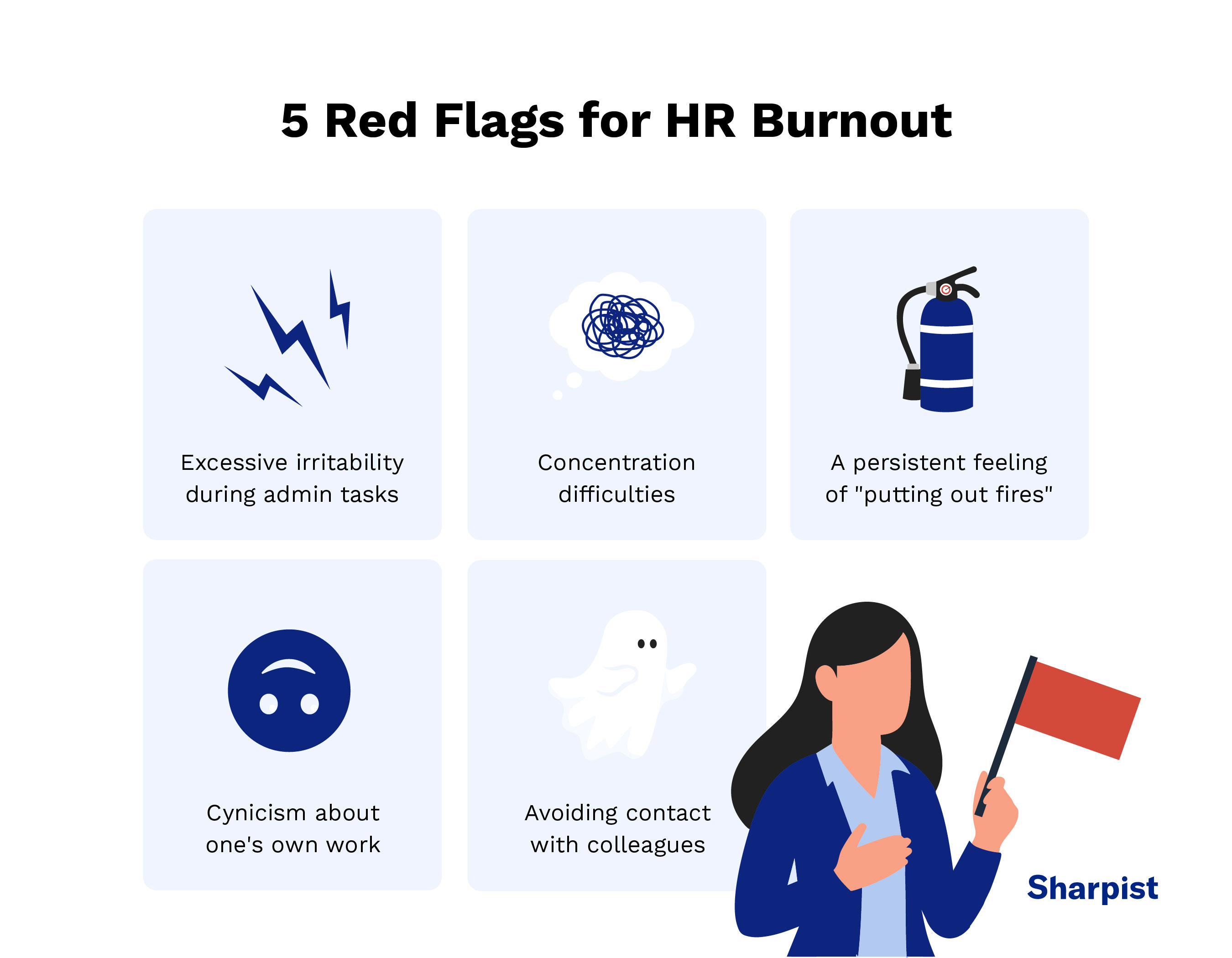
3. Take Warning Signs Seriously: The 5 Red Flags for HR Burnout
Burnout doesn't happen overnight. It creeps up on you – with warning signs that many HR employees ignore or dismiss as normal workplace stress. But it is precisely this trivialization that is dangerous. If you overlook the early signs, you risk complete exhaustion that will require months of recovery. The good news is that burnout can be prevented if you recognize the red flags in time and take action.
HR employees are masters at overlooking their own warning signs. That's why it's essential to be aware of the typical burnout symptoms and to take an honest look at yourself before your work-life balance gets out of kilter.
The 5 most common burnout symptoms in HR:
Important: If you experience two or more of these signs, you should seek professional help. This could be a coach, a psychotherapist, or a confidential conversation with an external HR network. Don't wait until sick leave due to burnout becomes inevitable. The sooner you take action, the faster you will regain your energy and well-being.
4. From Operational to Strategic: Redefining Your Own Role
The majority of HR employees do not have time for strategic work. They spend their days performing administrative tasks that should have been automated long ago. This discrepancy between expectation and reality is a major driver of burnout. Those who are constantly reacting instead of creating lose sight of the meaning in their work – a classic symptom of burnout.
The problem is structural: many companies expect strategic input from HR, but do not provide the resources or time to do so. HR teams are drowning in emails, Excel spreadsheets, and coordination loops, while the significant issues – talent development, corporate culture, and leadership development – fall by the wayside. This constant overload of operational tasks leads to frustration and exhaustion.
How to make the transformation a success:
When HR delivers measurable results in strategic areas rather than just handling administrative processes, recognition increases – an important protective factor against burnout.
5. External Expertise to Relieve the Team: HR Is Not Psychotherapy
The majority of employees expect mental health support from HR – but HR managers are not trained psychotherapists or coaches. The problem is exacerbated by unrealistic expectations: employees seek help from HR for depression, relationship problems, or anxiety disorders – issues that clearly belong in the therapeutic realm. HR becomes a dumping ground for emotional concerns in the company, without the necessary resources or skills to deal with them. This overload is one of the main reasons why HR employees themselves burn out.
A clear division of roles is essential:
Win-win situation: Employees receive professional help from qualified coaches, HR is relieved of emotional stress and can concentrate on its own core tasks. This clear distinction protects HR managers from being overwhelmed and at the same time ensures that people in the company receive the support they really need.

6. Demand for Your Team What You Organize for Others
When HR organizes coaching programs for managers, the HR team should participate in them themselves. When HR launches mental health initiatives, it should also use them for itself. Sounds obvious – but it's not. The reality is often different: HR employees roll out programs, recommend them internally, measure their impact – but don't use them themselves. This attitude robs HR teams of valuable support. The solution: HR must practice what it preaches – and do so visibly.
Why HR teams should use their own programs:
7. Raising Awareness Among Managers: HR Burnout as a Management Task
HR managers and CHROs are responsible for the well-being of their own teams. However, many are so overworked themselves that they overlook warning signs among their employees. Burnout prevention in HR starts with leadership – with a clear view of the stress levels in your own team and concrete measures to reduce it.
HR managers are caught in the same overload trap as their teams. They juggle strategic management requirements and operational problems, budget negotiations and crisis talks. This often leaves them with no time for the most important thing: listening attentively to their own team. It is precisely this distance that makes burnout invisible – until it is too late.
What HR managers can do specifically:
Sharpist's modern and digital coaching can help raise awareness among managers about issues such as burnout prevention and employee satisfaction – without burdening HR with additional administrative tasks.

How Sharpist protects HR teams from burnout
Sharpist was developed to relieve HR teams – not to burden them further. The zero-admin approach gives HR managers back their time and energy. Sharpist takes care of all the administration: matching, scheduling, tracking, reporting. HR teams save over 200 hours per year. Customers also get a personal relationship manager who provides support for all questions. This support reduces stress and ensures that programs really work – without HR having to provide support themselves.
HR employees can also book coaching sessions with Sharpist themselves – confidentially, with certified coaches outside their own organization. Topics such as stress management, setting boundaries, and dealing with emotional stress are addressed professionally. This strengthens personal resilience in the long term.
Sharpist provides clear data on impact: +18 % leadership skills at LVMH, 100 % employee retention at Miro during restructuring. These measurable results create appreciation for HR work – an important protective factor against burnout.
FAQ
Why Are HR Employees Particularly Prone to Burnout?
HR is caught between two stools: strategic requirements clash with operational overload. Added to this is the emotional strain of crisis support without therapeutic training. Half of their time is spent on administrative tasks that could be automated, while at the same time they are expected to provide strategic support. This discrepancy between expectations and reality creates enormous stress and makes HR particularly susceptible to burnout.
What Can I Do if My Team Is Already Showing Signs of Burnout?
Take immediate action: Hold open discussions, distribute workloads realistically, organize external professional help. It is important that those affected do not feel ashamed. Offer confidential coaching services outside the organization and at the same time reduce systemic stressors such as unrealistic deadlines or too many administrative tasks. The sooner you intervene, the better the prognosis.
How Can Coaching Help With Burnout When We Don't Have Time?
That's exactly the problem: not having enough time is often a symptom of burnout. Coaching helps you to reset your priorities, set boundaries, and identify time wasters. At Sharpist, sessions can be booked flexibly – even in the evenings or on weekends. Just three to five sessions can bring measurable improvements and help you get off the treadmill.
Why Use External Coaches Instead of Internal Support for Burnout in the HR Team?
HR employees cannot talk to internal colleagues about overload without risking confidentiality. They need a protected space outside the organization where there are no conflicts of interest. External coaches at Sharpist offer precisely this confidentiality – with professional training and without organizational entanglements. This creates the security necessary for honest reflection.
.avif)








.svg)


%20(1).avif)