



.png)
.png)
.svg)

.png)
.png)


.png)


.png)


.svg)


.svg)

You introduce a coaching program and meet silent resistance. The workshop manager nods politely but never signs up. The project lead says she has no time. The division head asks whether it is really necessary. HR professionals in technical and industrial companies know this resistance well. Sharpist ensures that coaching truly resonates in technical cultures, with the right format, the right entry strategy, and measurable results.
The Topic in a Nutshell
Why Technical Leaders Reject Coaching and What It Costs HR
The coaching stigma is not an information problem, it is a format problem with real costs for HR. Denise Städele (Carthago Reisemobilbau) sums up the starting point: "Coaching used to be something we did when a leader had a problem or wasn't going to stay much longer." Coaching as an outplacement measure instead of an investment in top performers, that is still the reality in many technical companies today. HR professionals in manufacturing, mechanical engineering, and production face five concrete objections that sustain the stigma:
The consequences when HR fails to address the stigma:
In 62% of Sharpist customer conversations, everything revolves around exactly this question: How do we bring employees along through transformation? The coaching stigma remains the most persistent obstacle.
What Sets Technical Leaders Apart From Those in Other Industries
To overcome the stigma, HR needs to understand why it is so deeply rooted in technical cultures. Foremen, shift supervisors, and production managers typically rise into their leadership role through technical expertise. An engineer yesterday, a team lead today. This self-image leaves little room for programs perceived as abstract or soft.
Three traits of this leadership culture make the stigma especially persistent:
On top of that comes the time problem in shift work: a fixed appointment with room booking simply does not work structurally in production. Tina Langosch (Carthago) describes online coaching as the solution: "They're standing at the line, they can use the tool without booking a room. For them, things are urgent by the minute."
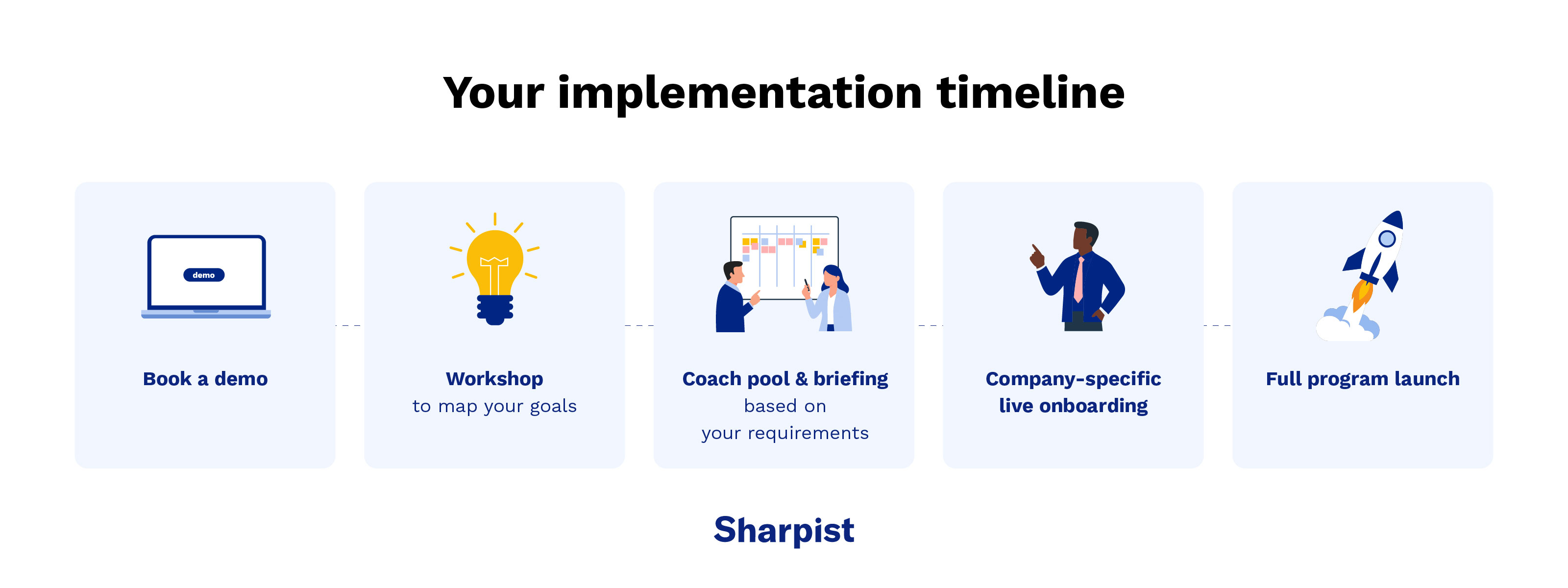
Three HR Strategies Proven to Work in Technical Companies
The coaching stigma can be overcome, but not through communication campaigns alone. The following three strategies have been tested in technical and industrial companies and have proven successful in practice.
Strategy 1: Start With the Toughest Skeptics (Top-Down)
Roland Lechner from PALFINGER chose a counterintuitive approach: not early adopters, but the toughest skeptics first, managing directors and vice presidents.
His instructions to the coaches: "I'm giving you the worst I have, the managing directors and vice presidents. Make something of it." The results after introducing Sharpist coaching at PALFINGER spoke for themselves:
Strategy 2: Let the CEO Experience It Firsthand
Denise Städele from Carthago describes the decisive turning point in her company as the moment the managing director tried coaching himself. The strategy unfolded in two steps:
"For me, the decisive moment was when the managing director tried it himself. Then I showed him: this is the dashboard, this is the aggregated data, this is what's happening right now." – Denise Städele, Carthago
Why this works in technical cultures: pragmatism and "seeing is believing" are deeply ingrained. The Sharpist platform delivers exactly this aggregated, anonymized data for HR reporting, without any insight into individual coaching content.
Strategy 3: Brand Ambassadors Instead of Mandatory Participants
Tina Langosch from Carthago gives HR professionals clear advice: "Bring along the people who want to join, because the others will follow." Starting with mandatory programs risks reinforcing the stigma. Starting with volunteers wins internal multipliers.
At Carthago, the first ambassadors did not come from the commercial side of the business:
Result at Carthago: 95% completion rate for digital coaching content and 70% active participation in micro tasks.
How Sharpist Makes It Easier for Technical Companies to Get Started
PALFINGER, Carthago, and TSR, all industrial and technical companies, have overcome the coaching stigma. The solution was a format that matches the self-image of technical leaders. Sharpist delivers this proof from the inside perspective of manufacturing and industrial companies. Four mechanisms make Sharpist particularly effective in technical cultures:
Sharpist's hybrid coaching approach combines human coaching for deep work and self-reflection, the AI coach for on-demand support between sessions, micro tasks for learning transfer, and action items for lasting behavior change. Roland Lechner from PALFINGER puts it this way: "When you think about PALFINGER's culture and the different leaders we have in production, in sales, and also the experts we have in different countries, you need this tailored solution."
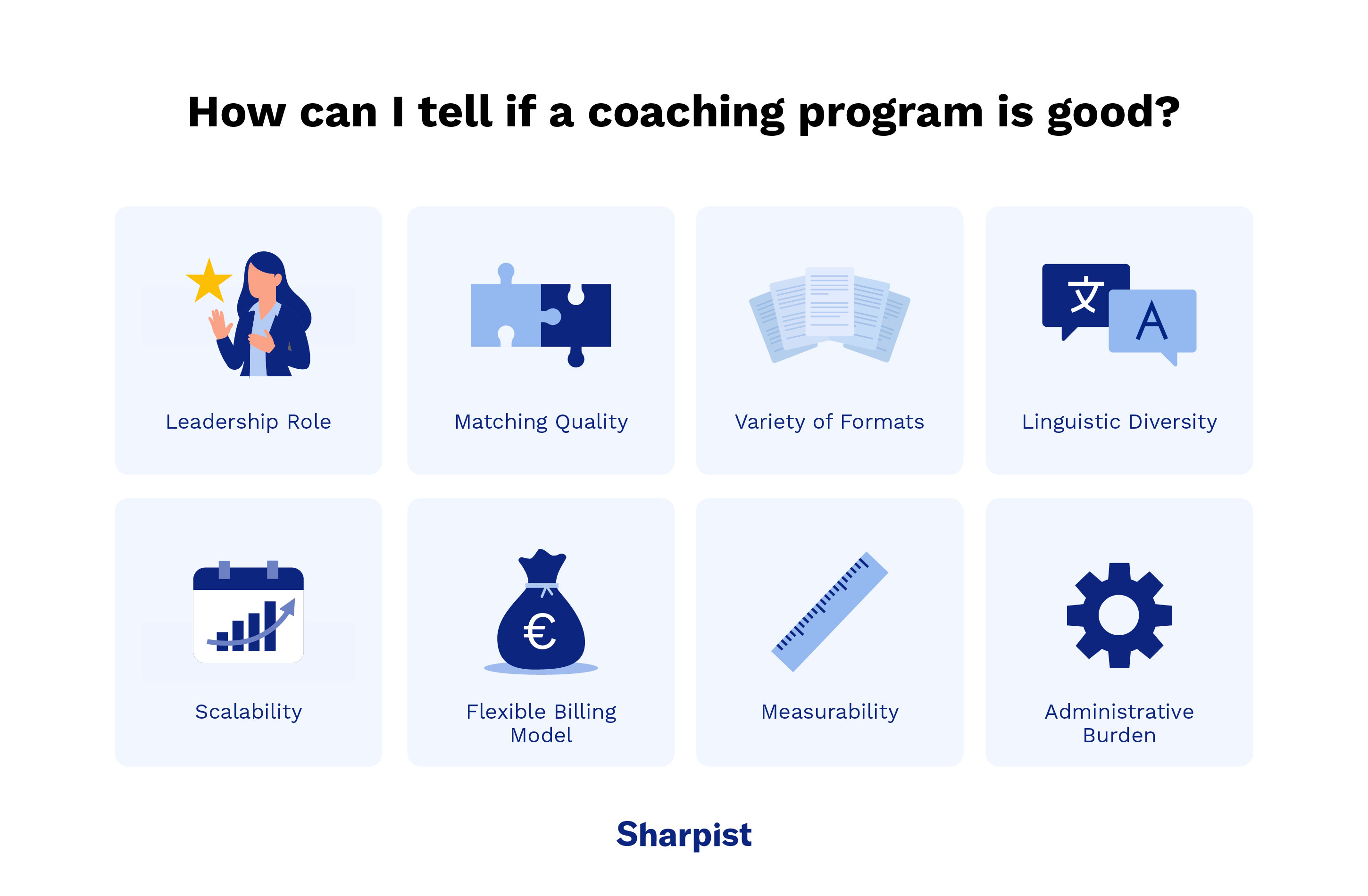
From Deficit Program to Growth Tool: How Sharpist Solves the Coaching Stigma in Technical Companies
You don't overcome the stigma with persuasive rhetoric, but with the right format, the right entry strategy, and results that speak for themselves. Companies looking to build a consistent leadership culture benefit from scalable programs across all locations and levels. Sharpist offers:
FAQ
Why Do Leaders in Technical Companies Reject Coaching More Often Than in Other Industries?
Technical leaders typically rise into their role through professional expertise. Their self-image is shaped by an engineering mindset, results orientation, and pragmatic action. Coaching was historically seen as a response to deficits or as outplacement support, a frame that is particularly persistent in industrial cultures. Sharpist customers such as Carthago and PALFINGER show that the stigma can be overcome when format and entry strategy fit the culture.
How Do HR Professionals Bring Blue-Collar Leaders Like Foremen and Shift Supervisors to Coaching?
The key lies in format fit and entering through concrete situations: "How do I handle my next difficult employee conversation?" resonates more than "How do I develop my personality?" On-demand availability without booking a room solves the time problem in shift work. The brand ambassador strategy, starting with voluntary early adopters from production, works better than mandatory programs.
What Role Does the Works Council Play in Introducing Coaching in Technical Companies?
Coaching programs are subject to works council co-determination under Sections 96–98 of the German Works Constitution Act (BetrVG). HR should involve the works council early and clearly communicate three key points: individual coaching content remains confidential, participation is voluntary, and the platform is not used for performance monitoring. When positioned correctly, the works council often becomes a co-sponsor, since coaching can be interpreted as a job-security and qualification measure.
How Do HR Professionals in Manufacturing Companies Measure the Success of a Coaching Program?
The strongest indicators are program completion rates, activation rates, 180-degree feedback on leadership competencies, and, indirectly, absenteeism rates. PALFINGER achieved a 90% completion rate and +6% in leadership competencies after Sharpist coaching. The Sharpist L&D dashboard provides aggregated, anonymized data for HR in real time, without any insight into individual sessions.
How Long Does It Take Until the Coaching Stigma in a Technical Company Is Noticeably Overcome?
There is no fixed timeline, but the top-down strategy shows the fastest effect: when senior leaders visibly use coaching, perception changes across the entire company. CEO firsthand experience can be a turning point. Brand ambassadors from production typically need about a quarter to gain traction. Realistic expectation: a measurable culture shift becomes noticeable after 3–6 months.
.avif)






.svg)


%20(1).avif)