



.png)
.png)
.svg)

.png)
.png)


.png)


.png)


.svg)


.svg)

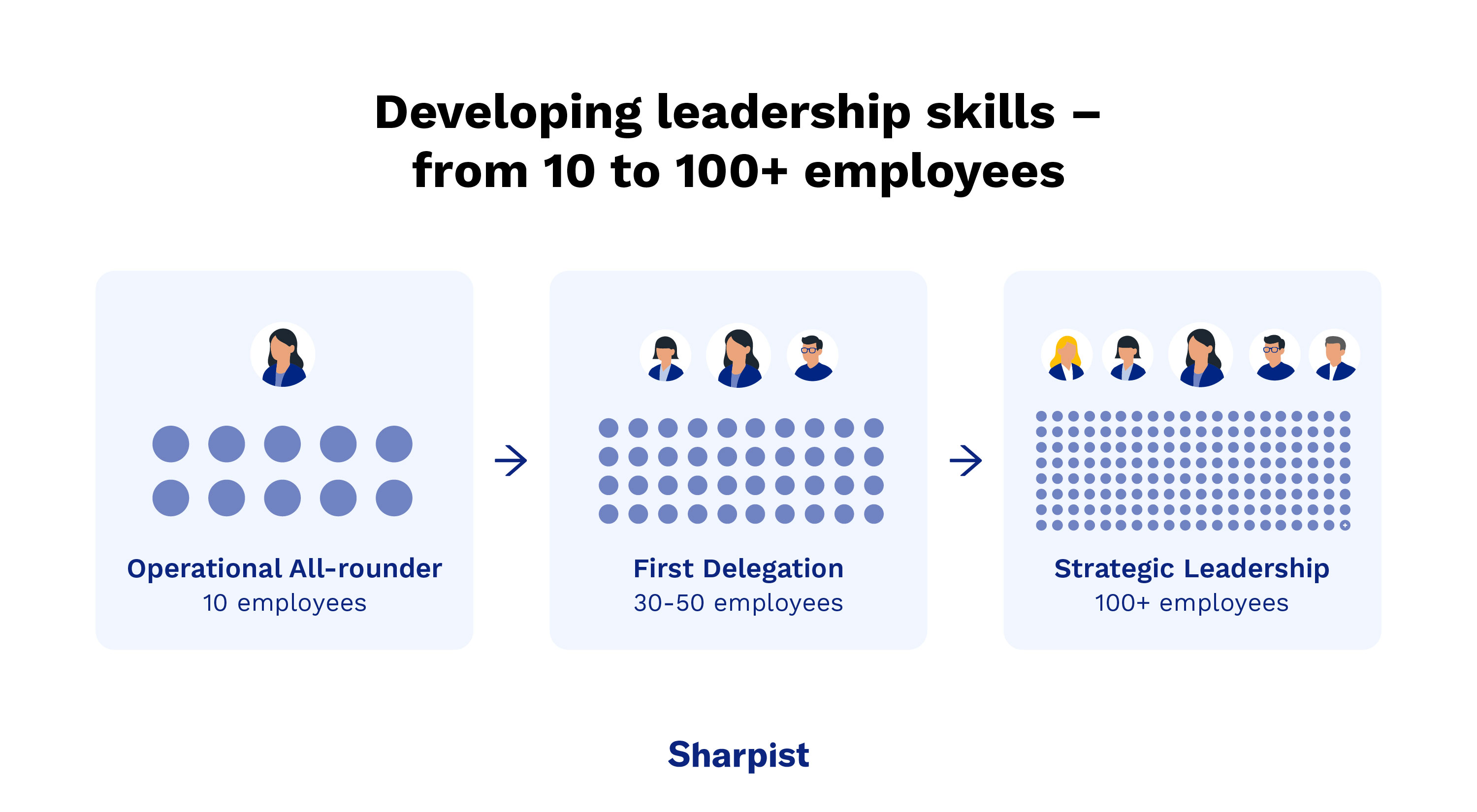
What happens to leadership when a well-coordinated team of 10 suddenly becomes an organization of 100+ employees? Decisions that used to be made over lunch now require processes. Founders get stuck in day-to-day operations, responsibilities blur, and company culture erodes under the pace of growth. This is where targeted leadership development comes in. Scalable coaching solutions like Sharpist's help scale-ups systematically prepare their leaders for the next phase.
The Topic in a Nutshell
The Biggest Scale-Up Challenges at a Glance
Scale-ups face a paradox: success itself creates the biggest problems. Growing from 10 to 100+ employees fundamentally changes communication, decision-making, and company culture. The following eight challenges are encountered by nearly every scale-up. What matters is not whether they arise, but how well leaders are prepared to handle them.
1. Leadership Role in Transition: From Doing to Managing
Founders who built their company with their own hands face a painful transition during the growth phase: they must let go of operational tasks and take on strategic leadership. Many experience delegation as a loss of control. Yet this is precisely the critical step. Without trust in a second leadership tier, management becomes a bottleneck.
Typical signs that founders are staying operational too long:
2. Missing Structures and Unclear Responsibilities
What works informally with 10 employees fails at 50 or 100. Missing org charts, unclear responsibilities, and improvised processes create friction that slows growth. A typical example: two teams working in parallel on the same problem, with no one knowing who makes the final call. The result is duplicated effort, frustration, and lost time.
That's why responsibilities should be defined early and structures built before chaos sets in. Leadership development through Sharpist addresses exactly this. Leaders learn to create clear structures, distribute responsibility, and design processes that scale with the company.
3. Company Culture Under Pressure
Rapid growth dilutes culture. New employees bring their own values and ways of working. The sense of "we" from the early days is lost when culture is left to chance. The solution: factor in cultural fit during recruiting, establish structured onboarding, and actively live the company values rather than just posting them on the wall. Company culture is a leadership responsibility. Leaders must be equipped to fulfill it.
4. Talent Shortages and High-Speed Recruiting
Scale-ups need to plan for key roles 12–24 months in advance rather than filling them reactively. According to studies, bad hires cost 1.5 to 3 times an annual salary and slow the entire team down. Strategic workforce planning, employer branding, and realistic role profiles are essential.
The 3 Most Costly Recruiting Mistakes in Scale-Ups:
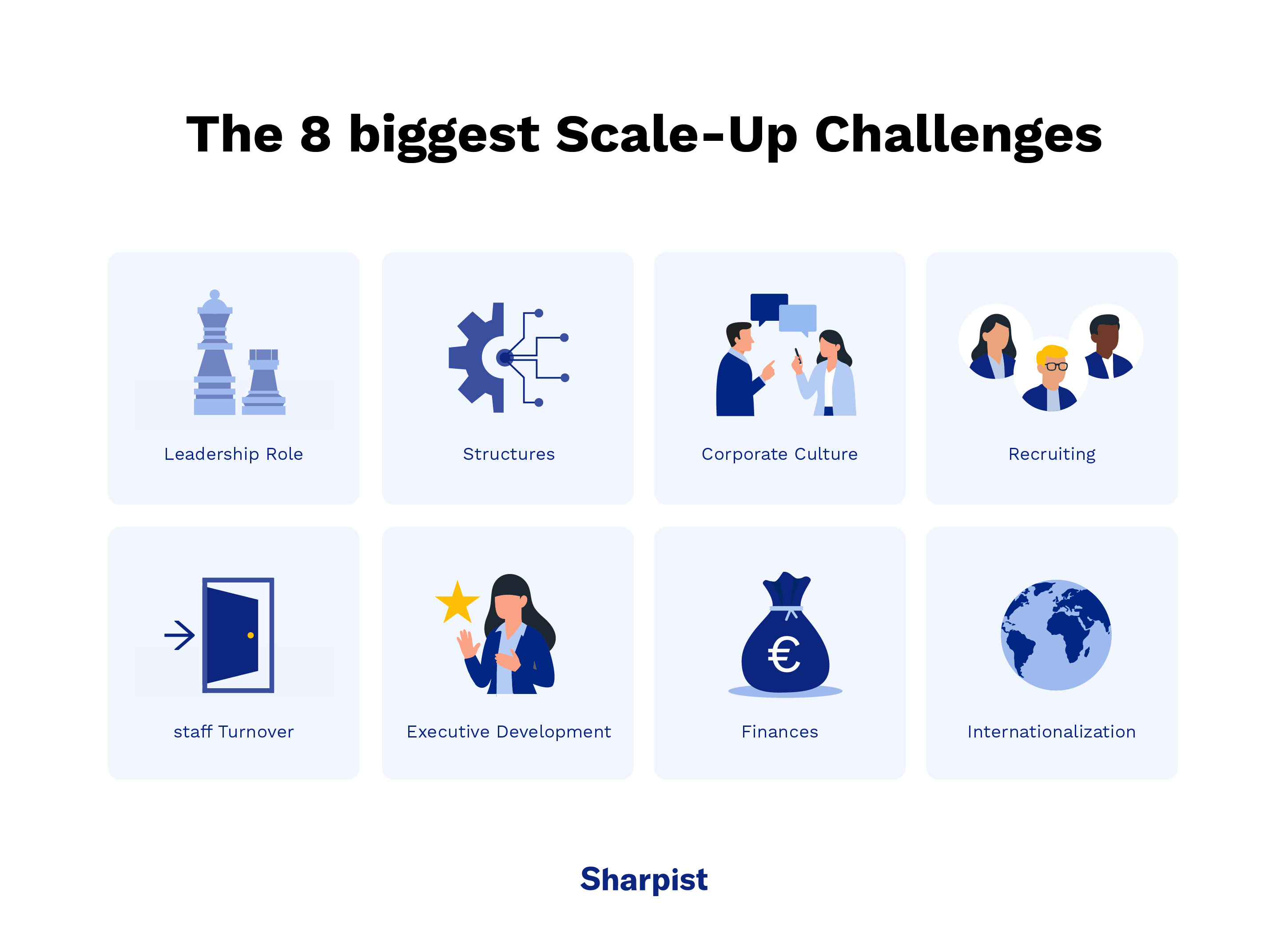
5. Employee Retention and High Turnover
Top talent leaves scale-ups when there are no development prospects. High performers in particular expect clear career paths, regular feedback, and recognition. Without these elements, turnover rises – and with it, valuable knowledge and team dynamics are lost. What top talents expects from scale-ups:
At Miro, targeted leadership development with Sharpist led to 100% talent retention during a restructuring.
6. Leaders Who Don't Grow With the Company
Many scale-ups promote their best individual contributors into leadership roles without preparing them for the new position. The result: overwhelmed team leads and frustrated teams. Leadership capability is not innate. Someone who excelled in an operational role yesterday needs entirely different skills today.
External support through coaching significantly accelerates this development. Sharpist offers a scalable solution here: 1:1 coaching with certified coaches. Sharpist's 32 focus areas cover the full spectrum – from self-leadership and people management to strategic leadership. This way, leaders grow alongside the company.
7. Financial Management and Liquidity During Growth
Growth requires capital. New employees, offices, technology: without solid financial structures, scale-ups can quickly run into liquidity bottlenecks. Cash management, forward-looking financial planning, and managing investor expectations become central responsibilities.
CFOs and finance leads also need leadership skills. In the growth phase, they must communicate priorities, manage teams, and support strategic decisions. Coaching helps sharpen strategic thinking and professionally manage the financing of growth.
8. Internationalization and Scalability of the Business Model
Many scale-ups think too late about international expansion. Processes are documented only in one language, intercultural competence is lacking, and the business model doesn't easily transfer to other markets. Intercultural leadership, scalable processes, and the ability to manage multilingual teams become critical success factors.
Sharpist supports scale-ups in internationalization with coaching in 55+ languages and a global coach pool of over 1,500 certified coaches. This ensures leaders worldwide receive the same quality of development, regardless of location or language.
Mastering Scale-Up Challenges Through Targeted Leadership Development
Missing structures, eroding culture, overwhelmed team leads: the challenges described above may seem different at first glance. But they share a common denominator. At their core, most scale-up problems are leadership problems. If leaders don't grow with the company, sustainable growth falls short.
That's precisely why leadership development during the scaling phase is business-critical. Traditional methods such as two-day seminars or generic workshops quickly reach their limits. They happen too infrequently, are not tailored to individual challenges, and deliver no measurable results.
Digital coaching solves exactly these shortcomings. It offers scalability, personalization, and measurability in a single approach. Sharpist combines 1:1 video coaching with over 1,500 certified coaches. The results speak for themselves: at LVMH, leadership capabilities improved by +18%.
Conclusion: How Sharpist Supports Leaders on the Journey from 10 to 100+
Mastering scale-up challenges means above all one thing: developing leaders systematically. Those who don't invest here risk growth outpacing the organization. Sharpist offers scale-ups exactly the solution that grows with the company. The platform combines 1:1 video coaching with certified coaches and over 2,000 micro tasks into a scalable development program.
With a flexible credit system, coaching in 55+ languages, and a coach-matching success rate of 97% on the first attempt, leaders worldwide receive the support they need during the growth phase. Book your personal demo directly!
FAQ
What Is the Difference Between a Startup and a Scale-Up?
A startup is still searching for its product-market fit and testing business models. A scale-up has already validated a working model and focuses on fast, structured growth. Key indicators include rising revenues, growing teams, and the development of professional leadership structures.
When Should a Founder Start Delegating Leadership Responsibility?
By the time a company reaches 15–20 employees at the latest, founders should begin actively delegating leadership responsibility. The key indicator: when operational decisions regularly depend on one person and strategic work suffers as a result, it's time for a second leadership tier.
How Can Company Culture Be Preserved During Rapid Growth?
Through clearly defined values, structured onboarding, and leaders who actively embody that culture. Culture must not be left to chance. It needs to be documented, communicated, and embedded in decision-making processes. Regular feedback and cultural coaching support this process.
What Competencies Do Leaders Particularly Need During the Scale-Up Phase?
Delegation, strategic thinking, communication within growing teams, conflict management, and the ability to build structures. Equally important: self-reflection and adaptability. Leaders must develop just as quickly as the company. Targeted programs like digital coaching accelerate this process.
How Does Targeted Coaching Support Leaders in Growing from 10 to 100+ Employees?
Coaching gives leaders a protected space to reflect on new challenges and develop concrete solutions. Digital platforms like Sharpist make this scalable through 1:1 sessions with certified coaches.
.avif)








.svg)


%20(1).avif)