



.png)
.png)
.svg)

.png)
.png)


.png)


.png)


.svg)


.svg)

Anyone who needs to fill a critical leadership position in three years should know today who that person is and how far they are from being ready. In practice, it looks different: nine out of ten mid-sized companies have no planned succession for management positions. What's missing is not awareness of the problem, but a functioning framework that brings identification, development, and measurement together – and that's exactly where Sharpist comes in.
The Topic in a Nutshell
Why Succession Planning Is No Longer Optional in 2026
Nearly 13 million working people will retire by 2036 – almost a third of all those currently employed. According to Germany's Federal Statistical Office (Mikrozensus 2023), an above-average number of employees in shortage occupations belong to the Baby Boomer generation. For companies with decentralized structures, long onboarding periods, and technically driven leadership roles, this is not an abstract future forecast but an ongoing risk scenario.
At the same time, a global survey by Wharton Executive Education (2026) of more than 2,500 executives shows: 86% consider succession planning to be critical, yet 70% find long-term planning futile because organizational charts change faster than succession plans. This is not an argument against succession planning – it's an argument against the wrong model of it.
What follows? Anyone who treats succession planning as an assignment process – Person A for Role B – will fail the moment the role changes. Those who instead focus on readiness – that is, the systematic development of leadership competencies independent of a specific target position – create a pipeline that holds up even under changed conditions.
The 5 Phases of Strategic Succession Planning
Strategic succession planning doesn't follow a random principle, but a clear process: from risk analysis to structured handover. The following five phases map out this process and show what really matters in practice.
Phase 1: Identify Key Positions and Assess Risks
Not every leadership position is equally critical. The starting point is a systematic risk analysis combining two dimensions: the probability of a vacancy (age, turnover, transformation pressure) and the potential damage to the organization if the position remains unfilled. Positions with a high risk index – that is, high vacancy probability combined with high damage potential – take priority. For each of these positions, the current Bench Strength should be assessed: how many qualified internal employees are ready? A ratio of 2:1 or 3:1 is considered solid.
Phase 2: Define Competency Profiles Instead of Copying Job Descriptions
Succession planning often fails because competency profiles are derived from existing job descriptions – that is, from the past. Forward-looking profiles ask: What competencies will this role require in three to five years? For many organizations, this means placing greater emphasis on cognitive agility, transformation capability, and cross-functional thinking than on technical expertise. Sharpist structures development paths along 32 focus areas in four categories: self-leadership, people leadership, organizational leadership, and strategic leadership – a framework that can be used both for benchmarking and for development planning.
Phase 3: Identify Suitable Employees and Clarify Motivation
This is a blind spot that generic checklists consistently overlook: many employees ultimately discover that they don't actually aspire to a leadership role. Anyone who nominates employees without clarifying their true motivation is planning on false premises. Motivation clarification is therefore not an optional factor, but a critical process step before any development investment.
For identification itself, the principle is: competency-based rather than title-based. High potentials who don't fit traditional patterns are systematically overlooked in conventional talent reviews – especially when these are limited to 9-box grids without subsequent development measures. Cross-silo perspectives – that is, involvement of different locations and departments – are just as important as deliberately managing pipeline diversity.
Phase 4: Systematic Development Through Coaching
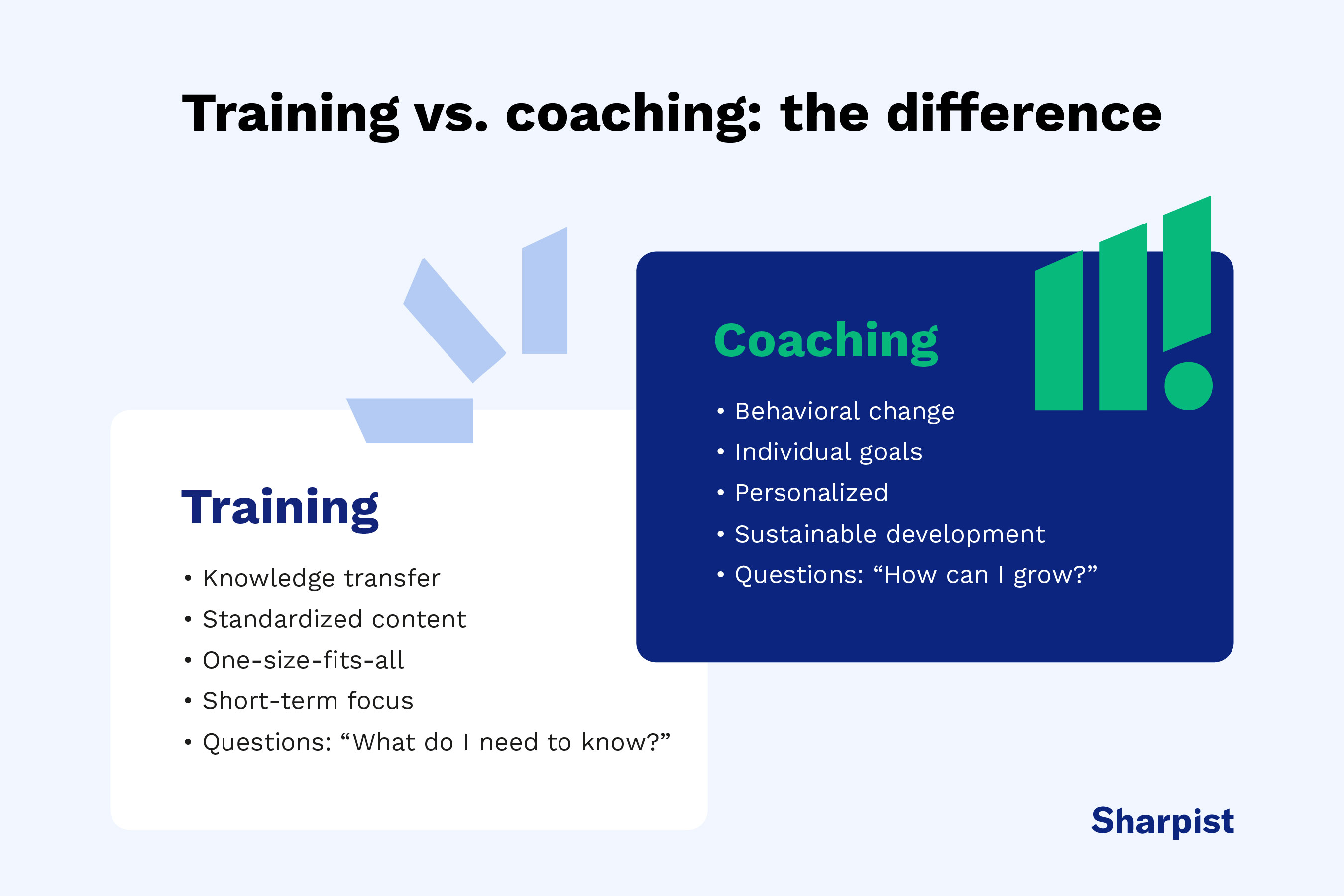
According to a survey by AIHR (2026), 83% of organizations use mentoring and coaching to develop employees for succession planning. What's missing is a framework that describes how coaching is deployed at the different stages. IKEA shows what this looks like in practice: the "Next-Step-Leader Coaching" is explicitly aimed at leaders transitioning to the next level. IKEA clearly distinguishes between mentoring (for people new to the role, where concrete guidance matters more than reflection) and coaching (when foundational competencies are already in place and individual transitions are the primary focus). The leadership index in the employee survey rose from 81% to 88% – despite several transformation phases during the same period.
Another practical note from implementation: coaching is only accepted by senior-level employees when it cannot be misread as an indication of performance issues. Miro has experienced this and now communicates explicitly that the coaching offering is entirely voluntary, that content remains private, and that external career development is also a legitimate topic. The result: 100% retention of all 120 strategically selected coaching participants over a six-month transformation phase, during which the global turnover rate at comparable companies stood at 20%.
Phase 5: Shape the Handover and Advance the Pipeline
The handover is not a one-time event but a structured process. Coaching during the first 90 days after the role transition secures the transfer: employees supported during this phase develop confidence in their new role more quickly and achieve early quick wins sooner. In parallel, the pipeline itself must be advanced: new employees are identified, development progress is documented, and the risk index for each key position is updated. Succession planning is not a project but a continuous cycle.
The Coaching Framework for Succession Development
In succession development, coaching works not as a one-off event but as a structural link between development impulse and day-to-day transfer. The following table shows how coaching intensity and focus correspond to the phases of succession planning:
Between scheduled sessions, over 2,000 personalized micro tasks close the transfer gap: a maximum of five minutes per task, individually assigned by the coach, with a proven 20% improvement in learning efficiency. Sharpist's AI coach complements this process with 24/7 availability for reflection and preparation between sessions.
Scaling Succession Planning: How Sharpist Builds Leadership Pipelines for Large Organizations
For organizations with 1,000+ employees and dozens of critical leadership positions, succession planning is not a case-by-case process. Sharpist solves exactly this scaling challenge: with over 1,500 ICF/DBVC-certified coaches in 55+ languages, succession programs can be rolled out in parallel across countries, languages, and hierarchical levels – without any loss of quality. The flexible credit model allows resources to be directed where development needs are currently highest, rather than letting unused budgets go to waste. Sharpist also offers:
FAQ
How Early Should Succession Planning for Leadership Positions Begin?
For C-level positions, a lead time of at least five years is recommended; for middle management levels, two to three years. The most common mistake is to start only when a vacancy arises. By that point, there is no time for careful development, and external hires are more expensive and riskier than internally developed employees.
What Is the Difference Between Succession Planning and Career Planning?
Career planning is an employee-driven process that foregrounds individual growth paths. Succession planning is an organizational strategy that ensures business continuity by deliberately developing high potentials for critical leadership positions. Both processes should be closely interlinked – succession planning without incorporating the employee perspective regularly fails.
How Do I Measure the Success of a Succession Planning Program to the Board?
The most compelling KPIs are the Internal Fill Rate (share of key roles filled internally), Bench Strength (number of development-ready employees per position), and Time-to-Productivity (how quickly employees in succession positions become fully effective). In addition, the risk index for critical positions can be used as a governance argument: which positions would be unfilled today in the event of an unexpected departure?
When Is Coaching More Effective Than Mentoring in Succession Development?
Mentoring is particularly suited to people who are new to a leadership role and need concrete guidance. Coaching is the more effective instrument when foundational competencies are already in place and the focus is on individual leadership transitions, strategic thinking, or the development of self-leadership competencies.
.avif)







.svg)


%20(1).avif)