



.png)
.png)
.svg)

.png)
.png)


.png)


.png)


.svg)


.svg)

How can organizations ensure that employee development is neutral, confidential, and effective? This article examines the advantages and disadvantages as well as the critical differences between internal and external coaching and shows why external solutions offer measurable benefits for executive coaching. Platforms like Sharpist are shaping the future of employee development through their combination of independence, expertise, and data-driven approaches.
The Topic in a Nutshell
Internal vs. External Coaching: What Is It and How Does It Differ?
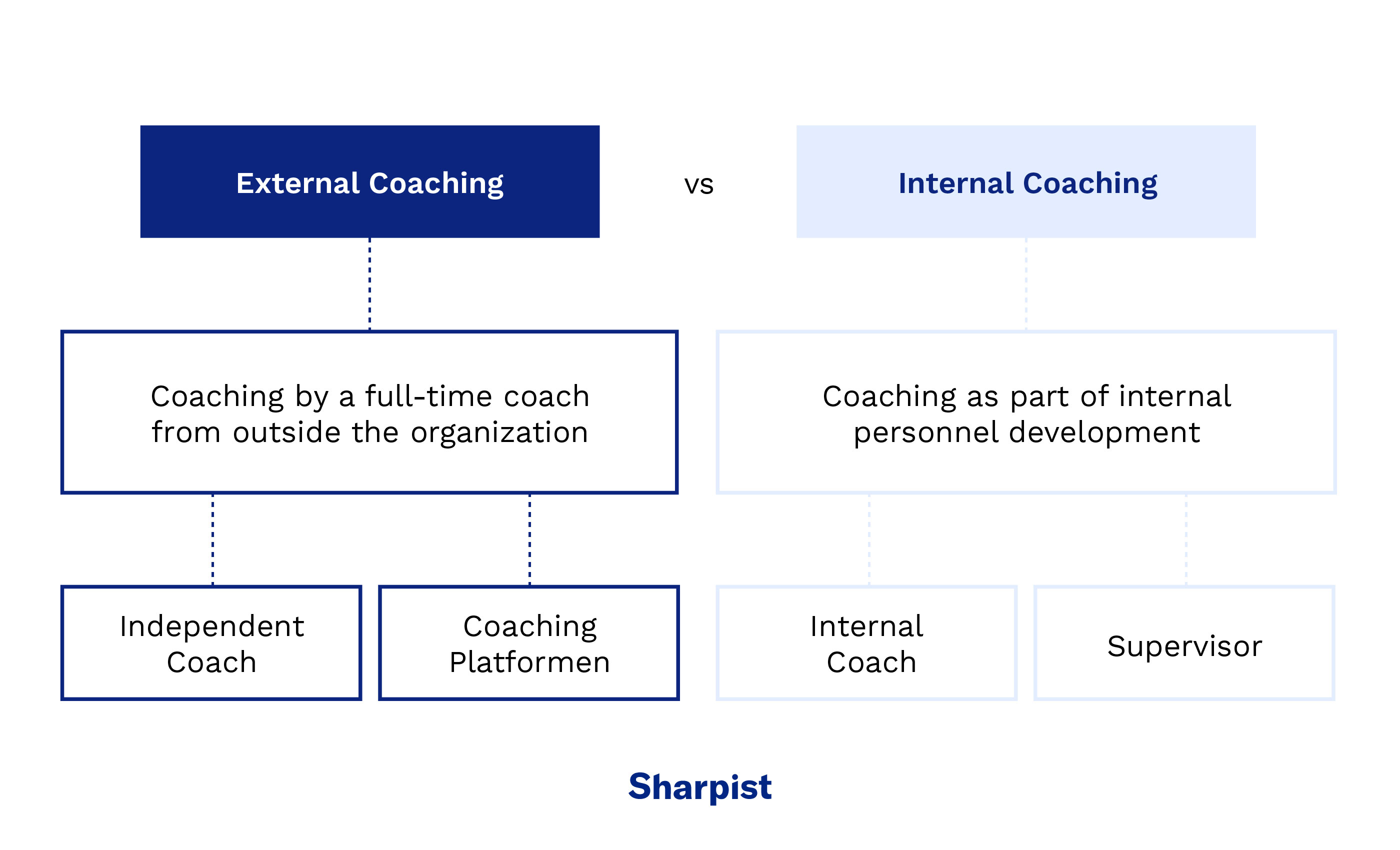
Internal coaching means that employed coaches, supervisors, or executives accompany employees within the organization. External coaching, on the other hand, engages independent coaches or platforms like Sharpist from outside. The central difference between the two coaching approaches lies in independence: while internal coaches are intimately familiar with the corporate culture and processes, conflicts of interest and hierarchical dependencies can arise. External coaches, by contrast, offer complete neutrality and specialized expertise without internal loyalties and without hierarchical entanglements.
When External Coaches Meaningfully Complement Internal Teams
Internal coaching comes with several structural challenges that can limit its effectiveness. These issues do not arise from a lack of qualification on the part of individual coaches, but from the systemic conditions within the organization.
1. Capacity Bottlenecks: When Internal Resources Are Not Enough
Internal coaches cannot scale indefinitely. As coaching demand grows, HR and L&D teams quickly reach their limits. External platforms like Sharpist make it possible to coach 10, 100, or 1,000+ employees simultaneously – without tying up additional internal resources.
2. Specialized Expertise for Complex Topics
Internal coaches possess valuable organizational knowledge. For highly specialized topics such as international transformation, strategic change management, or specific leadership challenges, external coaches from Sharpist – with 1,500+ certified experts – provide complementary subject expertise from a wide range of industries.
3. Relief for Overburdened HR and L&D Teams
HR teams are often overwhelmed by administrative tasks. External platforms like Sharpist handle coach matching, scheduling, billing, and reporting – saving HR teams over 200 hours of administrative work per year. This allows internal teams to refocus on strategic priorities.
4. A Neutral Perspective for Sensitive Topics
Some employees feel more comfortable discussing sensitive topics with neutral third parties. As a result, many employees avoid bringing up certain taboo subjects – such as therapeutic, health-related, or personal issues without a direct business connection – in coaching sessions. While internal coaches are irreplaceable for questions of organizational culture, external platforms provide additional confidentiality for sensitive leadership topics. At Sharpist, all coaching sessions are GDPR-compliantly encrypted – HR and executives have no access to session content, ensuring absolute confidentiality.

External Platforms as an Alternative to Internal Coaching
External coaching platforms resolve the structural problems of internal coaching and offer measurable benefits for organizations and employees alike. They create a protected space for genuine transformation, free from the systemic constraints of internal structures.
1. Independence and a Neutral Perspective as Success Factors
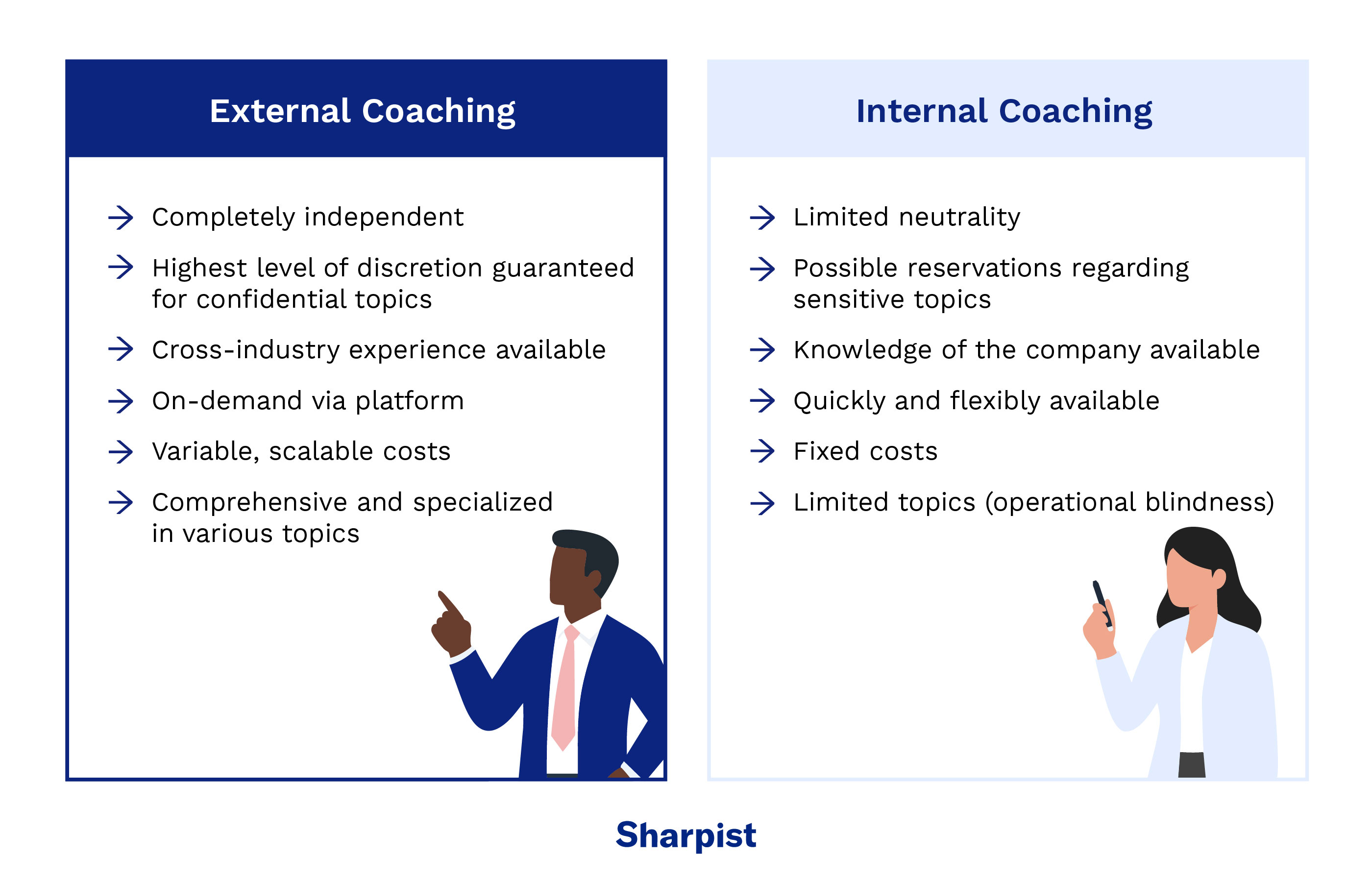
External coaches have no internal loyalties or career interests within the organization. This enables neutrality and objectivity in the coaching process. Coachees can speak openly about sensitive topics – from conflicts with managers to doubts about organizational decisions – without fear of internal consequences or career repercussions. This independence creates the protected space that effective coaching requires, and empowers employees to address even critical topics that would remain taboo with internal coaches.
2. Access to Specialized Coaches with a Broad Range of Experience
External platforms provide access to coaches with specific expertise in areas such as change management, strategic leadership, or resilience. These coaches bring experience from diverse industries, company sizes, and cultures. Modern coaching platforms like Sharpist use intelligent matching to help organizations find exactly the coach who fits the specific challenge and personality of the coachee – for sustainable leadership development.
3. The Highest Level of Confidentiality without Internal Consequences
External coaches are not part of the organization – all data is ideally processed in a GDPR-compliant and encrypted manner. Coachees can speak without fear of information being passed on to HR or of career repercussions. This absolute confidentiality cannot always be structurally guaranteed in internal coaching, even when discretion is pledged. The physical and organizational distance creates psychological safety that is essential for coachees to openly address sensitive topics such as leadership conflicts, career doubts, or personal crises.
4. Fresh Perspectives through an External View of Structures and Processes
External coaches bring cross-industry perspectives and best practices that break through organizational blind spots. They have worked with diverse organizations, cultures, and industries and are familiar with proven approaches from a wide variety of contexts. This external viewpoint makes it possible to question entrenched structures and processes and to develop innovative solutions. While internal coaches only know their own organizational reality, external coaches bring fresh perspectives for transformation and culture change – unconstrained by years of organizational socialization.
5. Scalability and Flexibility for Growing Organizations
External coaching platforms scale effortlessly alongside the organization without placing a burden on internal resources. Whether 10 or 1,000+ employees need to be coached – external platforms can respond flexibly to changing needs. Modern platforms like Sharpist offer flexible billing models, digital availability, and significantly reduce the administrative burden on HR teams.
Organizations can thus respond quickly to growing coaching needs without having to build new internal structures, recruit coaches, or run training programs. This flexibility is especially valuable for dynamically growing organizations or companies in phases of transformation.
Success through External Coaching: Why Is It Superior to Internal Coaching?
External coaching platforms outperform internal coaching through measurable results and demonstrable business impacts. The superiority manifests across several key areas:

Conclusion: External Coaching from Sharpist as the Future of Employee Development
Internal coaching quickly reaches structural limits: a lack of neutrality or confidentiality risks can undermine its effectiveness. External coaching platforms offer an alternative through complete independence, access to specialized coaches, and the highest level of confidentiality with GDPR-compliant data protection standards.
Sharpist brings together the key success factors:
Rely on external expertise with Sharpist: Develop talent sustainably, measurably maximize your ROI, and secure the decisive competitive advantage – book a demo now.
FAQ
What Is the Alternative to Internal Coaching?
The alternative to internal coaching is external coaching platforms like Sharpist, which provide independent, specialized coaches. These offer complete neutrality without internal loyalties, the highest level of confidentiality through GDPR-compliant data protection standards, and access to over 1,500 ICF- and DBVC-certified coaches. External platforms scale flexibly for organizations of any size and enable measurable results in leadership development without the structural limitations of internal solutions.
When Is External Coaching Better than Internal Coaching?
External coaching is particularly superior when it comes to sensitive topics such as conflicts with managers, career doubts, or employment-related concerns. It also offers clear advantages for strategic leadership topics, transformation, and change management. When neutrality and confidentiality are critical or when specialized expertise is needed for complex leadership challenges, external coaches clearly outperform the capabilities of internal solutions.
What Are the Greatest Disadvantages of Internal Coaching?
The greatest disadvantages of internal coaching are the lack of neutrality due to organizational affiliation, confidentiality risks with sensitive topics, hierarchical dependencies between coach and coachee, and limited thematic breadth due to organizational blind spots.
Can External Coaching Be Conducted Remotely?
Yes, external platforms like Sharpist offer 100% digital coaching via video sessions with over 1,000 certified coaches in 55+ languages – fully remote and yet with the highest level of effectiveness.
How Do I Find the Right Coaching Platform for My Organization?
Look for ICF or DBVC certification of coaches, high matching success rates, and GDPR-compliant data protection. Scalability for growing teams, measurable results through transparent ROI tracking, and flexible pricing models are essential. Sharpist meets all criteria with proven business impacts and a credit system that enables maximum resource efficiency.
.avif)







.svg)


%20(1).avif)