



.png)
.png)
.svg)

.png)
.png)


.png)


.png)


.svg)


.svg)

When the board announces an efficiency program, L&D budgets tend to end up on the chopping block early. Not because people development is unimportant, but because it's rarely communicated in the CFO's language. Organizations that make blanket cuts now will pay the price 18 months later – when the leadership pipeline is empty and growth would finally be possible again. Sharpist shows how HR decision-makers can prioritize strategically under budget pressure rather than cutting on reflex.
The Topic in a Nutshell
Why L&D Is the First to Face Scrutiny – and Why That's a Misconception
People development budgets are treated as discretionary spending in many organizations – growing in good times and shrinking in bad ones. This classification is structurally problematic because it decouples L&D from corporate strategy. According to the DGFP/Kienbaum HR Cost Study 2025, HR costs remain broadly stable despite budget pressure, but that pressure selectively hits areas that cannot demonstrate measurable business impact. Leadership development tends to suffer the most.
The real misconception is treating cuts to leadership development as short-term relief. The negative consequences only surface 12–24 months later: when internal candidates for key positions are missing, when high potentials have already left, and when growth would be possible again but the leadership pipeline is empty. Building leadership pipelines takes time – time that organizations squander through blanket cuts.
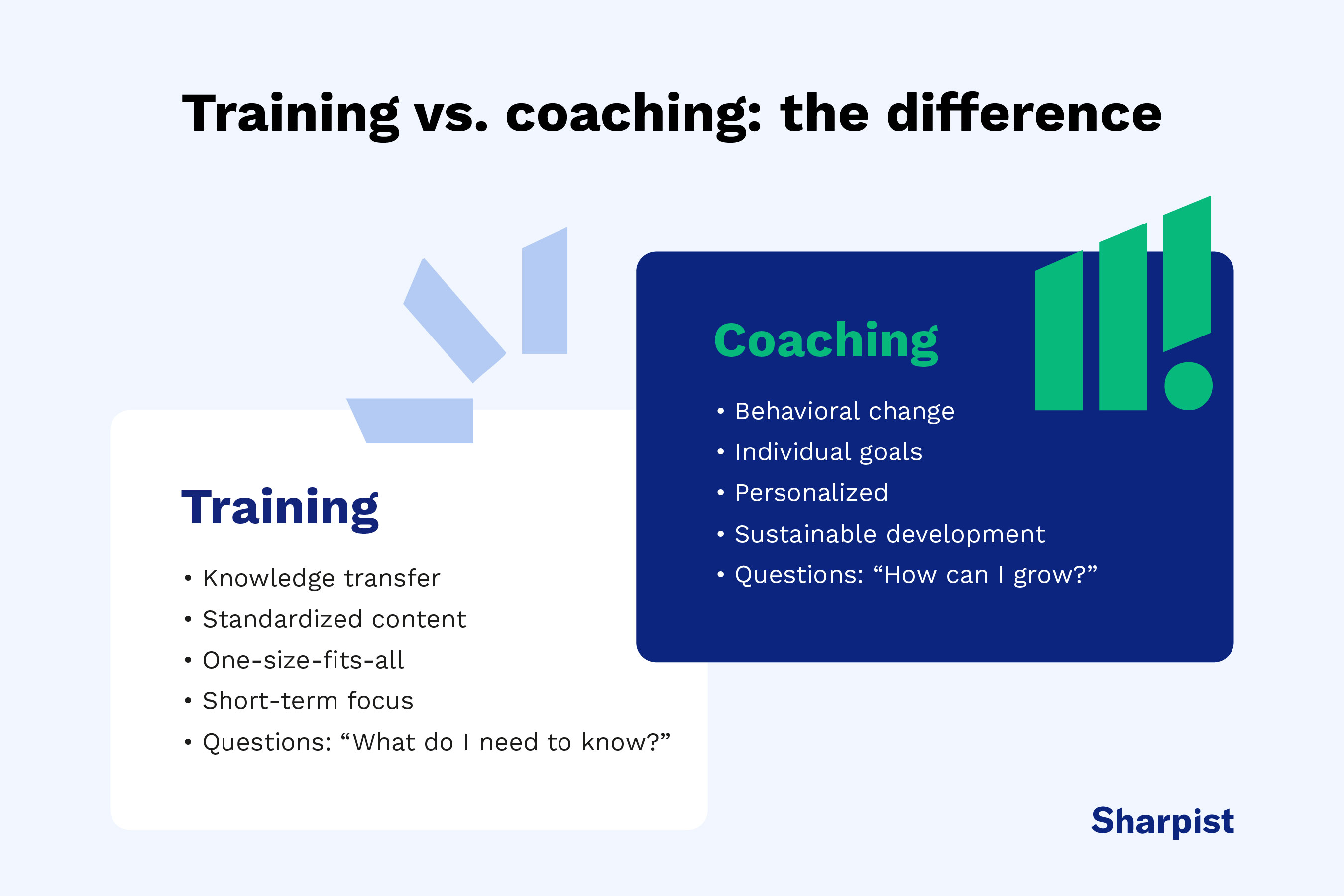
The Three Most Common Mistakes Under Budget Pressure
Before diving into strategies, it's worth taking an honest look at what tends to go wrong in practice – because these three mistakes are ones HR decision-makers encounter time and again.
Mistake 1: Blanket Cuts Instead of Strategic Prioritization
When all programs receive less budget across the board, the organization doesn't eliminate weak programs – it weakens all of them. The strategically smarter approach is a clear prioritization framework: Which competencies are business-critical over the next 12 months? Where does a skills gap cause direct economic damage? Development programs for leaders, high potentials, and hard-to-replace specialists take precedence – not because they are expensive, but because their absence will cost more.
Mistake 2: Ignoring the Activation Gap
According to the Studytube L&D Monitor 2025, 43% of companies use less than half of their training budget. A third of employees don't even know whether a learning budget is available to them. Before discussing cuts, the conversation should therefore start with activation. A program with an 80–90% activation rate at a lower budget creates more impact than an expensive program that barely gets used.
This is precisely where one of the most significant differences between traditional e-learning platforms and an approach like Sharpist's lies: while e-learning platforms typically achieve activation rates of 10–20%, Sharpist records 80–90%. Breitling, for example, achieved an activation rate of 96% with Sharpist within the first week – and 100% activation over the entire course of the program.
Mistake 3: Treating Leadership Development as a Luxury
Especially during high-stress phases, leaders need more support, not less. Roland Lechner, Head of HR EMEA at Palfinger, explicitly describes coaching as a "pressure valve in times of constant stress": leaders can set aside issues without carrying them into the next management round. Palfinger maintained its commitment to leadership development even through multiple crisis phases and, with Sharpist-supported shopfloor programs, recorded a 20% reduction in absenteeism.
What HR Decision-Makers Should Do Instead: Four Strategies
Blanket cuts are not a strategy – they're a deferral with compound interest. Those who consistently apply the following four levers can not only protect people development but position it in the CFO's language as an investment with measurable returns.
1. Learn the CFO's Language
Bart van der Looij, CFO at GoodHabitz with over 30 years of international financial responsibility, put it directly in the Sharpist webinar: "CFOs don't wake up thinking about cutting training budgets. The real question is: where do limited resources do the most good?" He outlines five elements of a compelling L&D business case: the specific business problem, the proposed solution, the costs, the expected impact with a measurement plan, and the link to company objectives. Engagement rates alone aren't enough: "Proving a gym membership isn't the same as showing that someone actually got healthier."
The monetization logic is clear: Losing a key person in a sales organization costs up to €1.5 million. If insufficient development contributes to 33–37% of resignations (L&D Monitor 2024), a coaching program for a leadership group can pay for itself by preventing just a single departure.
2. Establish Activation Rate as the Key Metric
The activation rate measures how many eligible individuals actually use a program – making it more meaningful than any budget figure alone. The table below shows how different formats perform under budget pressure:
3. Prioritize Measures by Business Impact
A structured approach helps prioritize development measures based on impact rather than tradition. The Kirkpatrick Model works here as a planning framework: first define the relevant business KPI, then derive the HR focus areas, then determine behavioral changes, and finally design the learning process. Those who jump straight to outcome KPIs without defining the intermediate steps end up measuring attendance rather than impact.
4. Hybrid Coaching as a Third Way
Between "cut everything" and "keep everything" there is a more efficient option: intensive coaching sessions for key personnel, supplemented by the Sharpist AI coach for ad-hoc needs and day-to-day reflection. The AI coach is available 24/7, without scheduling, with enterprise-grade privacy and an average rating of 4.5/5 stars.
Checklist: How to Prepare for Your Next Budget Negotiation
Most HR decision-makers don't lose budget negotiations because of weak arguments – they lose because they start collecting the right ones too late. Those who enter budget negotiations not just reactively but armed with data have a structurally stronger position.
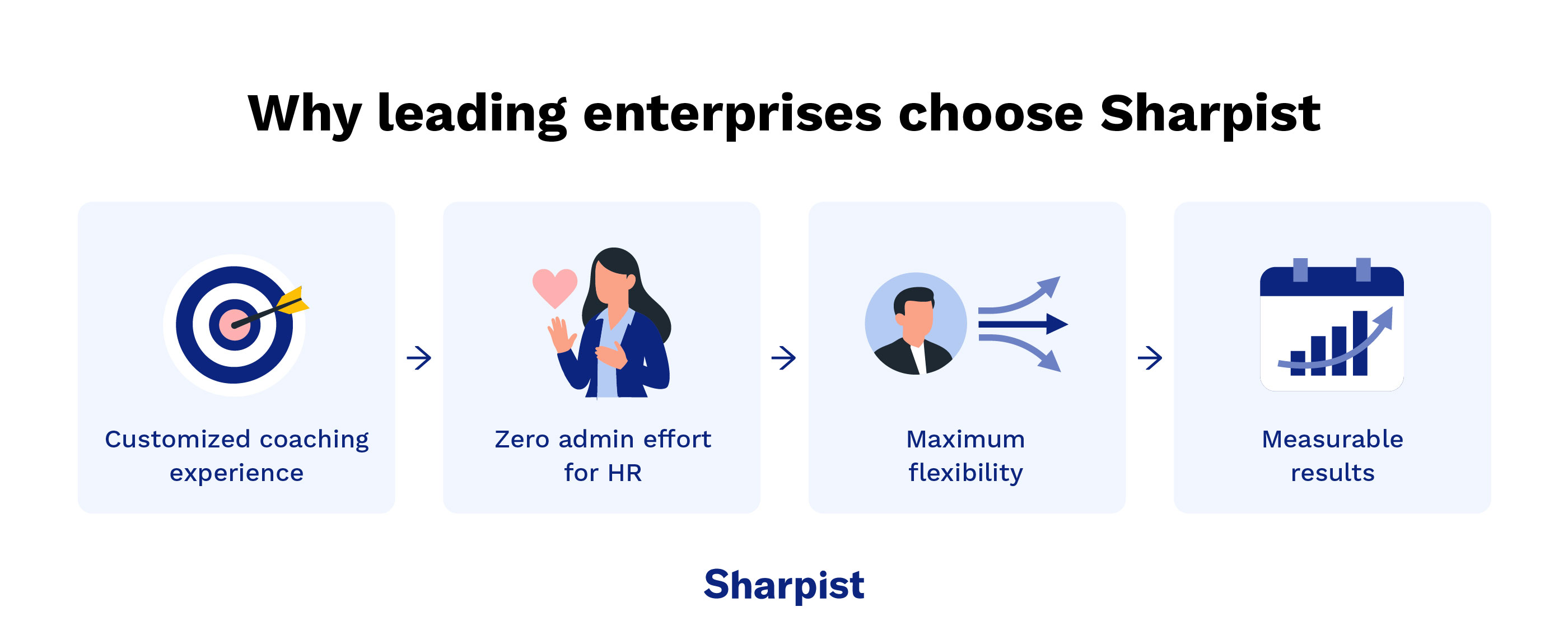
Case Study: How Miro Retained Talent Through Targeted Prioritization
When Miro (approximately 1,500 employees worldwide) went through a restructuring with layoffs, the scenario many HR decision-makers dread loomed large: declining morale, rising turnover, and a loss of trust in the organization. Instead of cutting development measures, Miro prioritized deliberately: around 120 culture multipliers – new leaders, stressed teams, cultural ambassadors – were coached with Sharpist, on a voluntary basis and with guaranteed confidentiality.
The result: 100% retention of all 120 participants throughout the entire transformation phase, a 25% increase in optimism regarding the transformation, and a coaching session rating of 4.9/5 stars. Sam Valentine, Head of Employee Experience at Miro, framed the CFO pitch directly: "If 2–3 key people are retained, the investment has already paid for itself."
Sharpist: Measurable People Development Under Budget Pressure
Sharpist offers leadership development that can be defended to the board – because it is measurable. The L&D dashboard delivers real-time analytics with industry benchmarks and ROI tracking. The flexible credit model prevents unused budgets from being lost: credits can be redistributed across locations and teams, which is especially critical in international organizations with heterogeneous user groups. With over 1,500 certified coaches in 55+ languages, Sharpist is built for multi-country deployments.
Those who want to position L&D not as a cost item but as a measurable value driver don't need better arguments – they need better data.
Find out in a personal demo how Sharpist implements this for your organization.
FAQ
Which L&D Measures Should Be Cut First Under Budget Pressure?
Programs with demonstrably low activation rates and no connection to a measurable business KPI are the first candidates for elimination. This often includes generic e-learning libraries that exist in name but are rarely used. Development measures for key roles, high potentials, and leaders navigating transformation phases should, by contrast, be given priority.
How Do I Calculate the ROI of a Coaching Program for the CFO?
The most compelling approach is turnover cost calculation: a leadership departure typically costs 100–200% of the annual salary. If a coaching program demonstrably contributes to retention, the break-even point can be named concretely. Supplementary metrics such as absenteeism rate, leadership index, and engagement score serve as measurable before-and-after comparisons.
Is Digital Coaching Truly Equivalent to In-Person Formats?
Victoria McIntosh, Global Head of Development at Breitling, explicitly rates digital coaching as equivalent to in-person formats – with significant cost advantages and greater flexibility across time zones. What matters is not the format but the activation rate and the demonstrable transfer into daily work. Breitling achieved 100% activation and 96% satisfaction with Sharpist.
How Do I Prevent Coaching Budgets From Being Cut During Restructuring?
By having the business case in place before the restructuring begins. HR decision-makers who proactively communicate retention data, activation rates, and turnover costs in the C-level's language are structurally better positioned in budget negotiations. Those who only react once the efficiency program is already underway are fighting a decision that has already been made.
.avif)



.png)



.svg)


%20(1).avif)