



.png)
.png)
.svg)

.png)
.png)


.png)


.png)


.svg)


.svg)

A production manager with 30 years of experience sits in the same meeting as a Generation Z new hire, yet the two barely speak to each other. This is exactly what cross-generational leadership is about: bringing four generations with different expectations of communication and development together as one team. Sharpist's individualized 1:1 coaching closes these communication gaps and helped Miro retain 100% of key employees during a transformation phase.
The Topic in a Nutshell
The cause lies in life context: Friction between generations often stems from different communication habits and life stages, not from age itself.
Generational stereotypes rarely hold true: Many assumptions about generations do not hold up to closer scrutiny, such as the assumption that only younger employees want flexibility.
Continuous coaching as the solution: Lasting behavior change comes from continuous 1:1 coaching, not from one-off lectures or workshops.
Sharpist makes multi-gen leadership scalable: At Carthago, Sharpist's hybrid coaching program connected production and office staff across all generations and achieved a 95% completion rate for digital learning content.
Four Generations, One Team: Why Leadership Is More Complex Today
Today, most companies have four generations working together at the same time: Baby Boomers, Generation X, Millennials, and Generation Z. Each group brings its own experiences, communication habits, and expectations of leadership, and it is exactly this diversity that makes cross-generational leadership one of the most complex tasks for HR professionals.
Leaders face additional pressure from today's pace of transformation. According to the Deloitte Global Human Capital Trends Report, 7 out of 10 leaders say that speed and adaptability are their most important competitive strategy for the next three years. The same report also shows that a third of surveyed employees experienced 15 major workplace changes in the past year alone, with direct consequences for engagement and well-being. For leaders who already have to bring different generations together, this pace makes the challenge even greater.
Where Cross-Generational Leadership Really Falls Short in Everyday Practice
The greatest friction between generations rarely comes from open conflict, but from quiet withdrawal. According to a LinkedIn survey of more than 2,000 employees, one in ten people under 26 has not had a direct conversation with a colleague aged 50 or older in over a year. One reason for this is different communication preferences: older employees often prefer phone calls or in-person conversations, while younger employees prefer messaging channels. Without deliberate leadership, such gaps quickly harden into parallel team cultures.
Why Most Generational Stereotypes Are Wrong
Many common assumptions about generations do not hold up to closer scrutiny. McKinsey disproves, for example, the claim that Generation X is more worried about job security than other generations. The desire for flexibility is by no means limited to Millennials either; according to the researchers, it depends more on individual life context, such as whether someone cares for children or family members, than on birth year. For leaders, this means individual conversations about actual needs achieve more than blanket generational templates.
Knowledge Transfer Between Older and Younger Employees Is Not a One-Way Street
Experienced employees often have deep expertise but are sometimes less familiar with new technologies and working methods. Younger colleagues bring technological know-how but often have less experience handling complex, ambiguous situations. Knowledge transfer therefore only works when it is thought of as a two-way process.
Reverse Mentoring as a Complement to Classic Mentoring
Reverse mentoring turns the classic mentoring principle around: younger employees share digital or technological knowledge with experienced leaders. Combined with classic mentoring, this creates a cycle in which knowledge flows across all generations instead of getting stuck at a single hierarchy level.
When Production Meets Office: Leadership in Blue-Collar/White-Collar Teams
At Carthago, a manufacturing company with around 1,600 employees in Germany and Slovenia, the challenge of cross-generational leadership became especially clear: new leadership principles needed to be embedded at every level, from production to executive management. Tina Langosch, HR Director at Carthago, describes the task like this: "We have to bring the bridge between blue collar and white collar together and let the boundaries blend." With Sharpist's coaching program combining 1:1 coaching, group coaching, and micro tasks, Carthago achieved a 95% completion rate for digital learning content and 70% active participation in leadership micro tasks.
This cultural shift was not a given. Denise Städele, Talent Management at Carthago, recalls: "In the past, we only used coaching when a leader had a problem or was about to leave. It was a difficult transformation to get to the point where it is seen as a development tool." This gap in perception between generations, coaching as crisis intervention versus coaching as a natural development tool, still shapes many multi-gen teams today.
Why Behavior Change Is the Most Important Lever
Hendrik Schriefer, CEO of Sharpist, had hundreds of customer conversations analyzed and found a recurring pattern: 62% of the conversations were about transformation, with organizations asking how to bring their employees along through change. According to his observations, employees rarely lack knowledge; what they lack is the ability and willingness to actually go through the change in their daily work.
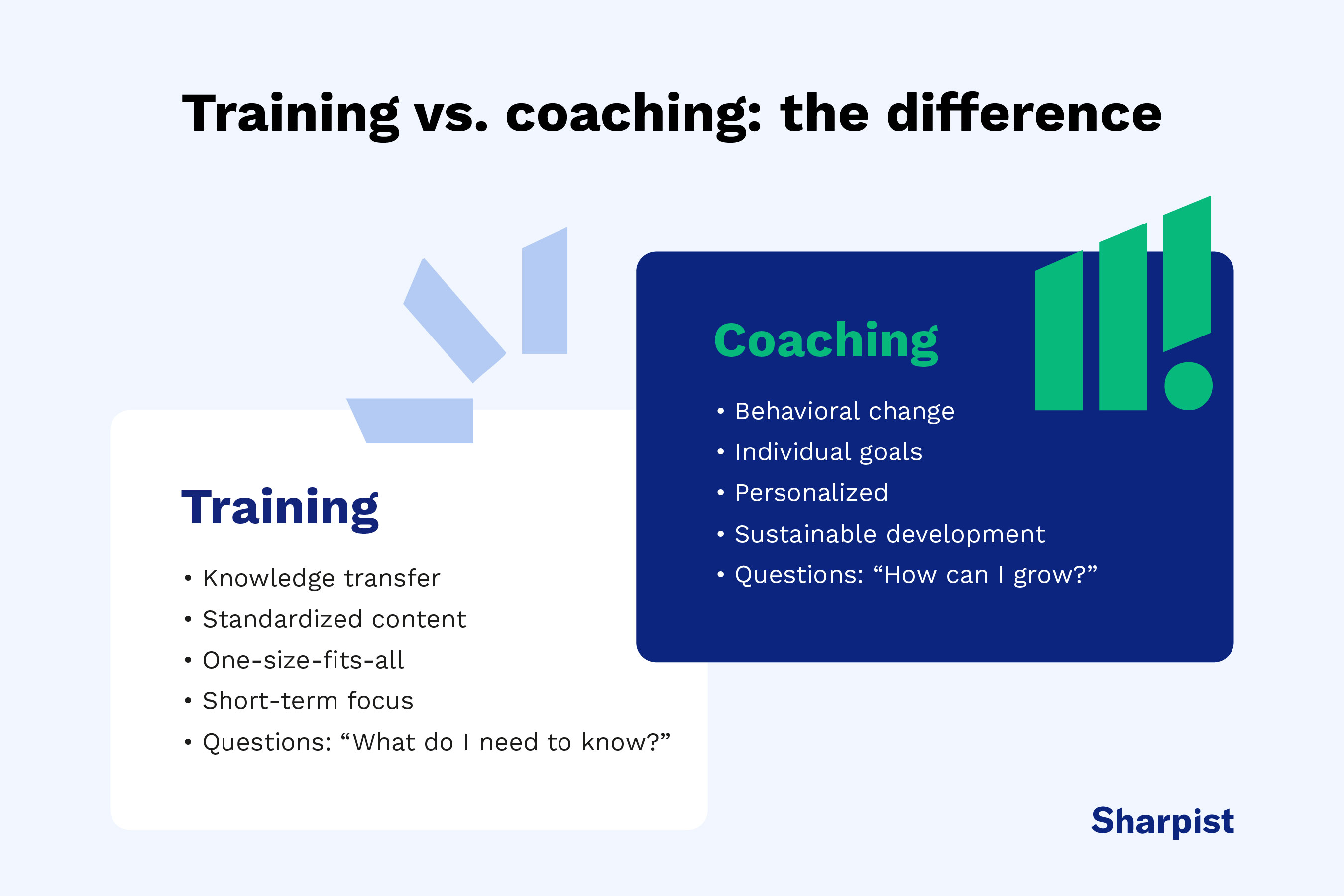
This observation aligns with McKinsey's recommendation to base leadership conversations on individual life context rather than a generational template. Classic lectures and workshops on generational diversity raise awareness, but rarely change how leaders communicate day to day in any lasting way. Continuous 1:1 coaching works through recurring conversations and concrete everyday situations, over weeks and months, rather than in a single event, because coaching targets behavior change while classic training mainly conveys knowledge.
How Sharpist's Hybrid Coaching Makes Cross-Generational Leadership Scalable
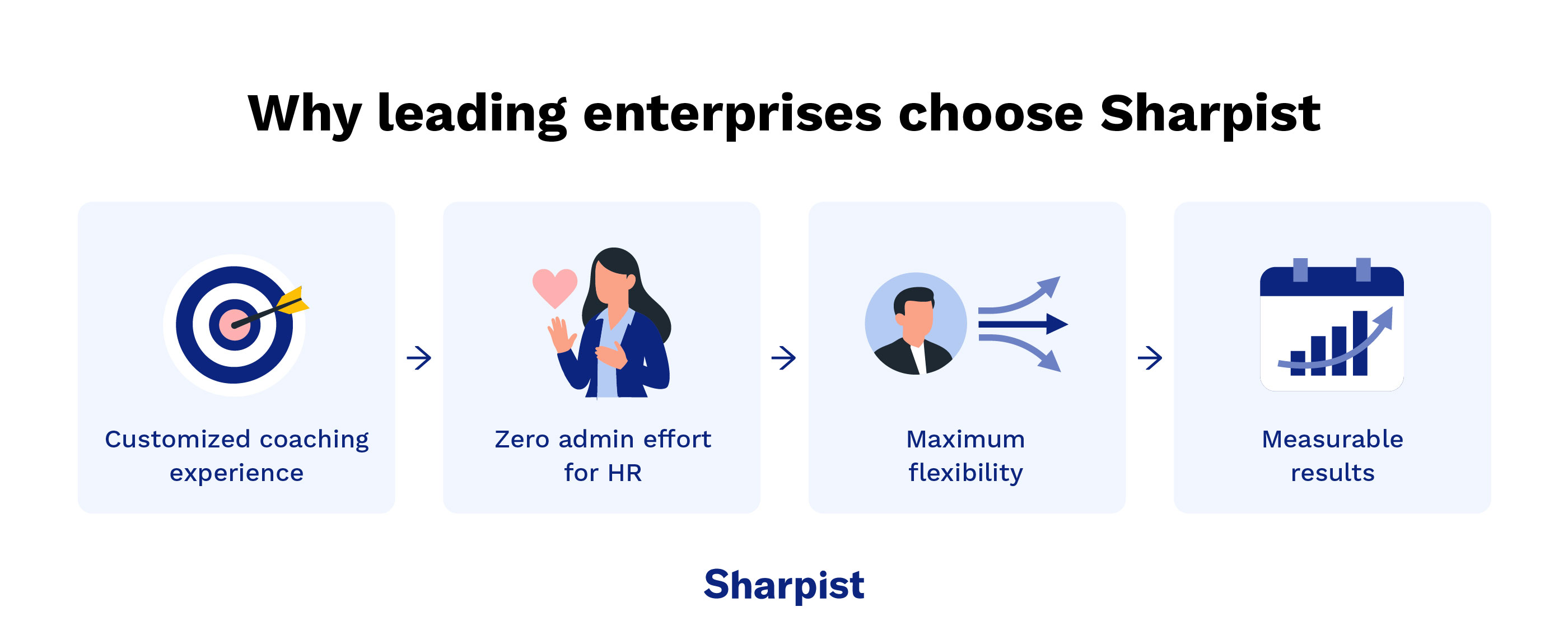
Sharpist's hybrid approach combines 1:1 coaching with certified coaches, an AI Coach for the time between sessions, and individually assigned micro tasks that translate coaching insights into everyday leadership practice. For HR teams developing multi-gen teams across multiple locations, the Sharpist L&D Dashboard also provides real-time analytics on engagement, progress, and completion rates across all leadership levels involved.
At Miro, this effect showed up during a particularly challenging phase. During a deep transformation involving layoffs, Sharpist's coaching program achieved a 100% retention rate among the 80 participating key employees, alongside a 25% increase in employee optimism. Sam Valentine, Head of Employee Experience at Miro, describes the openness of the program like this: "You can talk about resilience or about career growth, and if the conversation is about moving on, that is just as fine." This same openness to different career stages is essential in multi-gen teams, where a new hire brings different concerns than an employee nearing retirement.
Sharpist Closes the Gap Between Generational Knowledge and Real Behavior Change
Cross-generational leadership rarely needs more knowledge about Baby Boomers, Gen X, Y, or Z. It needs behavior change in everyday leadership that proves itself in daily business.
Certified coaches for individual reflection: more than 1,500 ICF/DBVC-certified coaches guide leaders through generation-specific everyday situations.
AI Coach for support between sessions: complements human coaching without replacing it.
L&D Dashboard for measurable progress: makes engagement and completion rates visible to HR decision-makers.
FAQ
What Is Cross-Generational Leadership in the Workplace?
Cross-generational leadership refers to the ability to lead teams in which several generations work together at the same time, such as Baby Boomers, Generation X, Millennials, and Generation Z. It involves deliberately managing different communication habits, expectations, and backgrounds so that all age groups work together productively.
What Challenges Arise When Leading Teams with Four Generations?
Common challenges include different communication channels, such as phone calls versus messaging, as well as knowledge gaps in both directions. According to a LinkedIn survey, one in ten people under 26 has not had a direct conversation with a colleague over 50 in more than a year, which shows how easily teams can split into parallel cultures.
How Can Leaders Promote Knowledge Transfer Between Older and Younger Employees?
Knowledge transfer works best as a two-way process. Reverse mentoring lets younger employees pass on technological knowledge to experienced leaders, while classic mentoring passes experience-based knowledge in the other direction. Both formats complement each other and prevent knowledge from getting lost at individual hierarchy levels.
How Does Coaching Differ from Classic Training for Cross-Generational Leadership in HR Teams?
Classic training and lectures raise awareness of generational differences, but they rarely change how leaders communicate day to day in a lasting way. Continuous 1:1 coaching addresses behavior directly, through recurring conversations rather than a single event, and makes progress measurable over time.
What Role Does Coaching Play for Production Employees in Blue-Collar Environments?
Coaching can also be scaled for production employees, as the Carthago and PALFINGER examples show. At Carthago, digital coaching content achieved a 95% completion rate; at PALFINGER, the program was specifically designed for shop floor managers up to the regional leadership level.
.avif)







.svg)


%20(1).avif)