



.png)
.png)
.svg)

.png)
.png)


.png)


.png)


.svg)


.svg)

An L&D team wants to implement a coaching platform for 300 leaders and has to explain to management how much internal effort this ties up. Two phases matter most here: the one-time rollout and the ongoing administration afterward. Sharpist reduces both structurally, among other things through algorithmic coach matching and a central L&D dashboard that demonstrably saves HR teams over 200 hours of administrative work per year.
The Topic in a Nutshell
Implementing a Coaching Platform: What HR Really Needs to Deliver to Get Started
The administrative starting point with a platform-based provider is much narrower than many HR teams expect. At its core, Sharpist only needs a list of names and email addresses for the participating leaders; the platform takes care of the rest.
HR therefore remains the decision-making body, not the implementation team, a direct time saving especially for organizations with multiple HR systems across country entities. It also helps if HR comes in early with a rough program goal or the target group's main pain point; this gives the Relationship Managers the basis to align the program correctly. In most cases, this information is already gathered during the sales process, which is exactly what makes the fast rollout possible.
Timeline: From Decision to First Coaching Session
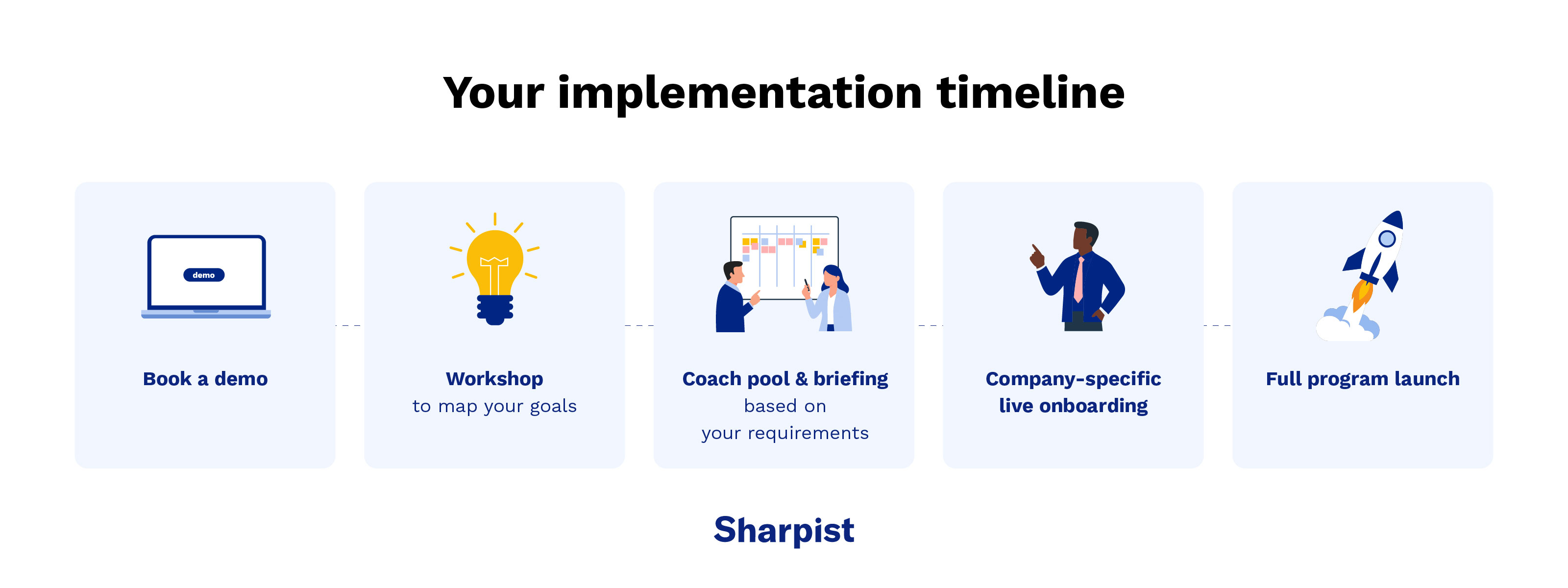
The second question HR decision-makers need to clarify before a rollout is time to launch. At Sharpist, most organizations move from approval to the first coaching session within 2 to 3 weeks, including platform setup, coach matching, and the first wave of communication.
Which Administrative Tasks an Enterprise Rollout Actually Takes Off Your Plate
The difference between a platform and a self-organized coaching program shows up most clearly in what remains as ongoing work after the rollout. Coach coordination, for example, disappears because a dashboard provides an overview instead of leaders having to be individually followed up with by phone. Defining the target group, internal communication, and the intensity of HR support remain tasks for the organization. What falls away is the operational groundwork, not the strategic steering.
Pilot Phase and Scaling Without Proportionally Growing Administrative Effort
Before rolling out a coaching program company-wide, it is worth running a limited pilot phase with 30 to 60 leaders from one team or business unit, with KPIs such as engagement rate or goal achievement defined in advance.
This calculation example refers to 50 leaders at a mid-sized municipal organization and should be understood as an illustration of a single organization, not as a universal industry benchmark. Company-wide scaling is data-driven, not based on gut feeling.
Ongoing Reporting: From Manual Collection to Dashboard
After the rollout, the administrative load shifts from implementation to ongoing management. This is where the difference between manual status checks and a structured dashboard has the biggest effect. Instead of asking individual leaders about their progress, HR teams at Sharpist see engagement, goal achievement, and usage in real time.
The L&D dashboard provides real-time analytics, industry benchmarks, and exportable quarterly reports that can be linked directly to retention and promotion data. For executive reviews, this means L&D budget discussions become results discussions, grounded in data rather than estimates.
How Sharpist Structurally Reduces the Administrative Effort of an Enterprise Rollout
Sharpist is designed as an enterprise coaching platform for organizations with 10,000+ employees and resolves the administrative core of a rollout structurally rather than organizationally.
For internationally active customers, this effect is especially visible in vendor management: Wiebke Rowedda, HR Director DACH and Turkey at Moët Hennessy (LVMH), only needs a single point of contact at Sharpist for pricing, invoicing, and licenses, instead of coordinating thousands of coaches across different currencies.
Why Sharpist Keeps the Biggest Rollout Effort Away From Your HR Team
At its core, an enterprise coaching rollout requires HR to provide a list of names, a rough program goal, and a timeframe of 2 to 3 weeks until the first session. Everything else, such as coach matching and ongoing reporting, can be structurally delegated to the platform.
Sharpist takes over exactly the tasks that would otherwise cost HR teams weeks. Schedule a Personal Consultation Now.
FAQ
How Much Internal Administrative Effort Does Implementing a Coaching Platform Require for HR Teams at Organizations With 10,000+ Employees?
The core administrative effort is low: HR essentially provides a list of names and email addresses for participants along with a rough program goal. The provider handles setup, coach matching, and onboarding. On an ongoing basis, effort is reduced mainly through automated dashboard reporting instead of manual status checks, at Sharpist by over 200 hours per year.
How Long Does It Take From Contract Signature to the First Coaching Session in an Enterprise Rollout?
At Sharpist, most organizations need 2 to 3 weeks from decision to the first session. During this time, platform setup, coach matching, and the first wave of communication to participants take place. The exact duration depends on company size and internal approval processes.
What Does HR Need to Deliver Before Starting an Enterprise Coaching Rollout?
The core requirement is small: a list of names and email addresses for the participating leaders is enough for the technical start. It also helps to have a rough program goal or the target group's main pain point; this information is usually already available from the sales process and is exactly what makes the fast rollout possible. The platform automatically handles coach matching, onboarding, and communication.
Which Administrative Tasks Permanently Disappear After Rolling Out a Coaching Platform?
Coach coordination disappears, since a dashboard provides an overview instead of manual scheduling, as does the manual compilation of status reports. Defining the target group, internal communication, and the intensity of HR support remain the organization's responsibility, while the platform takes over the operational execution.
How Large Should a Pilot Group Be for a Coaching Rollout at a Company With Multiple Locations?
Most pilot groups include 30 to 60 leaders from one team or business unit, over a period of 3 to 6 months with KPIs defined in advance. Scaling to additional locations then happens on a data-driven basis, guided by engagement and outcome data from the pilot.
.avif)







.svg)


%20(1).avif)