



.png)
.png)
.svg)

.png)
.png)


.png)


.png)


.svg)


.svg)

A new investor takes over, a fresh leadership team steps in, and the workforce watches to see whether the new leadership holds. How does HR build a leadership culture during a private equity transformation that holds up while the investor clock is already running, without losing key talent along the way? Sharpist supports this moment with structured coaching that changes leadership behavior and makes progress visible in the L&D dashboard.
The Topic in a Nutshell
Why the Private Equity Clock Is Merciless for Leadership Culture
Private equity investors buy themselves time, but that time is limited. According to the Private Equity Trend Report 2026 by PwC, the average holding period in Europe has risen to 6.5 years, while returns to investors sit at their lowest level since the 2008/2009 financial crisis. At the same time, average purchase prices stand at 12.8 times operating income, so returns can hardly be achieved through multiple expansion anymore, they have to be earned operationally.
For HR, that means every delay in building an effective leadership team eats directly into the time left for value creation. Dr. Ralf U. Braunagel, Private Equity Leader at PwC Germany, puts it this way: “The days when cheap financing and rising valuations alone delivered good returns are over. Today, the ability to transform portfolio companies operationally and digitally decides success or failure.” Operational excellence comes from people who translate strategy into daily leadership behavior, which makes leadership culture the decisive lever for the investment case.
The Double Risk HR Faces in PE Portfolio Companies
Under investor pressure, portfolio companies carry two reinforcing risks at once: leadership that doesn't hold, and people who don't stay. Both directly determine the speed and success of the transformation.
1. When New Leadership Doesn't Hold: Mis-Hires and Poor Cultural Fit
Studies by McKinsey, Bain and the University of St. Gallen have reached comparable conclusions for years: roughly 70% of all transformation programs fail due to lack of leadership, unclear accountability, or cultural resistance. In the German-speaking market, the mis-hire rate in top management sits at around 40% according to an analysis in PE-Magazin, while only about 21% of companies regularly use structured diagnostic processes for leaders. So the gap isn't just in selection, it's in what happens afterward, when a newly assembled team has to deliver again.
2. When the Existing Team Leaves: Retention Risk Under Investor Pressure
According to a survey by AlixPartners, 65% of PE firms replace their portfolio CEOs during the holding period, and 38% of leaders in portfolio companies worry about their job because of the disruption, well above companies without PE investment. 83% of surveyed PE executives say unplanned CEO changes extend the holding period, and nearly half see the returns diminished as a result. Neither risk is a soft factor, both are among the hardest value drivers in the portfolio. Acting early on proactive talent development, rather than reacting only once key talent has already resigned, systematically reduces this risk.
Why Classic Training and Executive Search Fall Short Here
Executive search firms solve the staffing question: they identify who should take on a role. That's valuable, but it doesn't answer how that person, or the existing team, becomes effective and stays effective within the compressed PE timeline.
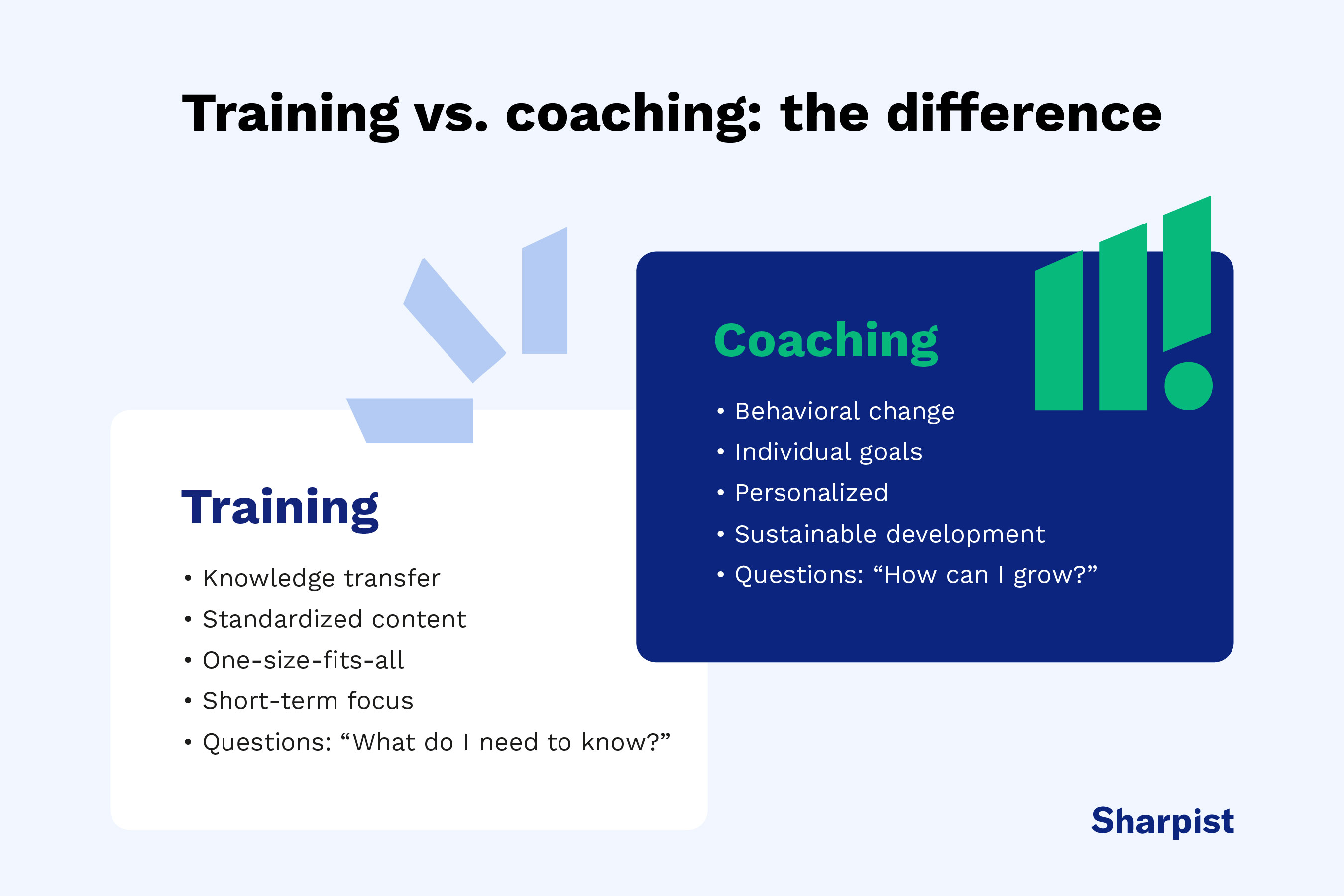
Classic leadership seminars convey knowledge, but the transfer into daily practice is often missing, especially when time is the scarcest resource. Knowledge from a single workshop day fades within weeks without guided application, right in the phase where leadership behavior needs to change fastest. A leadership development approach after restructuring that relies solely on one-off training therefore often stays theory instead of practice, exactly when newly assembled teams need effective leadership most urgently.
What Structured Coaching Actually Delivers During a PE Transformation
Structured coaching closes the gap that selection processes and one-off training leave open, through continuous support that changes leadership behavior week by week.
Changing Leadership Behavior in Real Time Instead of Training Once
Sharpist's hybrid coaching approach combines 1:1 video coaching with certified business coaches, an AI coach, and personalized micro tasks. The human coach creates space for deep work and self-reflection, the AI coach is available between sessions for quick sparring, and micro tasks of no more than 5 minutes translate insights into daily work. Action items after every session anchor the behavior change, instead of leaving it to a single training day. Anyone looking to reduce micromanagement in their organization [URL NOT MAPPED], which tends to emerge especially often under uncertainty, needs this kind of continuous support in real leadership situations rather than another seminar day.
Retaining Key Talent Without Acting as a Control Instrument
At Sharpist customer Miro, this played out during a restructuring involving layoffs and strategic pivots: around 120 culture multipliers and especially affected employees received individual coaching, voluntary rather than mandatory. After four months and 207 coaching hours, the program reached 100% retention among participants and a 25% increase in confidence across the workforce. For leadership teams responsible for the transformation budget, the aggregated L&D dashboard becomes an early argument, long before any resignations actually happen.
How HR Can Prove Progress
Investors think in numbers, and leadership development has to be reported in the same language to be taken seriously in the investment case. The Sharpist L&D dashboard delivers real-time analytics on engagement, progress, and business impact, including industry benchmarks, so HR can justify coaching investments with the same metrics investors already demand. That matters especially for people development under cost pressure [URL NOT MAPPED], when HR has to justify every single coaching investment to leadership.
Structured coaching reaches activation rates of 80 to 90% among Sharpist customers, compared to 10 to 20% for classic e-learning programs, a difference that directly affects transformation success. At Palfinger, the absence rate fell by 20% over the same period, while core leadership competencies improved by 6%, with a program completion rate of 90%. Anyone looking to support their team through transformation processes should track these metrics from the start, rather than searching for them retrospectively at the end of the holding period.
Sharpist's Hybrid Coaching: How HR Actually Builds Leadership Culture in the Transformation
Sharpist supports portfolio companies within the time window a private equity transformation dictates, with a model that combines deep work and everyday transfer. The human coach works with leaders on trust and reflection, the AI coach is available between sessions for quick insights and role play, and micro tasks together with action items anchor what's learned in daily work. In addition, change management coaching helps leaders address resistance constructively and communicate change credibly.
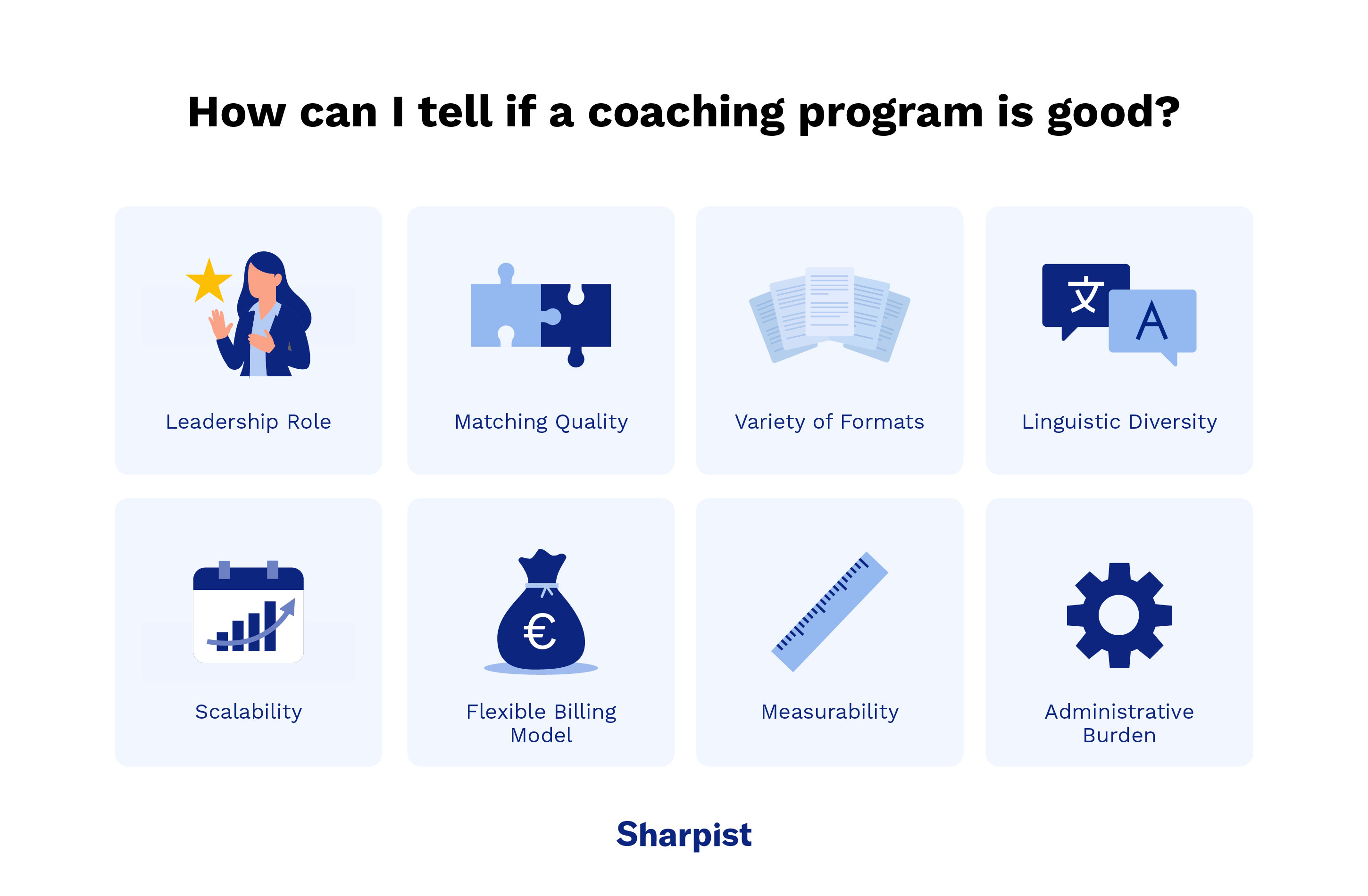
For PE portfolio companies, scalability is decisive: roles and teams often shift on their own during the transformation. Sharpist's network of 1,500+ certified coaches in 55+ languages covers this dynamic, and the credit system ensures unused coaching allowances can be redistributed instead of expiring when leadership teams get reshuffled. Sharpist customers such as LVMH saw an 18% improvement in leadership competencies, IKEA Switzerland increased its leadership index by 8 to 10%, and coach matching succeeds in under 2 hours with a 97% success rate on the first attempt.
How Sharpist Closes the Gap Between Leadership Change and Leadership Impact
Private equity transformations give HR no time for trial and error on leadership culture. Continuous hybrid coaching from Sharpist is the mechanism that delivers effectiveness and retention at the same time, within the holding period investors set.
Closing this gap now shortens the path from hiring to impact, before the next investor review comes around.
FAQ
What Is a Private Equity Transformation?
A private equity transformation refers to the operational and cultural overhaul of a portfolio company during a PE investor's holding period, aimed at proving value creation. Because the average holding period in Europe has risen to 6.5 years according to PwC, and returns increasingly have to be earned operationally rather than through multiple expansion, the transformation is under significant time pressure. Leadership culture and management quality become the decisive value driver.
Why Do Leadership Changes Often Fail in Private Equity Portfolio Companies?
Leadership changes often fail due to poor cultural fit, not a lack of professional qualifications. The mis-hire rate in top management sits at around 40% in the German-speaking market, while only about 21% of companies use structured diagnostic processes to spot this in advance. Without guided onboarding, even a professionally correct hire stays ineffective.
What Are the Consequences of a Failed Leadership Change for Investors and the Workforce?
According to AlixPartners, a failed leadership change extends the holding period in 83% of cases and, in the view of nearly half of surveyed PE executives, reduces returns. For the workforce, the risk rises at the same time that unsettled key talent leaves the company, especially when 38% of leaders in portfolio companies already fear for their jobs.
How Does Coaching Differ From Classic Leadership Training During a Transformation?
Classic leadership training conveys knowledge in one-off doses, often on a single workshop day, without ensuring the transfer into daily practice. Coaching supports leaders continuously: a human coach, an AI coach, and micro tasks of no more than 5 minutes continuously translate insights into concrete behavior, instead of delivering knowledge once and leaving its application to chance.
How Quickly and How Measurably Can the Success of Coaching Be Proven in a Private Equity Transformation?
For leadership and HR, the L&D dashboard delivers real-time metrics on engagement, progress, and business impact. Structured coaching reaches activation rates of 80 to 90%, well above the 10 to 20% of classic e-learning programs. At Sharpist customer Miro, the effect was concrete: 100% retention of key talent after four months of the program.
.avif)






.svg)


%20(1).avif)